
24/7 Customer Support

Free returns

Same-day & Next-day Delivery

Quality Guaranteed

Unlock Your Welcome Offers: FREE Delivery | Up to 80% OFF | Free 30-day JoyPlus trial
Download the APP
A magnetic building blocks set can offer screen-free play, open-ended construction and a useful introduction to geometry. However, attractive packaging and large piece counts do not always tell you whether a set will suit your child, survive regular play or store neatly in a UK home.
Before buying, look beyond the number of tiles. The right choice depends on age suitability, magnet safety, connection quality, piece design and the type of play your child actually enjoys.
A 150-piece set may look better value than a 36-piece starter pack, but quantity alone does not guarantee variety. A set with mostly identical squares may be less versatile than a smaller collection containing triangles, diamonds, connectors or themed parts.
Check the shape mix, rather than relying only on the headline number. For younger children, a manageable starter set can also reduce frustration and make tidying easier.
Magnetic tiles are not suitable for unsupervised use by babies or toddlers. If a magnet becomes loose and is swallowed, multiple magnets can attract through the intestine and cause serious injury. Before purchase, read the safety information and inspect pieces regularly for cracks, splitting or exposed components.
For UK households, also check that the packaging provides clear age guidance, warnings and appropriate conformity information. A smooth surface or “non-toxic” description does not remove the need for supervision.
Some educational building toys are designed for free-form play, while others require following detailed instructions. A 14+ wooden mechanism kit is not a suitable alternative to magnetic tiles for a preschool child, even if both are described as building toys.
Consider whether the recipient wants quick builds, imaginative role play, a STEM challenge or a display model that takes several hours to assemble.
Always match the manufacturer’s recommended age to the child’s ability. Magnetic tiles for children aged 3 and over still require sensible supervision, particularly where small pieces or magnets are involved. Sets containing numerous small construction elements may be more appropriate for older children, teens or adults.
For a gift, avoid relying on the child’s birthday alone. Think about whether they still mouth objects, tend to throw toys or can follow instructions safely.
ABS plastic is commonly used in magnetic construction toys because it is lightweight and easy to wipe clean. Look for smooth, rounded edges and descriptions indicating that magnets are securely enclosed. These are useful product features, but they should be supported by regular checks during use.
Avoid continuing to use any tile that is cracked, swollen, separating or making a rattling sound. Store sets in a box or pouch so pieces are not lost and can be checked before the next play session.
A good STEM construction toy should offer enough shapes to build flat patterns and three-dimensional structures. For travel, a 36- or 58-piece set with a storage pouch may be more practical than a large collection.
For older children and adults, check dimensions, estimated assembly time and whether tools, glue or batteries are required. A finished model may need a stable shelf or desk, while magnetic tiles can usually be dismantled and reused.
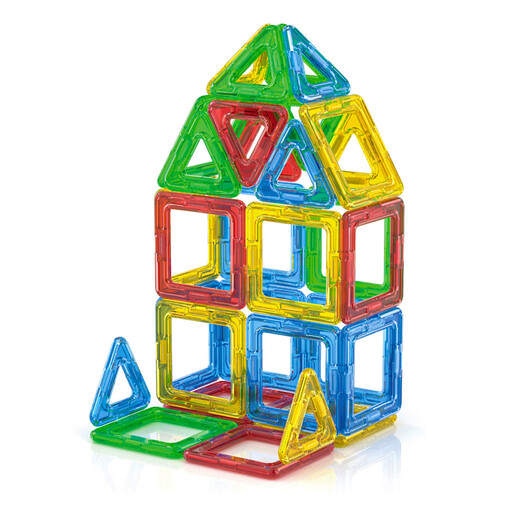
Why This Fits Their Persona: A compact introduction for families wanting creative building blocks without committing to a large collection. The colour box is convenient for storage and gifting.
The 36-piece format sets realistic expectations instead of relying on an inflated piece count. The product information also identifies small magnets and recommends checking for damage.
ABS plastic, smooth rounded edges, manual play with no batteries and a stated 3+ age range.
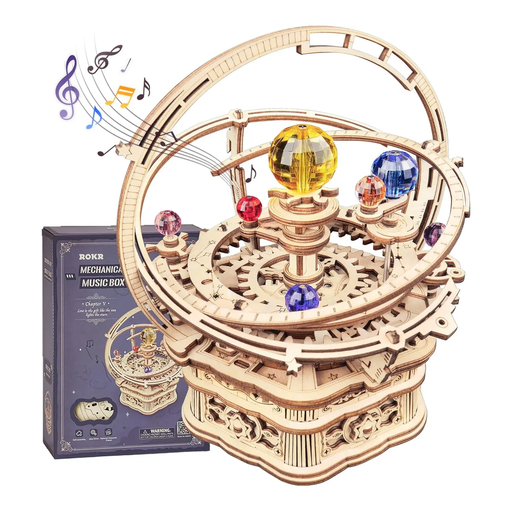
Why This Fits Their Persona: Suited to teens and adults who prefer a structured project, mechanical detail and a finished decoration for a bookshelf, desk or display cabinet.
It is clearly labelled for ages 14 and above, so buyers are less likely to mistake a complex DIY model building kit for a preschool toy.
84 pre-cut pieces, approximately three hours of assembly, manual winding mechanism, rotating solar-system-inspired design and no batteries required.
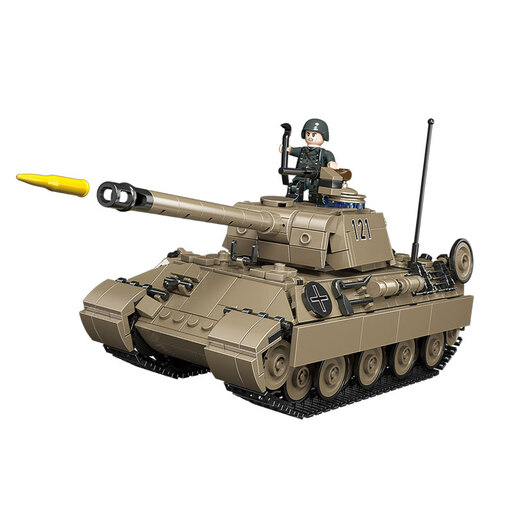
Why This Fits Their Persona: A substantial project for hobby builders, older children and families who enjoy longer parent-child activity sessions rather than quick free-form builds.
The 899-piece count and model format make the level of commitment clear. Small parts mean it should be kept away from under-threes and assembled with suitable supervision.
ABS construction, stated dimensions of 45 × 7 × 30.5 cm and a detailed tank design intended for building and display.
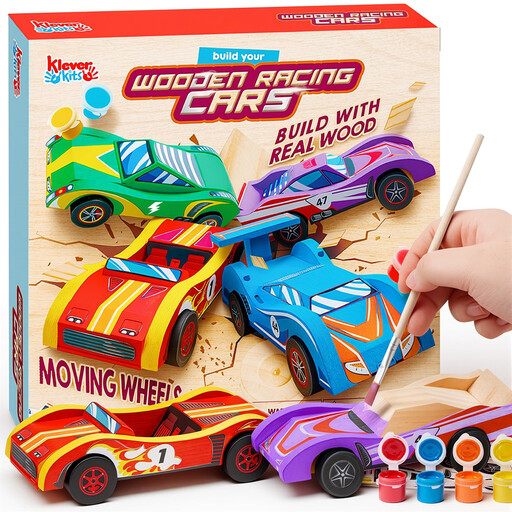
Why This Fits Their Persona: A practical option for children who enjoy making, painting and personalising objects, including birthday activities, rainy-day projects and family craft sessions.
The contents are specified rather than described only as a vague craft set, helping buyers check what is included before ordering.
Four wooden cars, 44 pre-cut pieces, 12 paint tubs, brushes, stickers, glue pen and illustrated instructions are listed in the product details.
We have compiled a complete, real-time list of products that fully satisfy these strict selection criteria and UK safety regulations.
Remember that “educational” is not a guarantee of a particular learning outcome. The practical value comes from how the toy is used: allowing time to plan, build, rebuild and discuss what went wrong.
Some sets are labelled 3+, but all magnetic pieces require supervision and regular inspection. Keep damaged tiles away from children and seek immediate medical help if a magnet may have been swallowed or inhaled. Follow the specific warning and age guidance supplied with the product.
A 36- to 60-piece set is often easier for a first introduction, travel or limited storage. A larger 100- to 150-piece collection may suit siblings or children who already enjoy building. Check the shape variety and storage method before prioritising quantity.
Most standard magnetic tiles and construction blocks are manually assembled and require no power. Some themed sets include lights or moving features, while wooden mechanical kits may use hand winding. Check the product specification carefully, particularly if the recipient is young or the toy will be used during travel.