
24/7 Customer Support

Free returns

Same-day & Next-day Delivery

Quality Guaranteed

Unlock Your Welcome Offers: FREE Delivery | Up to 80% OFF | Free 30-day JoyPlus trial
Download the APP
A perfect day on the slopes can be quickly compromised by one thing: poor visibility. Whether it's the sun suddenly disappearing behind a cloud, your lenses fogging up on a crucial run or the discomfort of forcing goggles over your prescription glasses, your equipment should solve problems, not create them. That’s where the convenience of modern magnetic ski goggles comes in, offering a practical solution to these common frustrations.
This guide is designed to help you navigate the features that matter. We'll break down what to look for when buying and share our top recommendations for 2026, helping you find a pair that keeps your vision clear from the first lift to the last run.
Choosing the right goggles goes beyond just the frame colour. For UK skiers who frequent European resorts, adaptability is key. Here are a few things to consider.
The most critical feature of any goggle is the lens. The amount of light a lens lets through is measured by its VLT (Visible Light Transmission). A low VLT (e.g., 10-20%) is ideal for bright, sunny days, while a high VLT (e.g., 60-90%) is necessary for overcast, flat light or evening conditions.
This is why interchangeable lens ski goggles are so popular. A magnetic system allows you to swap lenses in seconds, without even taking your gloves off. This means you can instantly adapt to changing weather, ensuring optimal clarity and depth perception at all times.
Fogging is the enemy of a good day on the mountain. High-performance anti fog ski goggles tackle this in several ways. Look for models with a dual-layer lens, which creates a thermal barrier similar to double-glazing. An effective anti-fog coating on the inner lens is also essential. Equally important is the frame's ventilation system, which allows air to circulate and moisture to escape, preventing condensation from building up.
A goggle is only as good as its fit. It should sit comfortably on your face without pressure points and create a complete seal to keep the elements out. For those who wear prescription eyewear, finding the right fit can be particularly challenging. OTG (Over-The-Glasses) ski goggles are specifically designed with extra volume and small, discreet channels in the foam to accommodate your glasses comfortably. Always check for an extra-long, adjustable strap to ensure it fits securely over your helmet.
Here are a few standout options that deliver on performance, convenience and compatibility.
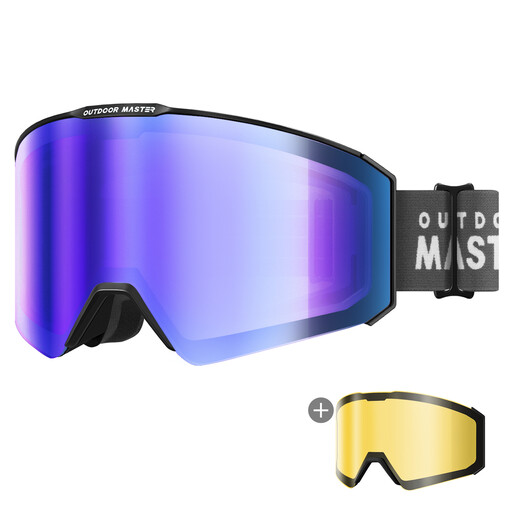
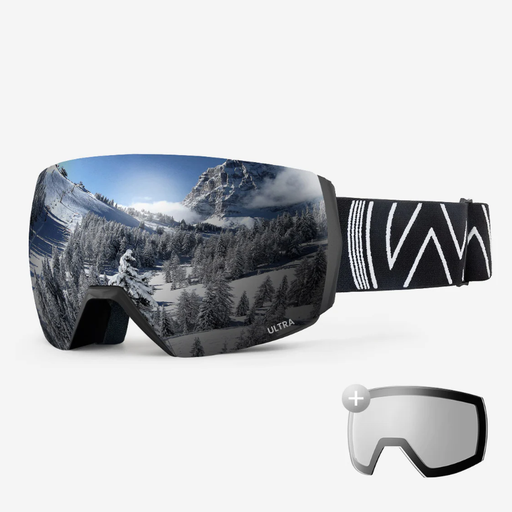
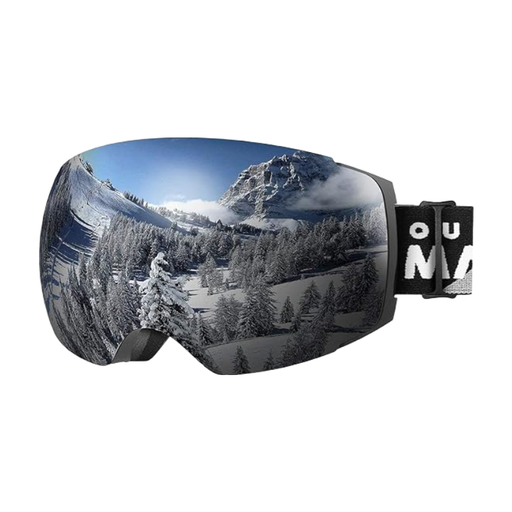
These recommendations from OutdoorMaster ski goggles represent some of the most practical magnetic and interchangeable options available. However, every rider has unique preferences for fit, style and lens tint. If you're still searching for the perfect pair, there are many other models to consider.
Explore our full collection of sports goggles to find the right match for your next mountain adventure.
Yes. Modern magnetic goggle systems use powerful neodymium magnets, often combined with a secondary locking mechanism or a deep-set frame groove. This ensures the lens stays securely in place, even during falls or high-speed runs. They are designed and tested to withstand the demands of skiing and snowboarding.
Fogging in OTG ski goggles often happens when warm, moist air gets trapped. To prevent this, ensure there is no gap between your helmet and goggles. Avoid overdressing to minimise sweating. Most importantly, if snow gets inside your goggles, shake it out rather than wiping the inner lens. Wiping can damage the delicate anti-fog coating. Let them air dry whenever possible.
Absolutely. The terms "ski goggles" and "snowboard goggles" are used interchangeably. The technology, fit and function are identical. The choice between them comes down to personal preference in style, colour and brand, not the sport you practice.