
24/7 Customer Support

Free returns

Same-day & Next-day Delivery

Quality Guaranteed

Unlock Your Welcome Offers: FREE Delivery | Up to 80% OFF | Free 30-day JoyPlus trial
Download the APP
Finding a toy that captures a child's imagination while also supporting their development can be a challenge. In a world of screens, many parents and educators are looking for engaging, hands-on alternatives. Magnetic tiles have become a popular choice, offering a brilliant blend of creative fun and educational value.
These versatile educational building toys allow children to construct everything from simple shapes to complex 3D structures, all while exploring principles of science and design. However, with so many options available, choosing the right set can feel overwhelming. This guide is designed to help you understand what to look for and to highlight some excellent choices that balance safety, play value and learning potential.
Before we look at specific sets, here are a few key points to consider when making your selection.
When it comes to toys, safety is non-negotiable. For safe magnetic blocks, look for products made from durable, non-toxic materials like BPA-free ABS plastic. The design should feature smooth, rounded edges to protect little hands. Most importantly, the magnets must be securely sealed within the plastic casing to prevent them from becoming loose. Always check that the product complies with UK and EU safety standards, such as EN71 and pay close attention to the age recommendations and any warnings regarding small parts.
While all magnetic tiles encourage creativity, some sets are designed with specific learning goals in mind. A basic 3D construction set is fantastic for developing spatial awareness and fine motor skills. Themed sets, such as those incorporating letters or a magnetic tiles ball run, add another layer of learning. These can introduce early literacy concepts or basic physics principles like gravity and momentum, making them excellent STEM toys for kids.
The number of pieces in a set will directly impact the scale and complexity of what a child can build. A starter set of around 40-60 pieces is often sufficient for a younger child to grasp the basics. Larger sets of 100 pieces or more are better suited for older children, collaborative play or ambitious builders who want to create sprawling castles and towers. A good mix of shapes—squares, various triangles and unique connectors—also expands the possibilities for creative learning toys.
As a Joybuy Product Recommendation Officer, I've filtered through the options to bring you a selection of magnetic tile sets that stand out for their design, safety features and play value.
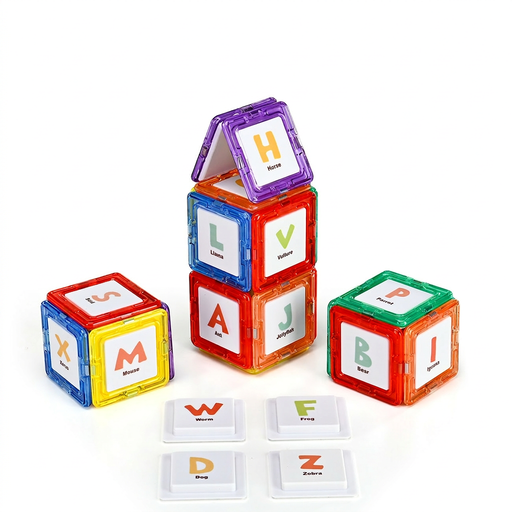
Why It Stands Out: This set cleverly combines construction play with early literacy. Each tile features a letter, allowing children to build structures while also learning the alphabet, spelling simple words and developing language skills. The strong magnets ensure that their creations remain stable.
Pros:
Who is it for? This set is an excellent choice for parents and educators of children aged 3 to 5 who want to introduce foundational literacy skills in a playful, hands-on way.
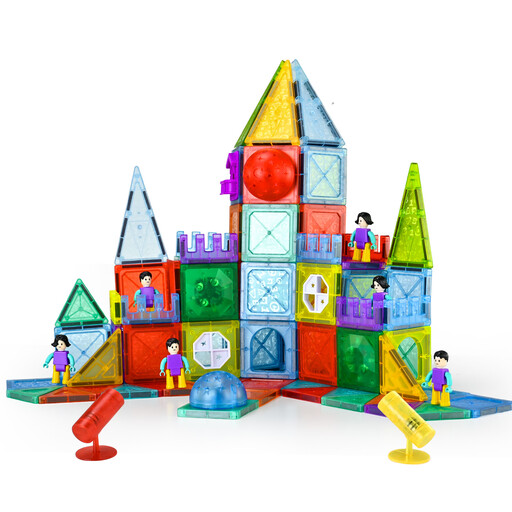
Why It Stands Out: This is a dynamic and interactive magnetic tiles ball run set that takes building to the next level. Children can construct intricate mazes and tracks and then watch as balls roll through their creations. The inclusion of light-up track pieces adds a visually exciting element, making it a captivating STEM toy.
Pros:
Who is it for? Perfect for children aged 5 and up who enjoy a challenge and are ready to explore more complex engineering and physics concepts through play.
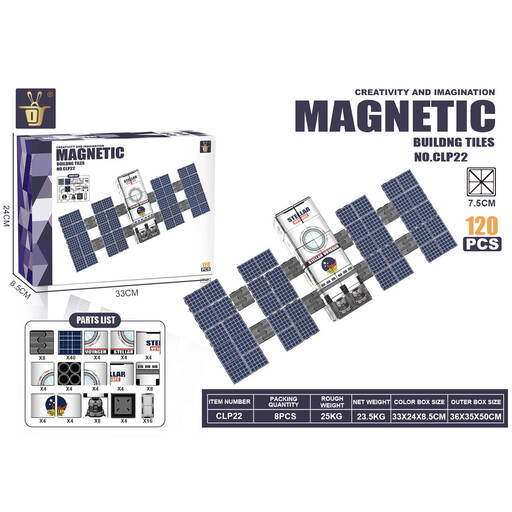
Why It Stands Out: This set sparks imagination with its unique space theme and large, 7.5cm diamond-shaped tiles. The 120-piece collection features rocket, planet and star motifs, encouraging children to build their own space stations and galaxies. The advanced magnetic system ensures a superior hold for more ambitious projects.
Pros:
Who is it for? An ideal choice for young space enthusiasts and creative builders who love to construct elaborate, story-driven worlds. The large piece count makes it great for siblings or classroom settings.
Magnetic tiles are fantastic, but every child's interests are different. If you're seeking an alternative form of 3D construction play, you might want to consider a different shape.
For a uniform building challenge that focuses on stacking and creating pixel-art style designs, explore our full range of magnetic cubes.
Magnetic tiles are generally recommended for children aged 3 and older. This is primarily because the sets contain small magnets, which can pose a serious risk if swallowed. Always choose sets where the magnets are fully and securely enclosed in durable plastic. It is crucial to follow the manufacturer's age guidelines and to ensure adult supervision, especially with younger children. Regularly inspect the tiles for any cracks or damage and discontinue use if a piece is broken.
These toys are powerful learning tools. While playing with magnetic building blocks, children develop a wide range of skills, including:
For a single child just starting out, a set with 40 to 60 pieces is usually enough to build a variety of simple to moderately complex structures. If you have multiple children who will be playing together, or if your child is a particularly avid builder, a larger set of 100 pieces or more is a better investment. It provides enough components to prevent frustration and allow for truly grand-scale creations.