
24/7 Customer Support

Free returns

Same-day & Next-day Delivery

Quality Guaranteed

Unlock Your Welcome Offers: FREE Delivery | Up to 80% OFF | Free 30-day JoyPlus trial
Download the APP
As a parent or gift-giver, finding a toy that captures a child's imagination while also supporting their development can feel like a challenge. In a world of screens, the appeal of hands-on, creative play is stronger than ever. Magnetic tiles have become a staple in playrooms across the UK for this very reason, offering a simple yet powerful way for children to build, learn and create.
However, with so many options available, choosing the right set can be confusing. How many pieces do you need? Are they safe? What makes one set different from another? This guide is designed to help you navigate the choices, offering practical advice to help you find a set that will provide hours of engaging fun for the children in your life.
Before diving into specific recommendations, here are a few key factors to consider. These points will help you assess the quality and suitability of any set of magnetic building blocks.
Safety is the number one priority for any children's toy. When it comes to magnetic tiles, look for products made from durable, non-toxic ABS plastic. This material is known for its strength and impact resistance. Ensure the magnets are securely sealed within the plastic casing to prevent them from becoming loose. The edges of the tiles should be smooth and rounded to be gentle on little hands. Always check for the recommended age, which is typically 3 years and up due to small parts, and adhere to the safety warnings regarding magnets.
The number of pieces in a set directly impacts what a child can build.
Beyond just being fun, educational construction toys like these are valuable tools for learning. The process of connecting tiles helps children intuitively grasp concepts of geometry, physics and spatial awareness. Sets featuring transparent magnetic tiles add another dimension to play, allowing children to explore light and colour as they build near a window or light source. This makes them excellent STEM toys for kids.
Based on our analysis of features, creative potential and user suitability, here are some noteworthy options for your consideration.
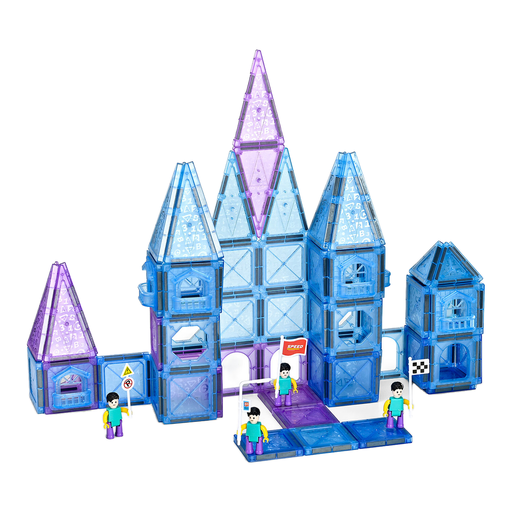
Why It Stands Out: This expansive set is built around a magical "Ice Kingdom" theme. Its unique ice-blue translucent tiles create beautiful light effects, making it perfect for building enchanting castles and palaces. The large piece count allows for truly ambitious projects.
Pros:
Who is it for? This set is ideal for children aged 5+ who enjoy imaginative, theme-based play and have ambitions to build large, detailed structures. It's also a great option for siblings to share.
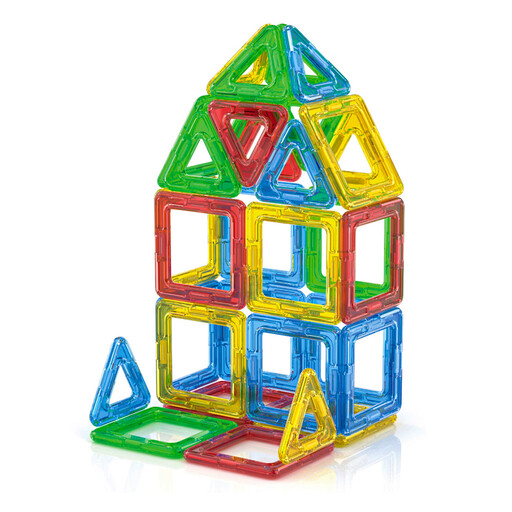
Why It Stands Out: This is a compact and accessible introductory set. With 36 pieces, it provides a perfect entry point into the world of magnetic building without being overwhelming. The smaller size of the blocks is well-suited for younger children to handle.
Pros:
Who is it for? A suitable choice for toddlers and preschoolers (age 3+) as their first set of creative building toys for children. It's also a good travelling-friendly option or a small expansion pack for an existing collection.
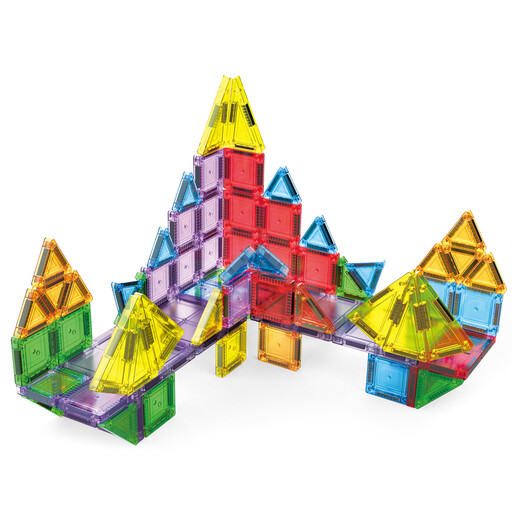
Why It Stands Out: This 76-piece set strikes an excellent balance between a starter kit and a large-scale building set. It offers enough variety and quantity for a child to progress from simple shapes to more complex 3D structures, supporting their growing skills.
Pros:
Who is it for? This is a great all-rounder set for children aged 4-7. It provides plenty of room for growth, making it a long-lasting addition to the toy box that can adapt as a child's building skills evolve.
The recommendations above are just a starting point. The world of magnetic construction is vast, with many different colour palettes, piece counts and shapes available. If you're looking for more variety or different themes, you can find more options to spark your child's creativity.
Explore our full collection of coloured tiles for more creative building options.
Magnetic tiles are generally designed for children aged 3 and older. This is because sets can contain small parts that pose a choking hazard. The most critical safety concern is the magnets themselves. If a magnet is swallowed, it can cause serious internal injury. For this reason, it is mandatory that children, especially those at the younger end of the age range, play under adult supervision. Always inspect tiles for cracks or damage before use and discontinue use if any part of the casing is broken.
These toys are highly regarded for their educational value. As children play, they develop:
For a single child just starting out (age 3-4), a set with 30 to 40 pieces is often sufficient for them to learn the basics and build simple creations. For older children (5+), or if you want to encourage more complex building projects, a set with 70 or more pieces is a better investment. Larger sets allow for more creativity and are better for collaborative play with friends or siblings.