Choose a maize snack by the total carbohydrate in the pack you will eat, not its calorie figure alone. Among five compared pack formats, a 17g bag of Skips Prawn Cocktail works out to about 9.5g carbohydrate from Snackline Direct’s per-100g figures, while Tesco Cheese Puffs contain 11g carbohydrate despite providing 86 kcal per 17g bag. Check the current label, salt and allergens, and use your own carbohydrate-counting plan rather than treating either pack as suitable for everyone.
Who is comparing these snacks?
Adults limiting carbohydrate between meals
For people with type 2 or gestational diabetes considering a lower-carbohydrate snack, the total carbohydrate in the bag matters more than a low calorie figure on its own. Kent Community Health NHS Foundation Trust’s 2024 snack guidance uses under 10g carbohydrate as a practical guide for this situation, not a rule for everyone.
People counting carbohydrate for insulin
For people using an individual insulin-to-carbohydrate ratio, the useful figure is the carbohydrate in the portion actually eaten. Diabetes UK notes that these ratios differ between people; a snack comparison cannot determine someone’s insulin needs.
Shoppers comparing portioned savoury snacks
Single bags make it easier to compare the intended portion, but a calorie comparison should sit alongside carbohydrate, salt and the ingredients. Check the exact flavour and pack size rather than carrying figures over from another format.
What should you check first?
Start with the carbohydrate in the bag you intend to eat, then compare energy and salt for that same portion. Diabetes UK explains that back-of-pack per-100g figures help compare similar foods, but they need to be related to the portion.
| Priority | What to check | Your needs |
|---|
| Total carbohydrate |
Read carbohydrate for the whole bag; if only a per-100g value is given, calculate it using the bag’s weight. Check whether your own plan calls for a particular amount. |
I need to know the carbohydrate I will actually eat, especially if I count it for insulin. Kent Community Health NHS Foundation Trust uses under 10g as a snack guide for people with type 2 or gestational diabetes, rather than a universal cut-off. |
| Pack size |
Match every nutrition figure to its stated portion. Walkers lists Wotsits Cheese for a 22.5g portion; a different Wotsits multipack may have a different portion and declaration. |
A smaller bag may fit my planned portion, but I cannot use the figures from a larger bag without checking its label. |
| Energy |
Compare kcal for the same portion as the carbohydrate figure. Tesco Groceries lists 86 kcal and 11g available carbohydrate for each 17g Cheese Puffs bag. |
I want a portion that fits my energy goal without assuming that fewer calories also means fewer carbohydrates. |
| Salt and allergens |
Compare salt per stated bag, and read the ingredients and allergen declaration for the exact flavour. Walkers lists 0.34g salt per 20g Monster Munch Sweet & Spicy pack; Tesco Groceries lists 0.54g per 20g Frazzles pack. |
If I am choosing between similar-sized packs, salt may affect my choice. I also need to check ingredients relevant to my allergies rather than assuming flavoured snacks share a recipe. |
What can make a comparison misleading?
-
Assuming under 100 kcal means under 10g carbohydrate
Tesco Groceries lists 86 kcal and 11g available carbohydrate for a 17g Cheese Puffs bag. Walkers lists 98 kcal and 12g carbohydrate for a 20g Monster Munch Sweet & Spicy pack. Neither falls under the 10g snack guide used by Kent Community Health NHS Foundation Trust.
If under 10g is relevant to your plan, check the current bag’s total carbohydrate before comparing calories.
-
Using per-100g figures as though they describe one bag
A per-100g declaration is a comparison basis, not necessarily the amount you will eat. Snackline Direct lists Skips Prawn Cocktail at 56g carbohydrate per 100g; its stated 17g bag works out to about 9.5g.
Use a declared per-bag figure where available. Otherwise, multiply the per-100g value by the bag weight divided by 100.
-
Letting the cooking description stand in for the salt figure
Although Frazzles are described as baked, Tesco Groceries lists 0.54g salt per 20g bag. Walkers lists 0.34g for the compared 20g Monster Munch Sweet & Spicy bag.
Compare salt for the portion you plan to eat, using the nutrition panel or front-of-pack traffic-light information where available.
-
Assuming flavours and pack formats have the same ingredients
Ingredients and allergen declarations vary between snacks and formulations. A nutrition figure for one Wotsits pack format should not be applied to another.
Read the current ingredients, allergen declaration and nutrition panel for the exact product before buying.
Which product lines appear in the comparison?
These references describe particular flavours and pack formats, not every snack made by each brand.
Tesco
Tesco Cheese Puffs are cheese-flavour maize snacks supplied in 17g bags within the listed 10-pack.
- Tesco Groceries lists 86 kcal, 11g available carbohydrate and 0.26g salt per 17g bag.
- The bag exceeds the under-10g carbohydrate snack guide used by Kent Community Health NHS Foundation Trust and contains milk ingredients.
Skips
The compared Prawn Cocktail format is a 17g snack made with tapioca starch and maize flour, according to Snackline Direct.
- Its retailer-listed 56g carbohydrate per 100g works out to about 9.5g per 17g bag.
- It is not a maize-only puff. The listed 2.2g salt per 100g works out to about 0.37g per bag; check the current label.
Monster Munch
The compared Sweet & Spicy maize snack has a stated 20g portion on Walkers’ product page.
- Walkers lists 98 kcal, 12g carbohydrate and 0.34g salt per 20g.
- Its listed carbohydrate is above the under-10g snack guide used by Kent Community Health NHS Foundation Trust.
Frazzles
The compared Smiths Frazzles Crispy Bacon multipack contains 20g corn-snack bags.
- Tesco Groceries lists 97 kcal and 12g carbohydrate per bag.
- Its listed 0.54g salt per 20g bag is higher than the 0.34g Walkers lists for the compared 20g Monster Munch pack.
Wotsits
Walkers lists Wotsits Cheese as a maize snack, but nutrition must be matched to the particular pack format.
- Walkers lists 123 kcal and 12.6g carbohydrate for its 22.5g Cheese portion.
- Do not apply those 22.5g figures to a 16.5g multipack bag; check that format’s own declaration.
Maize snack options on Joybuy
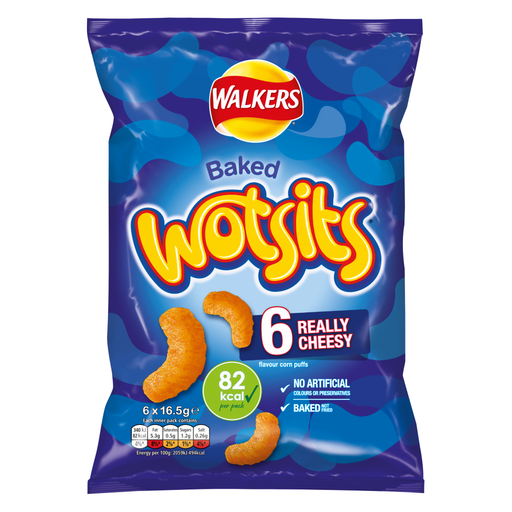
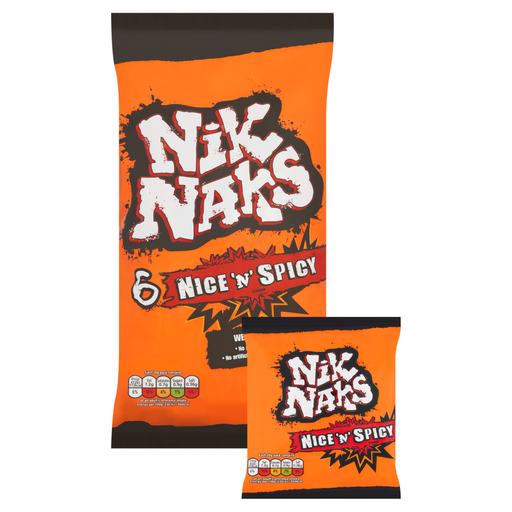
These are two portioned Wotsits and Nik Naks multipacks to assess against your own carbohydrate plan. Check the nutrition and ingredients for their exact bag sizes; they are not the same pack formats as all the products discussed above.
 No image available
Walkers Wotsits Cheese 6 x 16.5g
The 16.5g bags offer a defined portion for comparing carbohydrate with your plan. Check this format’s current carbohydrate, energy, salt and allergen declaration rather than using figures for Walkers’ 22.5g Wotsits Cheese portion.
View on Joybuy
 No image available
Nik Naks Nice Spicy Corn Snacks 6 x 20g
Use the 20g bag as the portion when checking whether its carbohydrate fits your snack plan. Read the current energy, salt and allergen declaration for this flavour as well; figures for another maize snack do not describe Nik Naks.
View on Joybuy
Questions about choosing a pack
Does a low calorie figure make a maize snack suitable for someone with diabetes?
No: calories describe energy, while the total carbohydrate in the portion is a separate consideration. Diabetes UK advises checking carbohydrate quantity; compare it for the bag you will eat, then consider energy, salt and your individual plan.
Should I choose by the ‘of which sugars’ figure?
Use total carbohydrate for the portion rather than sugars alone when comparing these snacks for carbohydrate counting. Diabetes UK explains that back-of-pack labels give carbohydrate information per 100g, which you can relate to the amount you intend to eat.
Is under 10g carbohydrate a rule for everyone with diabetes?
No. Kent Community Health NHS Foundation Trust’s 2024 guidance uses under 10g as a lower-carbohydrate snack guide for people with type 2 or gestational diabetes. Diabetes UK notes that insulin-to-carbohydrate ratios vary between individuals, so use advice relevant to your own treatment plan.
Can I use the nutrition figures from a different bag size?
Not without checking the portion and its declaration. A 22.5g Wotsits Cheese portion and a 16.5g multipack bag are different amounts; read the current label for the bag you intend to eat, including its ingredients and allergens.


