Parents packing an occasional savoury snack
Check whether packaged savoury snacks are permitted, then consider the pack alongside the rest of the lunch rather than choosing it on its own.


If you are considering a packaged maize puff for a nursery lunch, check the nursery’s food policy first, then compare fat and salt per 100g on the exact packs you might buy. A small pack can be an occasional addition rather than the main part of lunch; check its ingredients and allergen information as carefully as its nutrition panel.
The decision changes with the nursery’s rules, the child’s food requirements and the kind of snack you intend to pack.
Check whether packaged savoury snacks are permitted, then consider the pack alongside the rest of the lunch rather than choosing it on its own.
Wotsits Cheese and Monster Munch Pickled Onion list maize in their ingredients, according to Walkers UK. Compare the exact flavours’ nutrition panels and pack sizes before treating them as interchangeable.
Check the exact pack’s ingredients and precautionary allergen statements against the child’s requirements, and tell the nursery or childminder about a food allergy, as NHS guidance advises.
Start with what the nursery permits and what the child can eat. Then compare nutrition on the same basis and look at the portion you would actually pack.
| Priority | What to check | Your needs |
|---|---|---|
| Nursery policy | Ask whether the setting accepts packaged savoury snacks and whether its packed-lunch or allergy rules restrict particular foods. The NHS advises checking the individual nursery’s food policies. | I want to know the snack can be packed before choosing a flavour or multipack. |
| Fat and salt | Compare both figures per 100g on the exact varieties, then read the values for the portion you plan to pack. Do not use “baked” or a calorie claim as a substitute for the nutrition panel. | A smaller portion matters to me, but I also want to understand how the snacks compare at the same weight. |
| Ingredient base | Read the first ingredients rather than relying on the shape or supermarket category. Walkers UK lists maize for Wotsits Cheese and Monster Munch Pickled Onion, but potato starch first for Quavers Cheese. | If I am choosing a maize snack specifically, I need to know that the puff is actually maize-based. |
| Allergens | Check the exact flavour’s ingredient list, highlighted allergens and any “may contain” statement. Match them to the child’s requirements and the nursery’s policy. | I cannot assume that a familiar puff, or another flavour from the same brand, has the same allergen information. |
| Age and format | Read the age guidance on snacks intended for babies or toddlers, and consider the food’s texture. Popcorn is not the same format as a melty puff; hard kernels can pose a choking risk for young children. | I need a format appropriate for the child, not merely a small pack that fits in a lunchbox. |
A cooking description does not tell you how one finished snack compares with another.
Compare fat and salt per 100g on the exact packs, then check the amount in the portion being packed.
Walkers UK lists potato starch as the first ingredient in Quavers Cheese. Its shape does not make it a maize-snack option.
Read the ingredient list for the particular product and flavour rather than relying on a brand name or shelf category.
Ingredients and precautionary statements can differ between flavours, even when the snacks look similar.
Check the pack against the child’s food requirements and the nursery’s allergy policy before packing it.
A small savoury pack does not, by itself, make a nursery lunch balanced.
If you include one occasionally, plan the main food and other suitable lunch items separately, following the setting’s rules.
Brand and retailer listings can help identify options, but the exact product label determines its ingredients, allergens and nutrition.
Walkers UK publishes information for the named Wotsits, Monster Munch and Quavers varieties.
Tesco Groceries lists Goodies Dino Puffs Cheese & Onion in a 4 × 12g format among its under-100-calorie snacks.
Popchips appears in Tesco Groceries’ snack-category listings.
These options include baby and toddler puffs for the nursery-lunch question, followed by a popcorn multipack that needs a separate age-and-texture check. Compare each exact pack with the nursery’s policy and the child’s requirements.
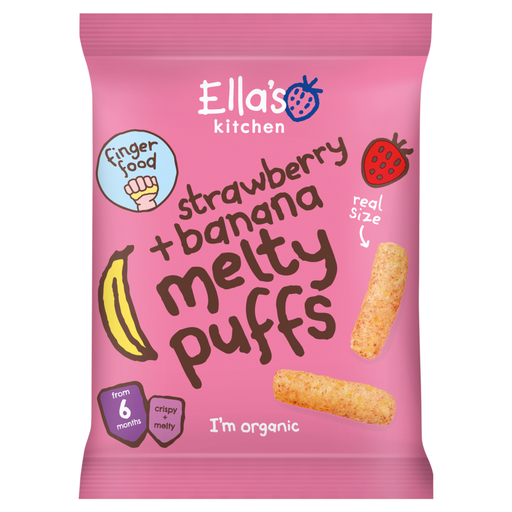 No image available
A fruit-flavoured baby puff to consider if its age guidance fits the child and the nursery accepts packaged snacks. Check the exact pack’s nutrition and allergen information before including it.
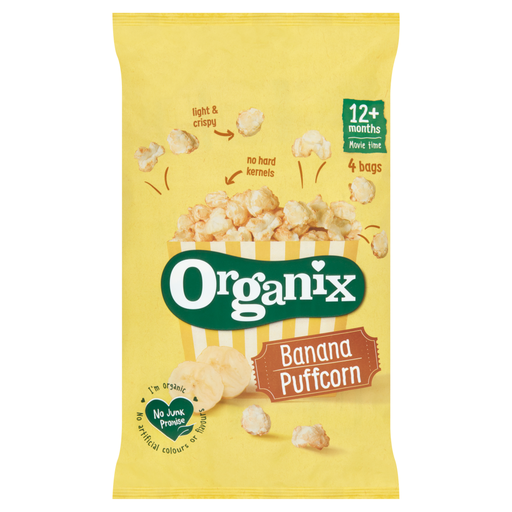 No image available
The 4 × 10g format gives you individually sized packs to consider for a toddler’s lunch. Check the age guidance, ingredients and allergen statement on the exact pack.
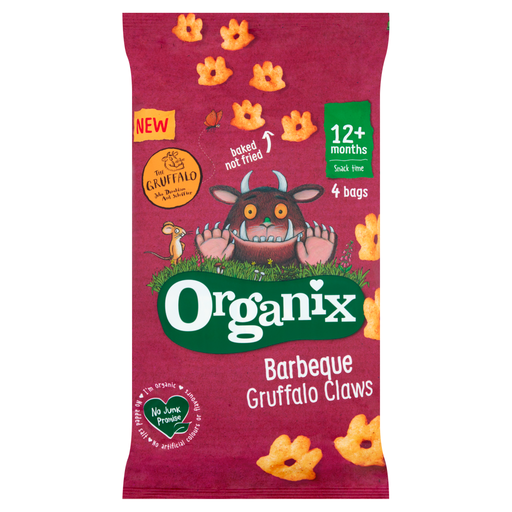 No image available
These toddler-labelled corn puffs come in a 4 × 15g multipack. Check whether the nursery permits the snack and follow the pack’s age and supervision advice.
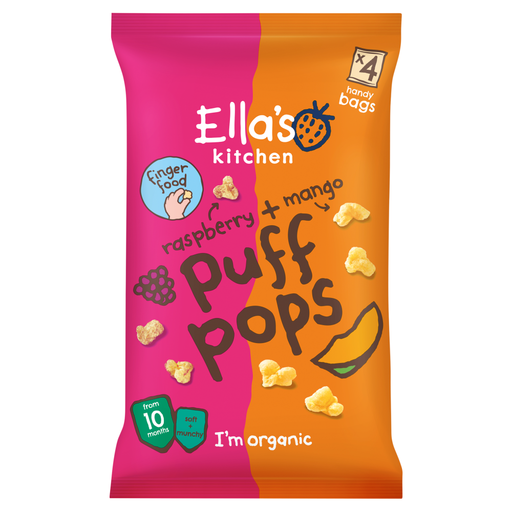 No image available
The 4 × 9g packs offer a small portion of fruit-flavoured puffs. Check the child’s age against the pack guidance, and follow its supervision advice during eating.
 No image available
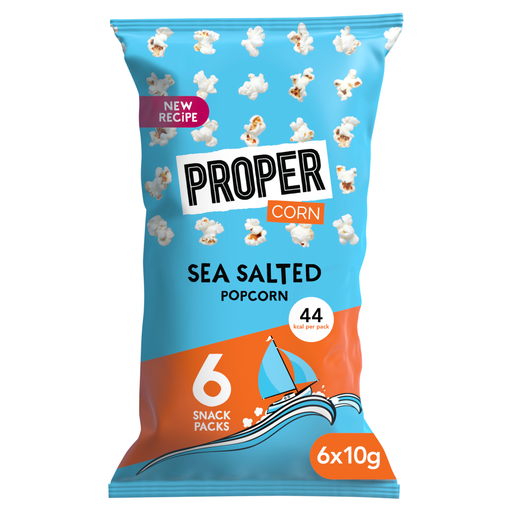
This is a popcorn multipack, not a baby or toddler puff. Do not substitute it for a melty puff when choosing for a young child: hard kernels can pose a choking risk. Check the setting’s policy and the exact pack’s allergen statement.
Check your nursery’s food policy before packing one. The NHS advises parents to check individual nursery policies and to tell the nursery or childminder about a child’s food allergy.
No. “Baked” describes preparation, not how much fat the finished snack contains relative to another product. Compare fat per 100g on the exact nutrition panels, then check the values for the portions you would pack.
No, not when you specifically need a maize-based snack. Walkers UK lists potato starch as the first ingredient in Quavers Cheese; check the exact pack if you are considering another variety.
Consider suitable main food, fruit and vegetables alongside any occasional packaged snack, while following the nursery’s rules and the child’s food requirements. If you pack food that needs to stay chilled, plan how it will be kept cold until lunch.