Parents packing a lunch for a child aged 1 to under 5
A portable packet is convenient, but the lunch still needs to work as a meal. Consider what other foods you are packing before deciding whether a savoury snack belongs alongside them.


Do not make a standard savoury grab bag the default snack in a nursery lunch: NHS advice identifies crisps as salty foods to avoid giving young children, and Bedfordshire Community Health Services’ packed-lunch standards advise avoiding crisps. Check the nursery’s policy first. If it permits an occasional packaged snack, compare the whole packet’s size, salt and allergen label, and keep the rest of the lunch centred on suitable meal foods.
A portable packet is convenient, but the lunch still needs to work as a meal. Consider what other foods you are packing before deciding whether a savoury snack belongs alongside them.
Ask what the setting permits before buying packets for lunch boxes. Its packed-lunch and allergen arrangements may affect whether a particular product can be sent in.
Compare the actual packet, not just the product range: portion size, salt and allergen warnings can differ. A smaller savoury snack does not take the place of the main lunch foods.
Start with the nursery’s rules and the lunch as a whole, then check the exact packet if a packaged snack is permitted.
| Priority | What to check | Your needs |
|---|---|---|
| Lunch composition | Consider the snack alongside the main meal foods, fruit and vegetables. The Department for Education says meals and snacks provided to children in early-years settings must be balanced and nutritious; Bedfordshire Community Health Services’ packed-lunch standards advise avoiding crisps. | I want to pack a lunch that works as a meal, rather than rely on a grab bag to fill the lunch box. |
| Nursery policy | Ask whether the setting permits the specific snack and what its packed-lunch and allergen rules require. The National Day Nurseries Association advises nurseries to communicate their expectations through a nutrition and mealtimes policy. | Before buying a multipack, I need to know whether I can send that packet to nursery. |
| Salt and servings | Read salt on the label’s stated basis, then check the packet size and serving count. Tesco Groceries lists 0.47g salt per 30g serving for a 36g Wotsits Cheese Grab Bag and says the pack contains 1 to 2 servings; its 15g Wotsits WOW packet lists 0.17g salt per packet. | If an occasional packet is allowed, I want to compare what is in the whole bag rather than mistake a stated serving for the full packet. |
| Allergens | Read the current packet’s ingredients and allergen warnings, including any “may contain” statement. Check them against the child’s requirements and the nursery’s procedure. | A familiar flavour or brand name is not enough for me to decide whether the exact variety is suitable. |
| Safe eating | Consider the food’s size, shape and texture for the child. Department for Education advice says food should be suitably prepared and served for children under 5. | I need food that suits my child’s eating abilities and the setting’s safe-eating arrangements, not just a packet that fits in a lunch box. |
Tesco Groceries lists the 36g Wotsits Cheese Grab Bag as containing 1 to 2 servings. Its nutrition information states 0.47g salt per 30g serving, so that figure should not be mistaken for a whole-pack value.
Check the serving size against the bag’s weight and consider how much the child is likely to eat. A single packet need not be a single serving.
How a snack is made does not establish whether it fits the nursery’s policy or the child’s lunch. The relevant label checks still include salt, serving size and allergens.
Check the policy first, then compare the figures on the specific packet rather than relying on a front-of-pack claim.
The nursery’s packed-lunch arrangements and the child’s allergen requirements may rule out a particular variety, even if another product in the range is acceptable.
Ask the nursery about its rules and read the current packet’s allergen statement before purchasing.
Checking first can avoid buying a multipack that cannot go in the child’s lunch box.
These examples show why the named variety and packet size matter more than the brand alone; they do not imply that a nursery permits any of them.
The Cheese Grab Bag and WOW Lightly Salted multipack use different packet and nutrition-label bases.
The cited Pickled Onion grab bag is a single 40g maize-snack packet.
The cited Smiths Frazzles bacon-flavour corn snack comes in 20g multipack portions.
The cited mixed-snack multipack includes Cheese Puffs in 17g bags alongside other snack varieties.
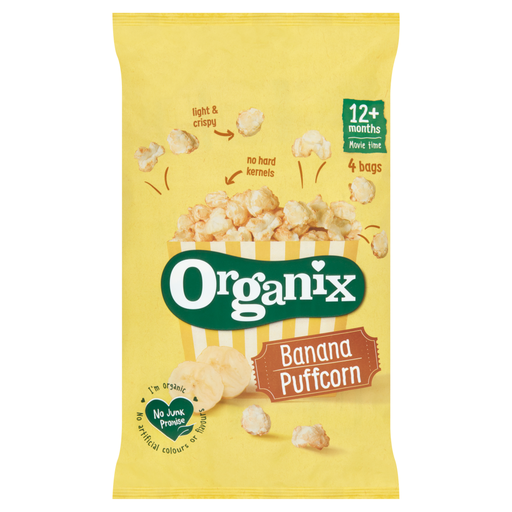
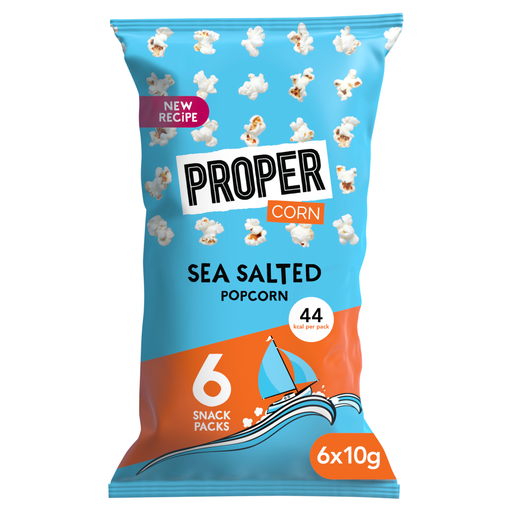
These Joybuy listings are for a 12+ months puffcorn product and a standard popcorn product. Both are corn-based packets, but their different forms matter when considering food for a young child; neither replaces the main foods in a nursery lunch.
 No image available
The stated 12+ months age range and four 10g packets make this a more relevant packet to assess for a nursery-aged child than standard popcorn. Confirm that the nursery permits it, check the current label for allergens including its milk warning, and pack it alongside suitable main lunch foods.
 No image available
This is standard popcorn in six 10g packets, not a toddler puffcorn product. Popcorn presents a choking concern for young children: do not treat its small packet size as evidence that it belongs in a nursery lunch. Choose food appropriate for the child’s age and eating abilities, and check the current packet’s milk warning where relevant.
No. NHS advice identifies crisps among salty foods to avoid giving young children, while Bedfordshire Community Health Services’ packed-lunch standards advise avoiding crisps. Plan the lunch around suitable meal foods and follow the nursery’s packed-lunch policy.
No. “Baked” describes how a product is made; it does not answer whether the nursery permits it or whether its portion size, salt and allergens are suitable. Check those points on the specific packet.
Check the setting’s rules, then read the exact packet for its serving count, whole-pack size, salt and current allergen warnings. Also consider whether its shape and texture suit the child’s eating abilities: Department for Education advice says food should be suitably prepared and served for children under 5.