For toddler snack time, do not choose familiar maize-style crisps as a way to add protein: the named products contain some protein, but their salt levels exceed the high-salt threshold given by nidirect. NHS guidance lists crisps among salty foods babies should not eat. If protein is the aim, consider an age-appropriate food such as milk, yoghurt or cheese where suitable for the child, and check ingredients and allergens on any packaged snack.
Who is making this choice?
Carers looking for protein at snack time
If the purpose of a toddler’s snack is to include protein, a crisp’s protein figure alone does not settle the choice. The NHS identifies milk and dairy products as sources of protein; consider the child’s age, the food’s texture and any allergens when choosing what to offer.
Shoppers comparing familiar crisp multipacks
Wotsits, Monster Munch, Frazzles and Skips have different pack sizes and declared protein figures. Compare salt as well as protein on the nutrition panels: the named products exceed nidirect’s high-salt threshold of more than 1.5g per 100g.
Families checking food allergens
Allergen declarations differ between these snacks. For a child with an allergy or intolerance, read the ingredients and precautionary statements on the physical pack rather than relying on the snack’s flavour or an older listing.
What should you check?
Start with the reason for the snack, then compare the amount in a serving with the per-100g figures and check whether the food suits the child.
| Priority | What to check | Your needs |
|---|
| Protein at snack time |
Check protein per serving, not just per 100g. If protein is the aim, consider an age-appropriate food that contains it; the NHS identifies milk and dairy products as protein sources. |
I’m choosing a snack to include protein, rather than picking a crisp simply because protein appears on its label. |
| Salt |
Read salt per 100g and per pack. Nidirect defines more than 1.5g salt per 100g as high; NHS guidance includes crisps among salty foods babies should not eat. |
I want to avoid making salty crisps a routine toddler snack, even when they come in small packets. |
| Ingredients and allergens |
Read the current pack’s ingredients and precautionary statements. GOV.UK guidance says allergens required to be declared on applicable prepacked foods must be emphasised in the ingredients list. |
If an ingredient matters for my child, I need to check this particular flavour and pack, not assume that related products have the same declaration. |
| Age and serving |
Check any age marking, the food’s texture and the pack’s serving information. Match the food and the way it is offered to the individual child. |
A toddler-labelled pack helps me narrow the options, but it does not answer every question about portion, texture or allergens. |
Common buying mistakes
-
Reading protein per 100g as protein per packet
Tesco lists Skips Prawn Cocktail at 5.2g protein per 100g, but 0.7g protein in a 13.1g pack. That pack also contains 0.29g salt.
Compare both protein and salt for the portion you are considering. If protein is the purpose of the toddler’s snack, choose a suitable protein-containing food rather than relying on a crisp.
-
Taking “baked” or “vegetarian” as a toddler-suitability test
Those descriptions do not tell you how much salt a snack contains. NHS guidance lists crisps among salty foods babies should not eat.
Use the nutrition panel and ingredients list to assess the particular product instead of treating its production method or marketing description as the answer.
-
Assuming a familiar flavour has familiar allergens
The named product listings contain or warn about different allergens, including milk, soya and cereals containing gluten. Declarations can differ between products.
For a child with an allergy or intolerance, check the physical pack’s ingredients and precautionary statements before offering the snack.
Brand references
These brand notes concern the named snack lines, not every product made by each brand or the snacks listed below.
Walkers
The named Wotsits Really Cheesy and Monster Munch Pickled Onion products are puffed savoury snacks, not age-specific toddler protein foods.
- Joybuy lists protein and salt per 100g for both named products, making their labels directly comparable.
- Joybuy lists 1.58g salt per 100g for Wotsits and 1.55g for Monster Munch. Both exceed nidirect’s high-salt threshold of more than 1.5g per 100g.
Smiths
Frazzles is the named bacon-flavour maize snack in this comparison; its flavour name does not establish that it contains bacon.
- Blakemore Wholesale lists maize and bacon-flavour seasoning in the named Frazzles product’s ingredients.
- The same specification lists 6.8g protein and 2.7g salt per 100g. Joybuy’s Frazzles listing declares milk and soya, with further precautionary allergen statements.
KP Snacks
The named Skips Prawn Cocktail product is a tapioca snack containing maize flour and rice protein, rather than a primarily maize-based puff.
- Tesco gives figures for both 100g and a 13.1g pack of the named product.
- Tesco lists 0.7g protein and 0.29g salt per pack, and precautionary statements for milk, soya and gluten.
Packaged snacks to compare
These toddler-age-labelled snacks include maize-style products and a rice-based choice. Their age markings, ingredients and nutrition panels are more useful to this decision than treating the list as protein recommendations.
 No image available
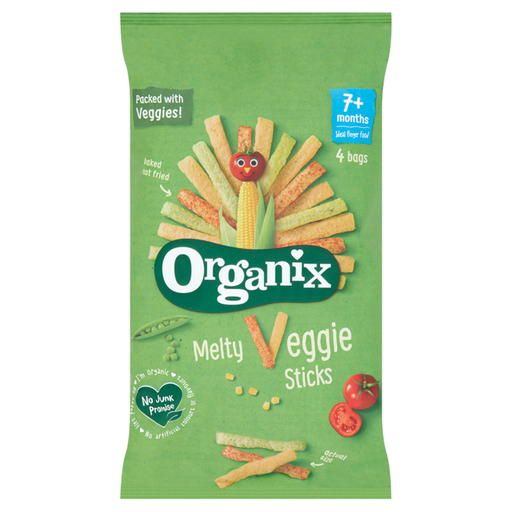
Organix Melty Veggie Sticks 7+ Months, 4 x 15g
The 7+ months age marking and four 15g packs distinguish this snack when comparing options for a young child. Check the pack’s protein and salt per serving, ingredients and allergen information before choosing it.
Joybuy
 No image available
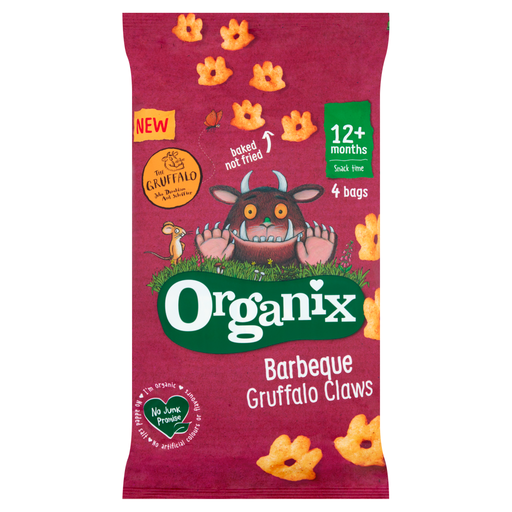
Organix Barbeque Gruffalo Claws Corn Puffs 12+ Months, 4 x 15g
This corn-puff multipack is marked 12+ months, so its age marking differs from those of the younger-age products here. Consider the child’s ability to manage the texture, and read the current pack for nutrition and allergens.
Joybuy
 No image available
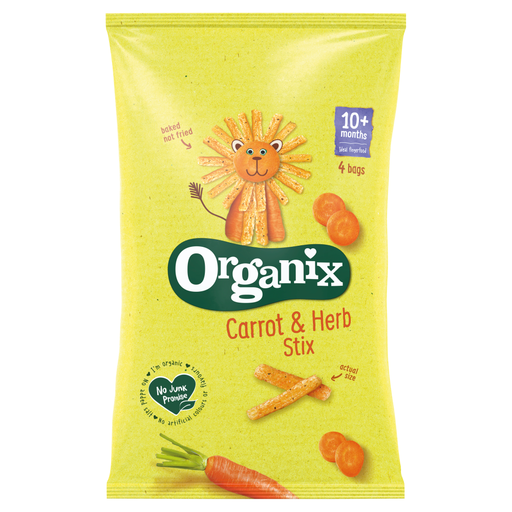
Organix Carrot & Herb Stix 10+ Months, 4 x 15g
The 10+ months marking and four 15g packs provide a different age and pack-size combination to compare. Check the physical pack’s serving information, ingredients and allergens when deciding whether it fits the child’s snack time.
Joybuy
 No image available
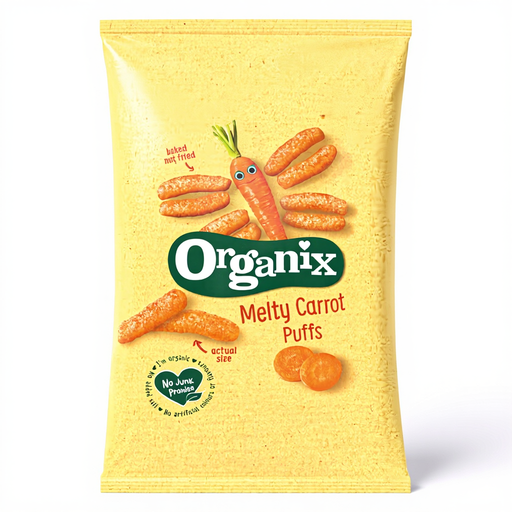
Organix Melty Carrot Puffs 6+ Months, 4 x 18g
This option is marked 6+ months and comes in four 18g packs. Product information about gluten is contradictory, so check the physical pack before choosing it for a child who must avoid gluten; also check its nutrition panel rather than assuming the puffs are a protein source.
Joybuy
 No image available
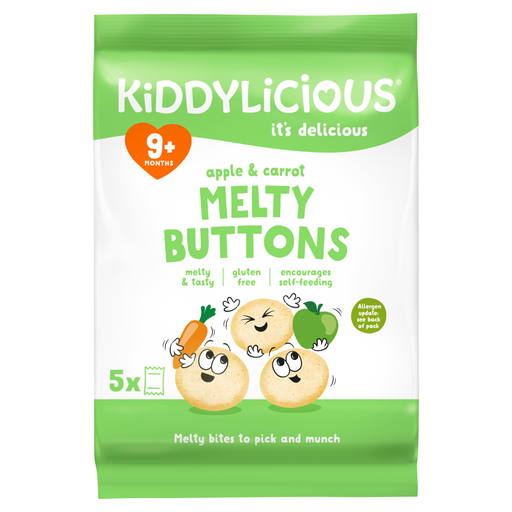
Kiddylicious Apple & Carrot Melty Buttons 9+ Months, 30g
This 9+ months snack is a rice-based choice rather than a maize snack. If maize or protein is the reason for shopping, check whether it meets that purpose; read the physical pack’s allergen statement, including its precautionary sesame information.
Joybuy
Questions about toddler snacks
Are Wotsits, Monster Munch, Frazzles or Skips protein snacks for toddlers?
Do not use these salty crisp-style products as the protein choice for toddler snack time. Their listings show some protein, but each named product exceeds nidirect’s high-salt threshold of more than 1.5g per 100g; NHS guidance lists crisps among salty foods babies should not eat. If protein is the aim, consider an age-appropriate protein-containing food instead.
Does “baked not fried” make a maize crisp suitable for a toddler?
No: baking describes how the crisp is made, not whether its salt level, ingredients and texture suit a child. For the named products, Joybuy and Blakemore Wholesale list salt figures between 1.55g and 2.7g per 100g, above nidirect’s high-salt threshold.
What could provide protein at toddler snack time instead?
Milk, yoghurt or a small portion of cheese are protein-containing options where suitable for the child. The NHS identifies milk and dairy products as sources of protein; consider the individual child’s age, texture needs and allergens when choosing and serving food.
How should I check allergens on a packaged snack?
Read the ingredients and precautionary statements on the current physical pack, particularly if the child has an allergy or intolerance. GOV.UK guidance says allergens required to be declared on applicable prepacked foods must be emphasised in the ingredients list; declarations for the named snacks vary by product.


