
24/7 Customer Support

Free returns

Same-day & Next-day Delivery

Quality Guaranteed

Unlock Your Welcome Offers: FREE Delivery | Up to 80% OFF | Free 30-day JoyPlus trial
Download the APP
Buying makeup brushes can seem straightforward until a flat foundation brush leaves streaks, a powder brush sheds into your base or an oversized set contains tools you never use. For UK shoppers, the practical choice depends less on the number of brushes in a box and more on formula compatibility, brush shape, fibre quality and cleaning requirements.
This guide explains the common buying traps, the specifications worth checking and which makeup brushes may suit different routines.
A makeup brush set may contain many pieces, but quantity does not guarantee useful coverage. Beginners often need only a foundation brush, powder brush, blush brush, eyeshadow brush and brow brush. A set dominated by similar blending brushes may offer poor value if you mainly wear a light base and simple eye make-up.
Look at the individual functions rather than the piece count. A dual-ended tool or multi-purpose face brush can be more practical for a small make-up bag, while a larger set may suit people who regularly create detailed eye looks.
Cream, liquid and powder products behave differently. A loosely packed powder brush can move liquid foundation unevenly, while a dense foundation brush may pick up too much loose powder. Check whether the product description specifically lists compatibility with liquid, cream or powder formulas.
Shape matters as well. Paddle-shaped face makeup brushes are useful for spreading liquid foundation, whereas rounded and densely packed heads are generally suited to buffing and blending.
Brushes require regular cleaning, particularly when used with foundation, concealer or cream blush. Product descriptions that explain washing and drying are useful because incorrect care can loosen the ferrule, damage painted handles or change the shape of the bristles.
Avoid soaking handles for long periods. Most brushes should be washed with warm water and a gentle cleanser, rinsed thoroughly, squeezed carefully and dried flat. Brushes with painted handles should not be wiped with alcohol unless the manufacturer specifically permits it.
Synthetic makeup brushes are commonly made from nylon or other manufactured fibres. They can be suitable for liquid and cream formulas and are often straightforward to clean. Products described as vegan makeup brushes should still be checked for their full material details, including the handle and ferrule.
Some brushes use natural hair, which may feel different and have different care requirements. For shoppers seeking animal-free tools, select a product whose listing clearly states that no animal-derived materials are used.
A useful listing should state how to apply the product and how to clean it. If you use several formulas, look for a multi-purpose brush that explicitly supports more than one type. However, a multi-purpose tool may not provide the same precision as a dedicated concealer brush, eyeliner brush or contour brush.
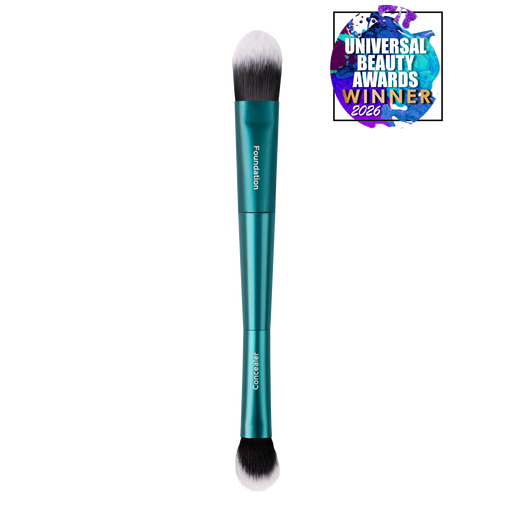
Why This Fits Their Persona: Two complexion tools in one handle make this practical for beginners building a compact collection or commuters carrying a smaller make-up bag.
It avoids paying for multiple similar tools by combining a larger foundation end with a smaller concealer end.
Synthetic bristles; paddle shapes for liquid and cream products; targeted end for concealer around the eyes and nose.
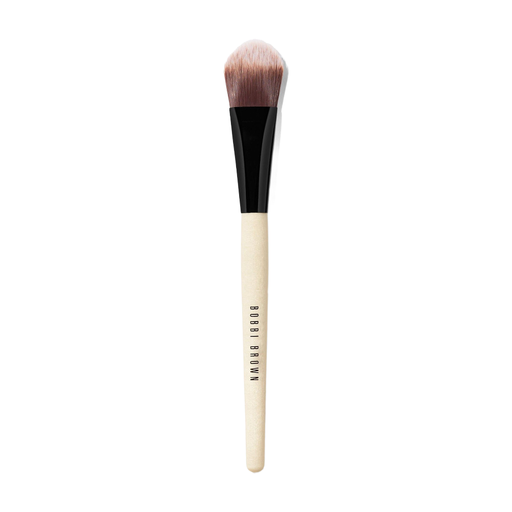
Why This Fits Their Persona: Suitable for shoppers who want a dedicated foundation tool with a controlled handle and a shape designed for layered base application.
The listing specifies an angled, domed head and synthetic bristles, rather than relying only on vague finish-related language.
Works with cream and liquid foundation; weighted handle; synthetic angled head for controlled application.
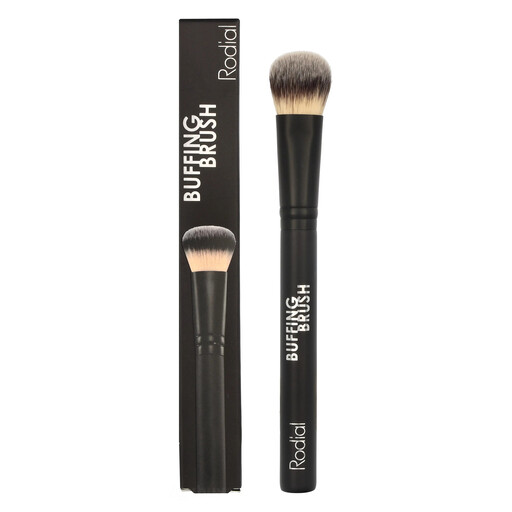
Why This Fits Their Persona: A versatile option for shoppers who move between primer, foundation, concealer, cream bronzer and cream blush in one routine.
Its stated formula range helps buyers assess suitability before purchase, instead of assuming a single brush is automatically universal.
Densely packed dome-shaped head; synthetic fibres; domed tip for areas around the nose and under the eyes.
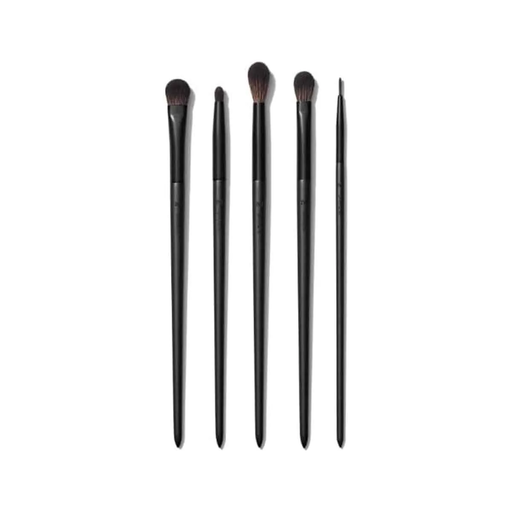
Why This Fits Their Persona: Suitable for shoppers who create varied eye looks and need separate tools for shading, blending, buffing and definition.
The five-piece format has distinct eye applications, reducing the chance of buying several brushes with the same function.
Synthetic bristles; pointed tips; tools for shading, blending, buffing and defining; vegan materials stated in the listing.
We have compiled a complete, real-time list of products that fully satisfy these strict selection criteria and UK safety regulations.
A practical starting collection is around five tools: a foundation brush, powder brush, blush brush, eyeshadow brush and brow brush. Add a concealer brush or eyeliner brush if those applications are part of your routine.
Clean brushes used with liquid or cream products at least weekly, or more frequently if they are used daily. Powder brushes may need cleaning less often, but regular washing helps remove product residue and maintain the brush shape.
Yes, many synthetic makeup brushes are designed for liquid and cream formulas. Check the product listing for stated compatibility and choose a dense, suitable shape such as a paddle, angled or domed foundation brush.