Map-and-menu management players
If you regularly read tooltips, tables and detailed maps, compare resolution, screen dimensions and comfortable placement before prioritising extreme refresh rates.


Start with a QHD monitor that fits your desk and viewing distance: a 27-inch screen offers a larger physical display, while a compact QHD model may be easier to place in a shared bedroom. If management games are your main use, check positioning, reflections and private audio before making a high refresh rate the deciding feature; 144Hz–180Hz becomes more relevant if you also play fast-action games.
If you regularly read tooltips, tables and detailed maps, compare resolution, screen dimensions and comfortable placement before prioritising extreme refresh rates.
A limited desk and another person’s need for quiet make stand footprint, reflections and a plan for private audio part of the monitor choice.
If faster games share time with management titles, refresh rate and adaptive-sync compatibility deserve attention alongside interface detail and room fit.
For management games in a shared bedroom, settle the screen’s resolution and physical fit before deciding how much fast-game capability you need.
| Concern | What to check | Who this matters to |
|---|---|---|
| Interface and map detail | Compare native resolution and screen size; check how your games handle interface scaling. QHD has a 2560 × 1440 pixel grid, but does not guarantee physically larger text. | When I spend a session reading maps, tables and tooltips, I want enough detail without losing track of the interface. Around 46% of consumers put readable detail first. |
| Shared-room fit | Measure desk depth and the stand footprint; check adjustment options, reflections and a suitable private-audio connection. | If someone else is studying or sleeping nearby, I need the screen to sit comfortably without glare or disruptive sound. For around 36% of consumers, considerate room use is the primary concern. |
| Faster-game crossover | Check the refresh rate available at your intended resolution and port, plus graphics-hardware and adaptive-sync compatibility. | I mainly play management games but also want the display to accommodate fast-moving titles when my computer can supply the frames. That crossover need comes first for around 18% of consumers. |
A 180Hz specification does not tell you how much room a management game has for maps or menus. LG UK and AOC UK list high-refresh Full HD and QHD models, so refresh rate alone does not settle that choice.
Start with your main games, native resolution and the space available for the screen. Give higher refresh rates more weight if you also play fast-action titles.
A diagonal screen size leaves out the stand footprint and the distance between your eyes and the display. Ergotron suggests at least 51 cm as a starting viewing distance, with more room for a larger screen.
Measure desk width, depth and clearance against the chosen model’s full dimensions, including its stand.
If the stand takes too much desk space, an alternative arm or stand may be needed, subject to mount and furniture compatibility.
Speakers may be convenient for one person but unsuitable when a room-mate needs quiet. Audio connections also differ between models.
Plan how you will listen privately and check the chosen monitor’s headphone output or a suitable connection on your computer or console.
Depending on those connections, private listening may call for headphones or an audio adapter.
Energy information gives you a more relevant basis for comparing electricity use than a general efficiency claim. The Department for Energy Security and Net Zero and the Office for Product Safety and Standards say products within UK energy-labelling scope must be supplied with an accurate printed energy label.
Check the energy information for the particular monitor and compare figures on the same basis.
Dell’s S2725DS illustrates a 27-inch QHD screen with positioning and audio features worth considering for a desk used for both games and other tasks.
LG’s 27GS60F-B illustrates a 27-inch gaming-monitor route for someone who also values high-refresh play.
BenQ’s GW2790 and GW2790C illustrate shared-desk features such as built-in audio, mounting options and, on the GW2790C, a headphone jack.
AOC’s 23.8-inch models illustrate compact Full HD and QHD formats for a desk with limited space.
These QHD monitors offer different approaches to a management-game desk, from gaming-focused high-refresh screens to ProArt displays that may suit a desk also used for other tasks. Compare each model’s footprint, connections and audio arrangements against your shared room.
 No image available
Consider this 27-inch QHD model if you have room for a larger screen and also play faster games.
The product name specifies OLED and 240Hz. Check the full stand footprint, the private-audio connection and whether your computer and chosen port can deliver the resolution and refresh rate you intend to use.
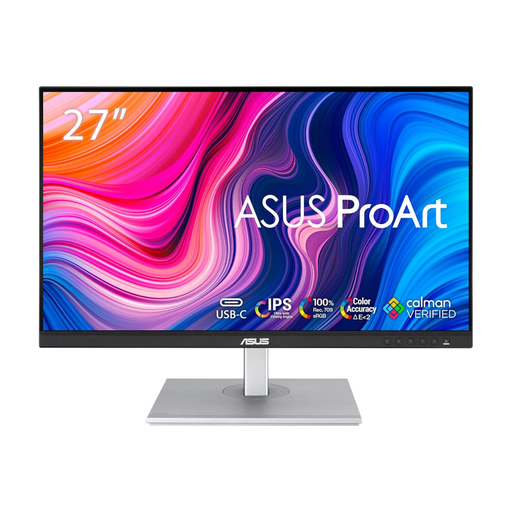 No image available
This WQHD model is worth comparing if management-game detail and other desk tasks both matter.
Check its dimensions and stand adjustment for your space. If you plan to connect a laptop by USB-C, confirm video support and charging requirements; plan a separate check of your private-audio connection.
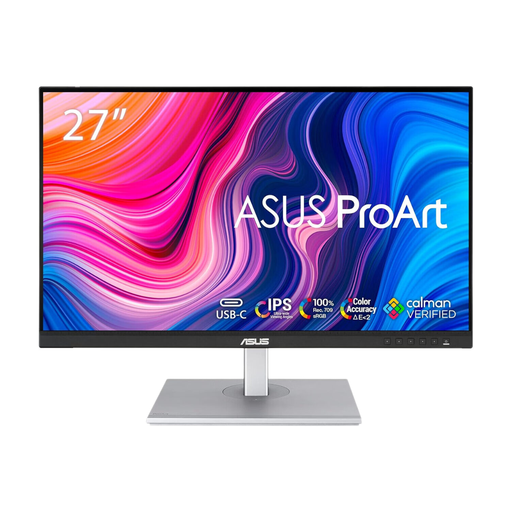 No image available
Consider this QHD screen when interface detail matters and a 100Hz specification meets your gaming needs.
Check desk fit and the connections on the exact variant you would buy, particularly if USB-C or private audio is important in your shared room.
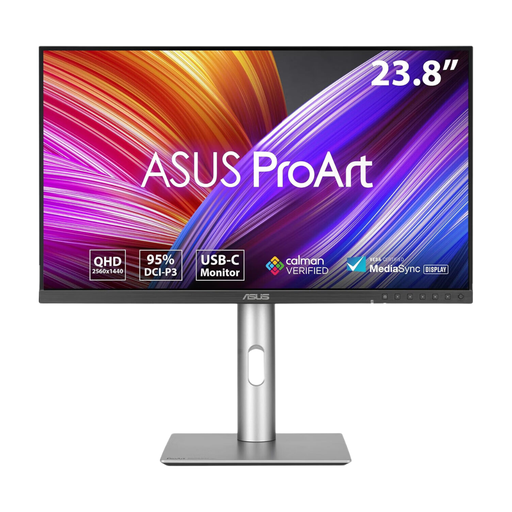 No image available
Compare this QHD model if you want a screen for management games and laptop tasks on the same desk.
Check its full dimensions and stand footprint before ordering. For laptop video over USB-C, confirm the laptop’s DisplayPort Alt Mode support; also check the refresh rate and private-audio connection you need.
 No image available
This 2560 × 1440 model combines a 27-inch format for management-game interfaces with a 220Hz specification for possible faster-game use.
Its glossy finish makes lighting placement worth checking. Confirm the stand adjustment and private-audio arrangement, as well as the resolution and refresh rate available from your computer’s chosen connection.
No: treat 180Hz as a crossover feature if you also play fast-action games and your computer can supply suitable frame rates through a supported connection. For management games as your main use, compare resolution, desk fit and positioning first.
Choose between them by measuring your desk and checking a comfortable viewing distance: 27-inch QHD provides a larger physical display, while a compact QHD model retains the 2560 × 1440 pixel grid in a smaller format. Ergotron suggests at least 51 cm from eyes to screen as a starting point, with more distance for a larger display.
Position the monitor and adjust the lighting so bright windows or lamps do not reflect in the screen. The UK Health and Safety Executive includes screen and lighting adjustment in its guidance on avoiding glare; check that your chosen stand allows a useful position at your desk.
They may suit some situations, but plan for private listening when someone else needs quiet. Check the exact model’s headphone connection or whether your computer or console can provide the output you need; BenQ UK, for example, lists a headphone jack on the GW2790C.
Check the energy information for the particular monitor before comparing electricity-use claims. UK guidance from the Department for Energy Security and Net Zero and the Office for Product Safety and Standards says products within energy-labelling scope must be supplied with an accurate printed energy label.