
24/7 Customer Support

Free returns

Same-day & Next-day Delivery

Quality Guaranteed

Unlock Your Welcome Offers: FREE Delivery | Up to 80% OFF | Free 30-day JoyPlus trial
Download the APP
A manual coffee grinder can give you more control over your brew without relying on electricity, but choosing the wrong model can make coffee preparation slow, inconsistent or unnecessarily difficult. UK buyers should look beyond attractive product photos and broad claims about precision.
The most common purchasing traps include:
This guide explains the specifications that matter, then matches several products to different brewing habits.
A burr grinder crushes coffee beans between two surfaces rather than chopping them with a blade. This gives users more control over particle size, which is important when adjusting a recipe.
A stainless steel burr grinder is a practical choice for regular home use because stainless steel is resistant to corrosion and can be cleaned with a dry brush. A conical burr coffee grinder uses cone-shaped burrs and is commonly selected for manual brewing because the design can fit into a compact body.
However, burr material alone does not guarantee a suitable grind. Check whether the product offers a clearly defined adjustment system and whether the burr assembly is supported securely. Dual-bearing construction, as listed for the STARESSO D6 PLUS, is designed to help keep the grinding mechanism positioned during use.
The adjustment mechanism should match the drinks you actually prepare:
An adjustable coffee grinder with a broad range is useful if you switch between methods. Do not assume that a grinder described as suitable for espresso will automatically provide café-style results: the coffee, dose, brewing equipment and technique also influence the cup.
Capacity is normally expressed in grams. A 20g capacity may be appropriate for a single serving, while larger households may prefer to grind in multiple batches only if the extra preparation time is acceptable.
For travel, consider the grinder’s height, diameter, handle design and total construction. A portable coffee grinder should be easy to hold securely and compact enough for a travel bag. A foldable handle can reduce the space required, while an all-metal body may add durability but also weight.
Cleaning is another non-negotiable specification. Look for a grinder that can be opened without specialist tools, then remove loose grounds with a soft, dry brush. Avoid abrasive cleaners unless the manufacturer specifically allows them. Any removable part should be completely dry before reassembly.
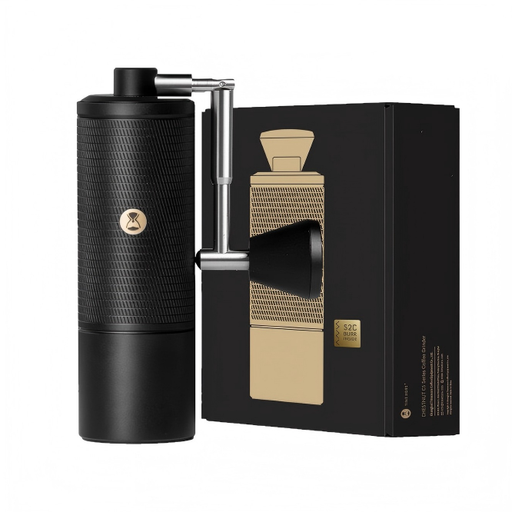
Why This Fits Their Persona: A straightforward option for beginners who want to start grinding fresh beans at home without adding an electrical appliance to the kitchen worktop.
It is presented as a dedicated manual grinder rather than relying on vague blade-grinder descriptions. Check the supplied adjustment details before selecting it for espresso.
Manual operation requires no electricity and the compact format is suitable for personal brewing and storage.
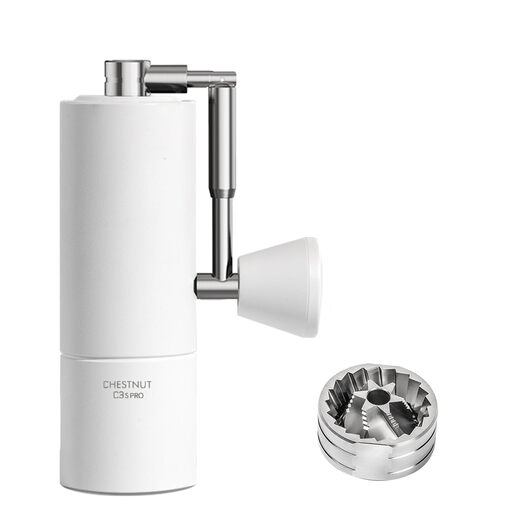
Why This Fits Their Persona: Suitable for drinkers who alternate between espresso, pour-over and French press and want one grinder with a stated stainless steel S2C conical burr and foldable handle.
The listed burr type and adjustable espresso-to-French-press range provide more useful information than a general precision slogan.
Stainless steel S2C conical burr; foldable handle; adjustable grind setting for multiple brewing styles.

Why This Fits Their Persona: Designed for users who want one 20g grinder for home, office, camping and travel, with adjustment from espresso-fine to coarse settings.
Its stated full-range, click-based adjustment and fully disassemblable structure address two common issues: limited grind choice and difficult cleaning.
20g capacity; stainless steel burr; dual ball-bearing structure; metal body with silicone handle grip.
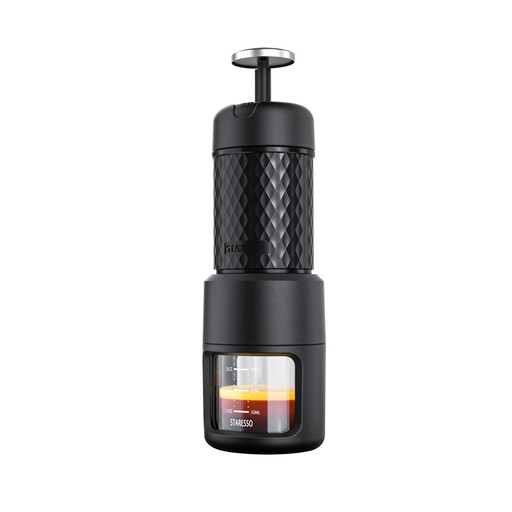
Why This Fits Their Persona: A practical match for office workers, students, campers and travellers who need a portable manual espresso machine without an electrical connection.
It lists both coffee capsule and coffee powder compatibility, reducing the need to buy a separate brewing system for different routines.
304 stainless steel inner liner; manual operation; 30ml, 60ml and 90ml markings; modular cleaning design.
A manual grinder is only part of the setup. For coarse coffee, pair it with a French press coffee pot and allow enough space for the coffee grounds to steep before pressing. For a pour-over routine, use a stable dripper and adjust the grind if water runs through too quickly or slowly.
For travel, a travel coffee maker or portable manual espresso machine may be more convenient than carrying a kettle, grinder and separate brewer. Remember that manual espresso equipment still requires hot water. With the STARESSO portable machine, the listed operating range is 85–95°C. Assemble and lock the parts securely before pressing, and rinse the modules after use.
A grinder with no electricity has no plug-in energy cost, but there is a time and effort cost for every dose. If you prepare several cups daily, prioritise a comfortable handle, stable grip and suitable capacity rather than choosing solely on portability.
We have compiled a complete, real-time list of products that fully satisfy these strict selection criteria and UK safety regulations.
It can be suitable when it provides a fine adjustment range and can grind consistently enough for your espresso setup. Manual grinding requires more physical effort than using an electric model, particularly when preparing multiple doses. Check the adjustment design, capacity and handle comfort before buying.
Lifespan depends on construction, frequency of use, cleaning and whether the grinder is forced through unsuitable materials. Regularly remove grounds with a dry brush, avoid excessive pressure on the handle and follow the manufacturer’s care instructions. Burrs and other moving parts may eventually need replacement, depending on the model.
A portable manual coffee grinder does not use electricity, so it avoids plug-in energy consumption. Its ongoing cost is mainly coffee beans and occasional replacement or maintenance parts. The trade-off is the time and effort needed to grind each serving by hand.