
24/7 Customer Support

Free returns

Same-day & Next-day Delivery

Quality Guaranteed

Unlock Your Welcome Offers: FREE Delivery | Up to 80% OFF | Free 30-day JoyPlus trial
Download the APP
Manuka honey can be a worthwhile addition to a kitchen cupboard, but premium pricing does not automatically mean a product suits your needs. UK shoppers commonly face three avoidable traps:
The right choice depends on origin, certification, flavour, format and how often you expect to use it.
Authentic New Zealand Manuka honey should clearly identify New Zealand as the country of origin. Look for a full ingredient list, batch information and a transparent description of whether it is multifloral Manuka honey or monofloral Manuka honey.
Packaging, certification and independent verification matter more than phrases such as “premium”, “pure” or “wellness boost”. Always compare the physical label with the online listing, as ingredients, pack sizes and instructions can change.
MGO, or methylglyoxal, is a naturally occurring compound used to indicate the measured concentration in honey. A rating such as MGO 40+, MGO 70+ or MGO 250+ means the product is labelled as meeting at least the stated threshold, subject to the product’s certification and testing information.
In practical terms:
MGO is not the same as a clinical treatment claim. It should be treated as a product specification, not a promise to prevent, cure or manage illness.
UMF Manuka honey uses the Unique Mānuka Factor system, which assesses authenticity and several quality markers. It is a separate system from MGO. For example, the product label may state UMF 10+ alongside an MGO figure, but shoppers should rely on the certification shown for that specific jar rather than attempting to convert ratings themselves.
Texture also affects usability. Creamy honey is convenient for toast and porridge, while a thicker consistency can be easier to take from a spoon. Natural crystallisation is not necessarily a fault; honey may become grainier during storage.
For regular household use, a 500g jar usually offers better cupboard convenience than a 225g or 250g format. Smaller jars can be more suitable when testing a flavour or selecting a higher-rated product.
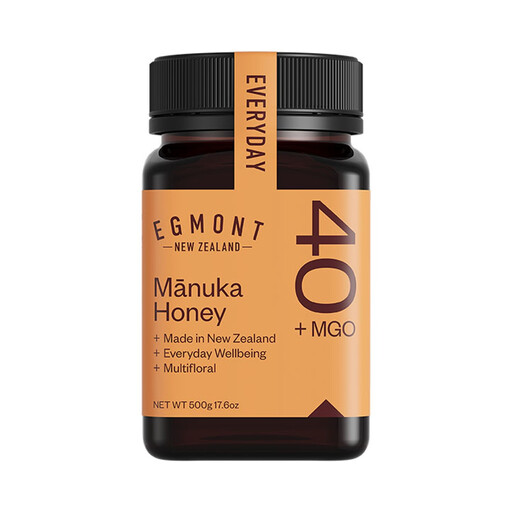
Why This Fits Their Persona: The 500g jar is suited to households wanting a natural honey sweetener for breakfast, drinks and baking without starting with a higher-priced rating.
It states the MGO 40+ rating, multifloral style and New Zealand origin, helping shoppers avoid vague “active honey” descriptions.
500g format; 100% New Zealand multifloral honey; suitable for adults and children over 12 months.

Why This Fits Their Persona: The monofloral format, UMF 10+ certification and 500g size suit shoppers prioritising traceability and a defined Mānuka profile.
It provides a named UMF certification and an independently tested MGO figure rather than relying only on premium wording.
Monofloral honey; UMF 10+ label; 500g format for repeated household use.

Why This Fits Their Persona: The higher MGO specification and smaller 250g jar suit shoppers seeking a concentrated, rich-flavoured honey for occasional spoonfuls or smoothies.
The stated MGO 250+ rating and monofloral origin make the product specification clear, while the smaller jar limits unused stock.
Monofloral New Zealand honey; MGO 250+ specification; 250g format for targeted purchasing.
We have compiled a complete, real-time list of products that fully satisfy these strict selection criteria and UK safety regulations.
Honey can be enjoyed on toast, cereal, yoghurt or in smoothies. If adding it to tea, use a warm rather than boiling liquid if you wish to preserve the product’s natural characteristics. Store the jar according to its label, usually in a cool, dry place away from direct sunlight.
Remember that honey is mostly carbohydrate and sugar. Anyone managing diabetes or blood glucose should seek suitable professional advice before making it part of a regular routine. Do not give any honey to infants under 12 months, and check the label if allergies to honey, bees or pollen are a concern.
It is not suitable for infants under 12 months. For older children, check the specific product label and consider its sugar content, allergies and serving size. A product listing stating “immune support honey” does not replace advice from a healthcare professional.
They indicate different minimum MGO thresholds stated on the relevant product. MGO 250+ represents a higher labelled threshold than MGO 40+ or MGO 70+, but the numbers do not guarantee a particular medical effect. Select according to budget, flavour preference and intended use.
Honey may crystallise naturally, particularly when stored in cooler conditions. This changes the texture rather than necessarily indicating spoilage. Follow the jar’s best-before guidance and storage instructions, and avoid introducing water or food debris into the container.