
24/7 Customer Support

Free returns

Same-day & Next-day Delivery

Quality Guaranteed

Unlock Your Welcome Offers: FREE Delivery | Up to 80% OFF | Free 30-day JoyPlus trial
Download the APP
Navigating the world of Manuka honey can feel overwhelming. With jars on the shelf ranging from ?10 to over ?100, and labels covered in acronyms, it is easy to feel uncertain about what you are actually buying. Many health-conscious shoppers in the UK invest in Manuka honey for its unique properties, only to find they have overpaid for a product that offers little more than standard table honey.
As the Joybuy Product Recommendation Officer, my role is to help you understand the market and make informed choices. Before you spend your money, it is crucial to be aware of a few common pitfalls that can lead to disappointment.
To ensure you are getting authentic, effective Manuka honey, focus on these three core parameters. They are the true indicators of quality and will help you select a product that aligns with your wellness goals.
The most reliable indicator of a Manuka honey's unique properties is its rating. This is where you will see terms like MGO and UMF.
The type of nectar the bees collect is fundamental to the honey's final composition.
Authenticity is paramount. True Manuka honey only comes from New Zealand.
Based on these quality markers, we have matched a few products from our collection to different user needs. This approach helps ensure you are choosing the right honey for your specific lifestyle and budget.

Why This Fits Their Persona: This is an excellent starting point for anyone new to Manuka honey. It is ideal for incorporating into a daily routine—stirred into porridge, spread on toast or added to a smoothie—for general wellness support without the high cost of a monofloral option.
It features a clear, independently certified MGO 70+ rating, so you are not paying for a vague "active" claim. You know the exact minimum potency you are getting.
This is a raw manuka honey, meaning it is unpasteurised. The large 500g jar offers good value for families or individuals using it daily.

Why This Fits Their Persona: For those who understand the properties of Manuka and are seeking a higher concentration for more targeted manuka honey for immune support. This is a premium choice for the colder months or for those with active lifestyles.
It is a certified monofloral manuka honey, ensuring the nectar source is primarily Manuka. The dual UMF 10+ and MGO 265+ rating guarantees high potency and authenticity.
The UMF certification provides complete confidence in its origin, purity and strength. It has a rich, caramel-like flavour, making it pleasant to take directly from the spoon.
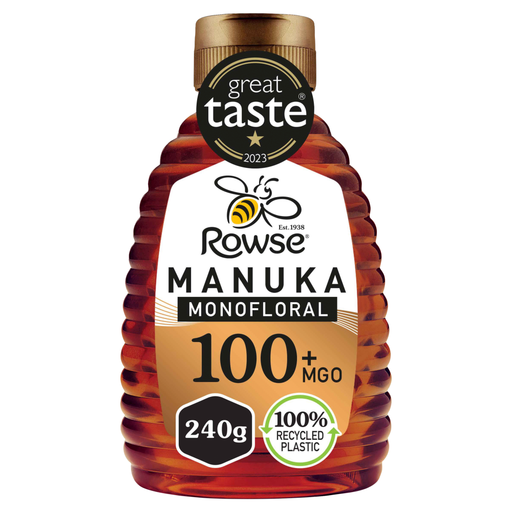
Why This Fits Their Persona: This is a reliable, mid-strength option from a familiar brand. It is perfect for those who want a consistent and convenient Manuka honey for their daily cup of tea or morning yogurt, offering a good balance of potency and accessibility.
The clear MGO 100+ rating on the front of the jar provides a trustworthy measure of potency, avoiding the pitfall of paying for a low-grade honey that lacks a meaningful MGO level.
It offers a popular mid-range potency that is versatile for various daily uses. The 240g jar size is convenient for trying out Manuka honey or for smaller households.
We have compiled a complete, real-time list of products that fully satisfy these strict selection criteria and UK safety regulations.
For general, everyday wellness support, such as adding to food and drinks, a Manuka honey with an MGO rating between 40+ and 100+ is typically sufficient. These grades offer a good balance of active compounds and value for daily consumption. Higher strengths, such as MGO 250+ or more, are often chosen by individuals seeking more concentrated, targeted support.
To get the most from your raw manuka honey, it is advisable to add it to warm, not boiling, liquids. Extremely high temperatures can degrade some of the natural enzymes and beneficial compounds. For best results, allow your tea or hot water to cool for a few minutes before stirring in the honey.
The premium price of genuine New Zealand manuka honey is due to several factors. The Manuka tree's flowers only bloom for a short period of 2-6 weeks each year, and they often grow in remote, rugged terrain, making harvesting a challenge. Furthermore, the rigorous scientific testing and certification process required to verify the MGO and UMF ratings is costly. These factors, combined with the unique and valued properties of this antibacterial honey, contribute to its higher price compared to standard honeys.