
24/7 Customer Support

Free returns

Same-day & Next-day Delivery

Quality Guaranteed

Unlock Your Welcome Offers: FREE Delivery | Up to 80% OFF | Free 30-day JoyPlus trial
Download the APP
New Zealand Mānuka honey is widely sold as a premium natural sweetener, but the jar price alone does not tell you whether it suits your household or daily routine. Ratings, floral source, processing and pack size all affect what you receive.
Marketing language can also make comparison difficult. A product may use words such as “active”, “raw” or “premium” without clearly explaining the measurable rating or country of origin. This guide focuses on the practical details that help UK shoppers compare authentic New Zealand honey without paying for features they do not need.
MGO Mānuka honey is graded by its stated concentration of methylglyoxal, measured in milligrams per kilogram. A higher number generally indicates a higher labelled MGO level, but it does not automatically mean the honey is more suitable for everyday use.
UMF 10+ honey is assessed under the UMF quality system, which covers more than one characteristic. Do not assume that every MGO and UMF number can be directly swapped. Look for the exact certification shown on the product label and check whether the jar is independently certified.
Raw honey or unpasteurised Mānuka honey may retain its naturally occurring characteristics because it has not undergone pasteurisation. However, “raw” does not by itself prove that the honey is from New Zealand or that it contains a particular MGO level.
Check the ingredient list, country of origin, producer details, batch information and certification marks. A clear statement such as “100% New Zealand Mānuka honey” is more useful than vague references to “Mānuka-inspired” flavour.
Mānuka honey remains a sugar-containing food. If your main purpose is toast, porridge, tea or baking, a lower-rated multifloral jar may offer better value. A higher-rated monofloral honey can make more sense when you specifically want a stronger flavour, a thicker texture or a clearly stated MGO specification.
Ratings such as MGO 40+, MGO 70+, MGO 100+ and MGO 250+ describe the minimum or stated level shown by the product specification. The exact wording can vary between products, so read the current packaging before purchase.
For a simple daily sweetener, MGO 40+ or MGO 70+ may be a reasonable starting point. MGO 100+ offers a higher labelled rating, while MGO 250+ is positioned towards shoppers seeking a more concentrated Mānuka profile. These ratings should not be presented as medical or therapeutic guarantees.
Multifloral Mānuka honey combines Mānuka nectar with nectar from other flowers. It often has a milder, more rounded taste and can work well in cereal, yoghurt, smoothies and warm drinks.
Monofloral Mānuka honey is sourced predominantly from the Mānuka plant. It commonly has a deeper flavour and may carry a higher MGO rating. Buyers seeking a distinctive caramel or toffee taste may prefer this style, although flavour and texture still vary by harvest.
A Mānuka honey 250g jar is useful if you are trying a new rating or consume honey occasionally. A Mānuka honey 500g jar may suit families or households using it regularly, provided the larger quantity will be used before the best-before date.
The ingredient list should be short: ideally, 100% honey, with no refined sugar, artificial flavourings or unnecessary additives. Store honey in a cool, dry place away from direct sunlight and moisture. Crystallisation can occur naturally and does not necessarily indicate spoilage. Follow the storage instructions on the jar.
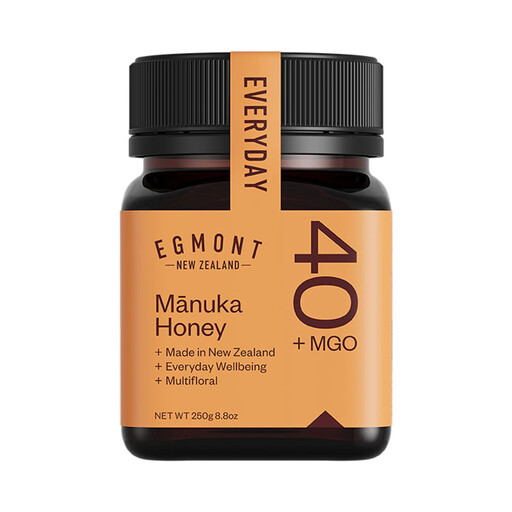
Why This Fits Their Persona: The 250g jar offers a practical way to try multifloral raw honey without committing to a larger pack.
Its listed MGO 40+ rating and 100% New Zealand multifloral ingredient description are clearer than relying on generic “active” wording.
250g size; raw and unpasteurised specification; mild floral flavour described for everyday use.
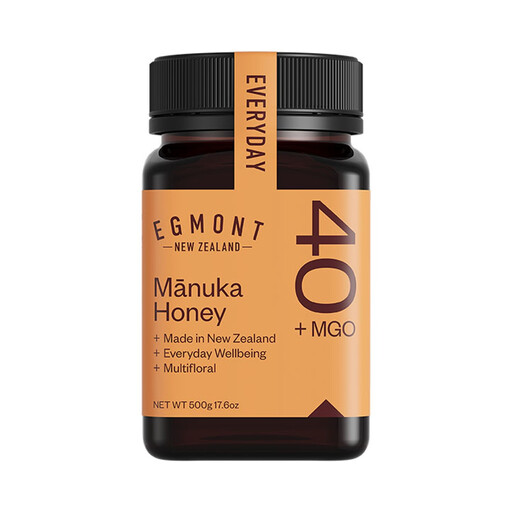
Why This Fits Their Persona: The larger jar suits regular breakfast use, family sharing and replacing refined sugar in selected recipes.
The pack states a multifloral source, raw processing and MGO 40+ rating, rather than implying that all Mānuka honey has the same specification.
500g format; 100% honey ingredient listing; suitable for use in porridge, yoghurt and smoothies.

Why This Fits Their Persona: This option is aimed at shoppers who specifically want a high listed rating, monofloral sourcing and a deeper caramel-toffee flavour.
The product description identifies monofloral sourcing and an MGO 250+ rating, helping buyers distinguish it from lower-rated multifloral jars.
Monofloral specification; MGO 250+ rating; 500g quantity for regular use.

Why This Fits Their Persona: The smaller jar suits shoppers wanting a high-rated Mānuka honey for occasional throat comfort or a concentrated-flavour routine.
The listed 250g size limits commitment, while the stated monofloral source and MGO 250+ rating make the intended use clearer.
250g format; thick texture and dark caramel flavour are listed product characteristics.
We have compiled a complete, real-time list of products that fully satisfy these strict selection criteria and UK safety regulations.
Honey should not be given to infants under 12 months because of the risk of infant botulism. For older children, follow the product label and consider the sugar content. Anyone with a honey or bee-product allergy should avoid it and seek appropriate medical advice if unsure.
MGO is a product measurement, not a guarantee of a health outcome. A higher rating may affect price, flavour and intended positioning, but Mānuka honey should not replace a varied diet, prescribed treatment or professional medical advice.
Honey can keep for a considerable period when sealed and stored correctly, but always follow the best-before date and storage instructions on the label. Use a clean, dry spoon, close the lid after each serving and keep the jar away from heat, sunlight and moisture.