
24/7 Customer Support

Free returns

Same-day & Next-day Delivery

Quality Guaranteed

Unlock Your Welcome Offers: FREE Delivery | Up to 80% OFF | Free 30-day JoyPlus trial
Download the APP
New Zealand Manuka honey is often sold with impressive-sounding descriptions, but the label can matter more than the marketing. UK shoppers comparing jars for breakfast, warm drinks, family cupboards or occasional throat comfort need to look beyond words such as “premium”, “active” and “raw”.
Three common buying pitfalls are worth avoiding:
MGO Manuka honey is labelled according to its stated methylglyoxal content, usually expressed in milligrams per kilogram. As a straightforward guide:
The number should be treated as a product specification, not a guarantee of medical results. Check that the jar clearly states the MGO level, net weight, ingredients, country of origin and batch or best-before information.
Multifloral Manuka honey contains Mānuka nectar alongside nectar from other flowers. This can create a lighter, smoother or more varied flavour and is often suitable for everyday use.
Monofloral Manuka honey is sourced primarily from Mānuka flowers. It commonly has a more concentrated, dark caramel or toffee profile. If you are buying monofloral honey, look for a recognised certification or independently verified quality mark on the packaging rather than relying only on the product title.
The term raw Manuka honey generally refers to honey that has not been pasteurised or heavily heat-treated. Raw honey may naturally crystallise. That is not necessarily a quality fault, although storage conditions and the manufacturer’s instructions should always take priority.
A 250g Manuka honey jar is useful for occasional use, gifting or testing a new MGO level. A 500g Manuka honey jar is more suitable for households that regularly add honey to toast, porridge, yoghurt or warm drinks.
For authenticity, review the complete label rather than one badge in isolation. Look for:
Certification schemes can differ. For example, one product may display an MGO rating, while another may also carry a UMF mark. These systems are not identical, so compare like with like and confirm the current packaging before purchase.
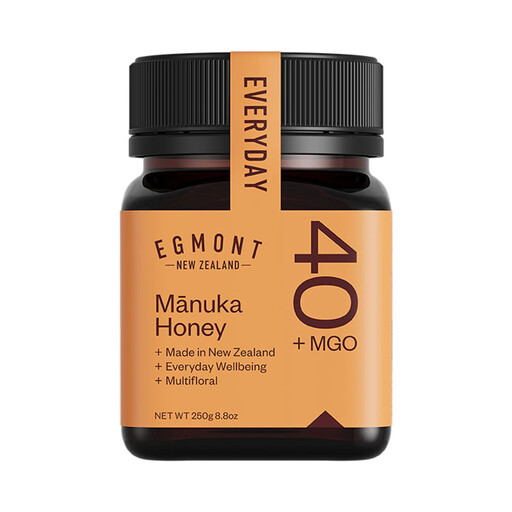
Why This Fits Their Persona: The 500g format suits regular household use, while MGO 40+ offers an accessible starting point for shoppers who mainly want a New Zealand honey for toast, porridge or drinks.
Its listing identifies the honey as multifloral, raw and MGO 40+, making the floral type and stated strength clearer than vague “active honey” wording.
500g family-sized jar; 100% New Zealand multifloral honey listed with no artificial additives.

Why This Fits Their Persona: This is aimed at shoppers who specifically want monofloral honey, a higher MGO specification and a substantial jar for measured daily use.
The listing identifies it as monofloral and MGO 250+, rather than leaving buyers to infer strength from premium-style language.
Monofloral format; listed MGO 250+ level; 500g size and dark caramel flavour profile.

Why This Fits Their Persona: The 250g jar suits shoppers who want an MGO 100+ option for occasional use, travel or a more controlled serving routine.
It gives the buyer a defined MGO 100+ specification and smaller format, avoiding the assumption that a larger jar is automatically more suitable.
MGO 100+ listed level; multifloral raw honey; compact 250g jar for measured use.
We have compiled a complete, real-time list of products that fully satisfy these strict selection criteria and UK safety regulations.
Honey is naturally high in sugar, so include it within a balanced diet and follow the product label. Anyone monitoring carbohydrate intake should account for the serving size. People with honey or bee-product allergies should check the ingredients and seek appropriate advice.
Do not give honey to infants under 12 months, because of the risk of infant botulism. For older children, follow household dietary guidance and the product label. Store the jar tightly closed in a cool, dry place away from direct sunlight. Raw honey may crystallise; gentle warming can soften it, but avoid overheating and never add it to boiling liquids if you wish to preserve its original texture and flavour.
It depends on your intended use. For spreading and cooking, MGO 40+ or MGO 70+ may provide a practical entry point. Higher MGO levels cost more because they are positioned as higher-strength products. Compare the MGO level, net weight and price per 100g rather than judging value from the front-label claims alone.
Raw Manuka honey is generally minimally processed or unpasteurised, depending on the manufacturer’s definition. It may have a thicker texture and can crystallise naturally. Check the product label for the precise processing description and storage instructions.
Choose 250g if you use honey occasionally, are testing a new floral profile or want a smaller purchase. Choose 500g if several people regularly use it in breakfasts, warm drinks or recipes. Always use a clean, dry spoon to reduce moisture entering the jar.