Brand and retailer references
These references describe relevant drink ranges and retailer categories; they do not indicate which products a retailer currently has in stock.
Lucozade
Lucozade Sport is a carbohydrate sports-drink option, distinct from the brand’s Lucozade Energy range.
- Tesco lists approximately 16 g carbohydrate per 250 ml for Lucozade Sport Orange 500 ml.
- Check how the serving you will drink fits your practised hourly carbohydrate and fluid plan.
Red Bull
A sparkling energy-drink range that includes original and sugar-free choices.
- Red Bull UK says its sugar-free products retain caffeine and taurine while using non-caloric sweeteners instead of sugars.
- Do not count a sugar-free variant as a source of carbohydrate for a long run.
Monster
Sparkling energy drinks with different sugar and caffeine amounts across the Original Green and Ultra variants.
- Monster Energy UK lists 160 mg caffeine and 55 g sugar per 500 ml for Original Green, and 150 mg caffeine and 0 g sugar per 500 ml for Ultra; its figures may vary by region.
- Check the whole can’s caffeine amount, and do not treat the zero-sugar variant as carbohydrate fuel.
Relentless
A sparkling energy-drink brand rather than a specified marathon sports-drink formulation.
- Relentless lists sugars, taurine and caffeine among the ingredients of its Cherry drink.
- The brand says Cherry is not recommended for children, people sensitive to caffeine, or those who are pregnant or nursing.
Tesco
A retailer whose drink categories distinguish sports drinks from energy drinks.
- Tesco lists Lucozade Sport as well as energy-drink products from Red Bull and Monster.
- Use the individual product’s nutrition panel to compare carbohydrate and caffeine; a browsing category cannot do that for you.
Sainsbury's
A retailer named on Relentless’s retailer page.
- Relentless identifies Sainsbury's as a retailer for its range.
- Check the particular drink’s label and local listing before making a product-specific decision.
Joybuy drinks to compare
These options include a Lucozade Sport multipack for drink-based carbohydrate planning and energy drinks to consider separately when comparing fizzy or caffeinated choices.
 No image available
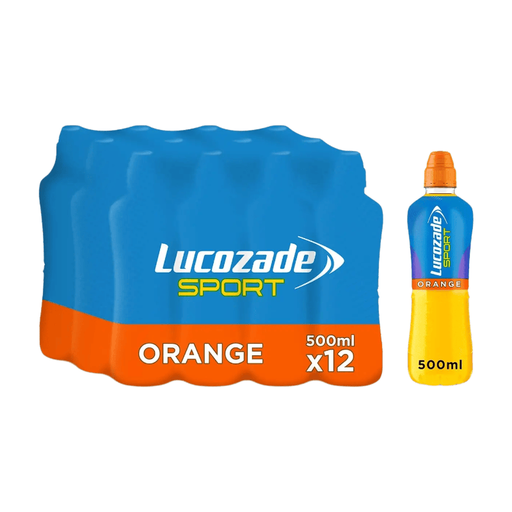
Lucozade Sport Orange 12 × 500 ml
Consider this sports-drink multipack if you want to include drink-based carbohydrate in a long-run plan. Tesco lists approximately 16 g carbohydrate per 250 ml for its Lucozade Sport Orange 500 ml bottle; check the multipack label and practise the amount you intend to drink. Check carbonation separately if fizz matters to you.
View on Joybuy
 No image available
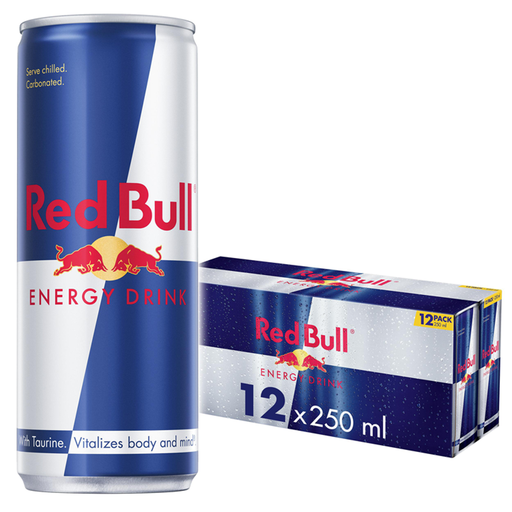
Red Bull Energy Drink 12 × 250 ml
This is a carbonated energy-drink choice to consider separately from a marathon fuelling plan. The Joybuy product description identifies a 12-pack of 250 ml cans containing sugars; check the can’s caffeine amount and count other caffeine sources before use.
View on Joybuy
 No image available
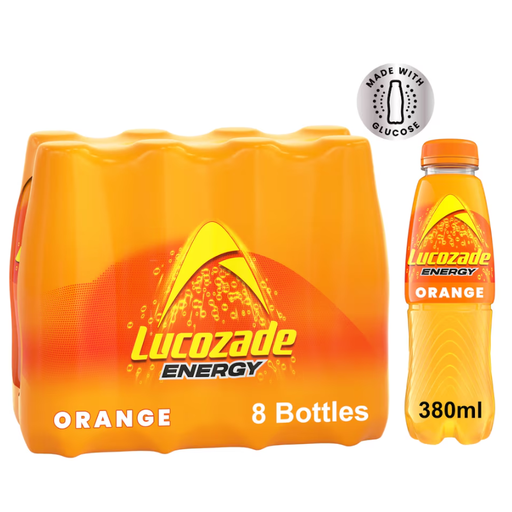
Lucozade Energy Orange 8 × 380 ml
Compare this Energy variant with Lucozade Sport by checking what each bottle contributes to your intended run-day plan. Check the 380 ml bottle’s carbohydrate, caffeine and carbonation information rather than assuming it has the same formulation as the sports drink.
View on Joybuy
 No image available
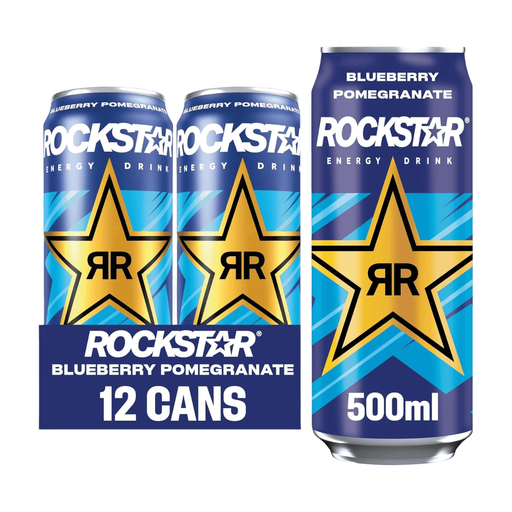
Rockstar Blueberry & Pomegranate 12 × 500 ml
If considering this 500 ml energy drink for a training day, compare the caffeine in a full can with everything else you expect to consume. Check its nutrition panel against your carbohydrate plan, and try the intended serving during training rather than on race day.
View on Joybuy
 No image available
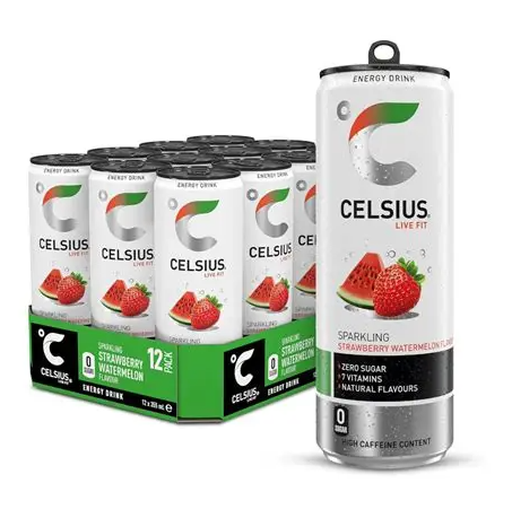
CELSIUS Watermelon Strawberry 12 × 355 ml
Consider the 355 ml can as a separate drink choice, not a substitute for calculating long-run carbohydrate intake. Check its current label for carbohydrate, caffeine and carbonation, and practise your intended drink strategy in training.
View on Joybuy
Questions about marathon-training drinks
Are energy drinks and sports drinks the same thing for marathon training?
No. The American College of Sports Medicine distinguishes energy drinks from sports drinks. For longer endurance events, World Athletics lists 30–60 g carbohydrate per hour for 1–2.5 hours and up to 90 g per hour beyond 2.5 hours. A carbohydrate sports drink can contribute to that plan; a caffeinated energy drink should not be treated as the whole strategy.
Can a sugar-free sparkling energy drink fuel a long run?
Not as a source of carbohydrate from the drink. Monster Energy UK lists 0 g sugar per 500 ml for Monster Ultra, and Red Bull UK says its sugar-free drinks replace sugars with non-caloric sweeteners. If you choose one, plan any carbohydrate needed for the run from another drink, gels or food, and practise that combination in training.
How should I assess caffeine before a run?
Count caffeine from the full drink and from coffee, gels and other sources consumed that day. The European Food Safety Authority’s 2015 assessment found no safety concern for the general healthy adult population at single doses up to 200 mg and daily intake from all sources up to 400 mg; those figures are not a running-performance recommendation. The NHS advises no more than 200 mg caffeine a day during pregnancy.
Should I try a fizzy drink for the first time on marathon day?
Try it on a comparable training run instead. The UK Sports Institute notes that what works before a run varies considerably between individuals, and research on carbonated drinks does not establish how a particular runner will tolerate a given serving. Practise the same drink, amount and timing you intend to use.
Is an under-16 energy-drink sales restriction already in force across the UK?
Do not assume there is a single UK-wide rule on that basis. In its July 2026 announcement, the UK Government said a ban on sales to under-16s in England of drinks other than tea or coffee containing more than 150 mg caffeine per litre was intended from April 2027, subject to Parliamentary approval. That announcement does not establish a current restriction across Scotland, Wales or Northern Ireland.


