Runners planning long sessions
A drink choice needs to fit the carbohydrate you plan to take during the session, alongside your fluid and sodium strategy. Orange flavour alone does not tell you what the drink supplies.


For a long marathon-training session, build a repeatable plan around carbohydrate, fluid and sodium rather than relying on sparkling orange drink as your main fuel. UK Sports Institute guidance highlights sodium in drinks used for rehydration, while the cited sparkling orange products differ substantially in carbohydrate and salt; if you enjoy one around a run, check its label and try the exact drink during training.
A drink choice needs to fit the carbohydrate you plan to take during the session, alongside your fluid and sodium strategy. Orange flavour alone does not tell you what the drink supplies.
Carbonation is not, by itself, a reason to rule out every drink. What matters for a particular run is the drink’s composition and whether you are comfortable consuming that amount while moving.
Still 100% orange juice, a sparkling juice drink and an orange-flavoured soft drink are different purchases. Check the product description and nutrition panel before assigning any of them a place in a fuelling plan.
Decide what the drink needs to do during the run before choosing an orange flavour for enjoyment around it.
Choose when: You need a repeatable carbohydrate plan for a long session, with fluid and sodium considered alongside it.
Trade-off: A sports drink, or food or gels paired with fluid, still needs a label check and a practice run to establish what you can comfortably use.
Choose when: You want a familiar, measured drink around training and already know how it fits your wider intake.
Trade-off: Juice contains free sugars, as the NHS notes, and should not be assumed to provide a complete fluid-and-sodium plan.
Choose when: You want orange fizz as an occasional drink around a run rather than your primary race fuel.
Trade-off: Juice content, carbohydrate and salt vary between products, and comfort with fizz needs an individual training trial.
| Priority | What to check | Your needs |
|---|---|---|
| Carbohydrate | Read grams per serving and the amount you intend to drink. A 2015 review indexed by PubMed describes guidance of 30–60 g of carbohydrate per hour for 1–2.5 hours of high-intensity exercise; match any plan to the actual session. | For a long run, I need to know what each serving contributes to my hourly plan, not just whether it tastes sweet. |
| Fluid and sodium | Check drink volume and declared salt or sodium together. The UK Sports Institute says sodium-containing drinks help retain consumed fluid. | If I am using a drink for rehydration, carbohydrate alone does not answer my fluid-and-sodium question. |
| Comfort with fizz | Try the exact drink and amount during training. A 1994 study published in the International Journal of Sport Nutrition found no difference in measured fluid and electrolyte responses between the drinks it tested, but that result cannot establish comfort with every retail drink. | I enjoy fizz, but I want to know how this particular drink feels during my run before using it in a planned routine. |
| Drink identity | Check whether the pack says 100% juice, juice drink or soft drink; then read its juice percentage, ingredients, carbohydrate and salt. | When I pick up an orange drink, I want to know what is in that product rather than treating every orange label as the same kind of juice. |
The word “orange” does not establish the juice content. For example, Marks & Spencer lists its Sparkling Brazilian Orange with 13% orange juice from concentrate and 5% comminuted orange, while Sainsbury’s lists Sanpellegrino Orange with 16% orange juice from concentrate.
Read the exact pack description, ingredients and nutrition panel before comparing it with still juice.
Marks & Spencer lists less than 0.01 g salt per 100 g for Sparkling Brazilian Orange. UK Sports Institute guidance identifies sodium as relevant to retaining consumed fluid, so a drink’s orange flavour or carbohydrate content cannot settle the rehydration question.
If rehydration is the aim, assess the fluid amount and declared salt or sodium alongside the rest of your plan.
Sainsbury’s lists 14.5 g carbohydrate per 330 ml can of Sanpellegrino Orange. That is less than the 30–60 g per hour described in the cited 2015 endurance review for 1–2.5 hours of high-intensity exercise; adding servings also changes how much you must carry and drink.
Work out the carbohydrate and fluid you intend to take each hour, then practise that routine in training.
Relying on several cans may add a carrying and drinking burden during a run.
The NHS counts sugars in unsweetened fruit juice as free sugars and gives general advice to limit juice and smoothies to a combined 150 ml a day. That everyday guidance is not an individual marathon-fuelling prescription.
Consider ordinary drinking habits separately from a planned training session, particularly if you sip juice frequently.
M&S lists still orange juice as well as a sparkling orange beverage; the two serve different shopping decisions.
A reference point when comparing still orange juice formats.
Another still-juice reference for shoppers deciding between smooth juice and juice with bits.
Its listings illustrate why still orange juice and sparkling orange soft drinks need separate label checks.
Its sparkling orange listings show why the exact product matters more than the shared flavour.
These orange soda and soft-drink options are for comparing fizzy drinks around training, not a selection of complete marathon-fuelling plans. Use the exact pack label when calculating what a serving contributes.
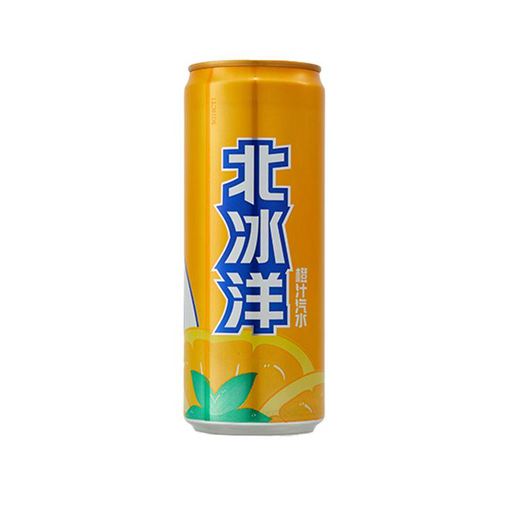 No image available
A 330ML orange soda to consider if you want fizz around a run. Check its carbohydrate and salt on the pack before including it in a fuelling or hydration plan, and try it during training first.
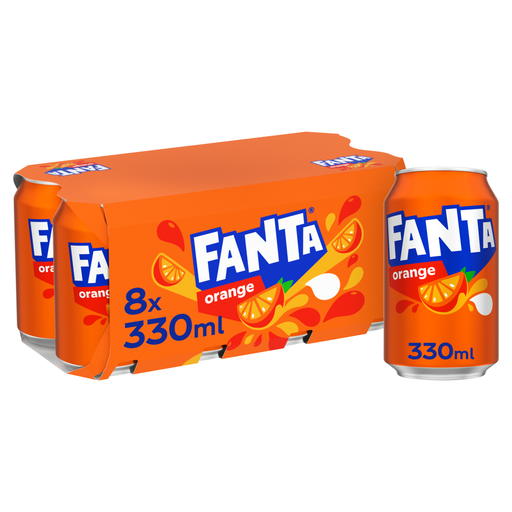 No image available
An eight-pack of 330ml orange soft drinks for someone choosing individual cans around training. A can is not, on its own, an hourly carbohydrate-and-sodium plan; check the current nutrition and ingredients panels.
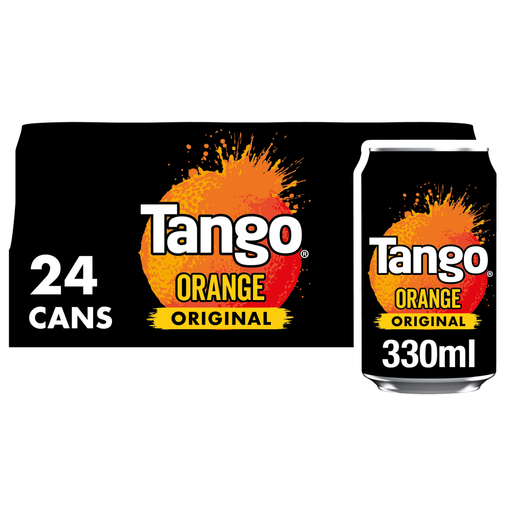 No image available
A 24-pack of 330ml orange drinks for occasional fizz around training. Check carbohydrate and salt per can rather than assuming the multipack format makes it suitable as your running drink; check the ingredients if phenylalanine is relevant to you.
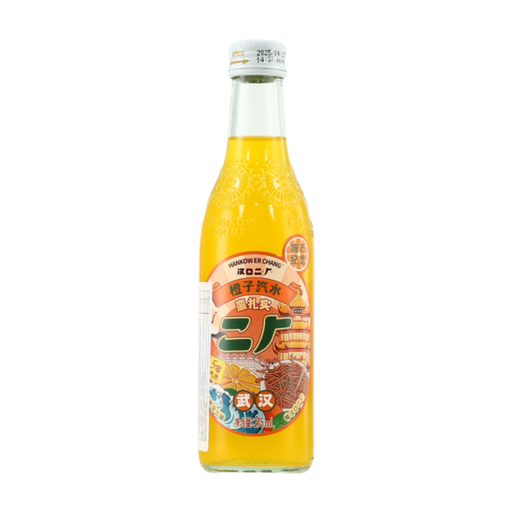 No image available
A 275ml orange-flavoured soda drink if you prefer a smaller bottle around training. Use the exact pack’s carbohydrate and salt values for any fuelling calculation, and try the drink before relying on it during a run.
Do not assume one can provides a complete plan. A 2015 endurance review indexed by PubMed describes 30–60 g carbohydrate per hour for 1–2.5 hours of high-intensity exercise, while Sainsbury’s lists 14.5 g carbohydrate in a 330 ml can of Sanpellegrino Orange. Plan the total carbohydrate, fluid and sodium for your session, then practise how you will take them.
No blanket conclusion follows from carbonation alone. A 1994 study in the International Journal of Sport Nutrition found no difference in measured fluid and electrolyte responses between the drinks it tested, but it does not establish your comfort with a particular orange drink. Try the exact product and amount in training.
No. Marks & Spencer lists 13% orange juice from concentrate plus 5% comminuted orange in Sparkling Brazilian Orange; Sainsbury’s lists 16% orange juice from concentrate in Sanpellegrino Orange. Check the description and ingredients on the product you are buying.
The NHS advises limiting fruit juices and smoothies to a combined 150 ml a day as general dietary guidance, and counts sugars in unsweetened juice as free sugars. That figure is not an individually tailored marathon-fuelling target; consider your training plan and ordinary drinking habits as distinct decisions.