Runners reducing sugar in everyday drinks
If you enjoy tonic outside training, compare its sugar content without expecting it to contribute carbohydrate to a run.


Choose a diet or zero-sugar tonic when you want a lower-sugar mixer outside your training fuel plan, not as the carbohydrate source for a long run or marathon. World Athletics advises a personalised, practised approach to fluid and carbohydrate intake during prolonged exercise; a regular tonic may contain sugar, but that alone does not make it a suitable substitute for a planned fuelling strategy.
The useful distinction is whether the drink is for an ordinary mixer occasion or part of a long-run fuelling plan.
If you enjoy tonic outside training, compare its sugar content without expecting it to contribute carbohydrate to a run.
If a drink or food needs to contribute to your carbohydrate intake during prolonged exercise, choose it as part of a quantified plan that you practise in training.
If you are choosing tonic for its flavour, compare the ingredients, sugars and energy on the label separately from your training food and fluids.
Choose when: you want tonic flavour for an occasion outside your fuelling plan.
Trade-off: little or no sugar also means little or no carbohydrate contribution to that plan.
Choose when: you prefer that mixer and are prepared to account for the carbohydrate shown on its label.
Trade-off: containing sugar does not, by itself, make a tonic a planned endurance drink.
Choose when: food or drink must contribute to a long-run, race-rehearsal or marathon fuelling plan.
Trade-off: the amount, format and fluid intake need planning and practice around your own tolerance.
| Priority | What to check | Your needs |
|---|---|---|
| Carbohydrate for prolonged running | Check carbohydrate per serving and how each serving fits your hourly plan. World Athletics indicates 30–60 g per hour for endurance exercise lasting 1–2.5 hours and up to 90 g per hour beyond 2.5 hours; its guidance also calls for an individualised, practised plan. | For a long run or race, I need to know how much carbohydrate my planned food and drink will provide, rather than relying on a mixer’s name or sweetness. |
| Fluid and practical use | Plan fluid alongside carbohydrate, and check whether the amount and format are practical to use during training. Practise the plan before racing; World Athletics notes that gut discomfort and opportunities to consume fuel matter. | I want a drink and fuelling format I can carry, consume and practise during my own runs. |
| Sugar in an ordinary mixer | Compare sugars and carbohydrate per 100 ml, then calculate the amount in your intended serving. A product described as “light” is not necessarily sugar-free: Fentimans lists 3.4 g sugars per 100 ml for Naturally Light Tonic Water. | Outside training, I may prefer a tonic with less sugar, but that choice is separate from getting enough fuel for a run. |
| Ingredients and current label | Read the ingredient list and nutrition panel on the pack, particularly if sweeteners matter to you. Tesco advises that formulations and nutrition information can change. | Before buying, I want to know what is in the particular mixer I will drink, not assume that all diet tonics have the same recipe. |
Tesco Low Calorie Indian Tonic Water and the Schweppes Slimline tonic listed by Tesco each show 0 g carbohydrate per 100 ml. Neither figure contributes carbohydrate to a prolonged-run fuelling plan.
Choose a lower-sugar tonic for a mixer occasion, and plan the run’s carbohydrate and fluid intake separately.
Fentimans lists 3.4 g sugars per 100 ml for Naturally Light Tonic Water. A lighter-sounding product name does not tell you its sugar content.
Compare sugars, carbohydrate and energy per 100 ml, then check the amount in the serving you intend to pour.
Fentimans Premium Indian Tonic Water lists 4.4 g carbohydrate per 100 ml, but that number alone does not establish a suitable hourly intake or fluid strategy for a marathon.
If a sugar-containing drink forms part of a run, calculate its contribution from the label and practise the complete plan in training. World Athletics advises balancing carbohydrate and fluid intake with practical opportunities and gut-discomfort risk.
Recipes and nutrition information may change; Tesco specifically advises shoppers to read the label.
Check the current pack when the sugar content, ingredients or carbohydrate amount matters to your choice.
These examples illustrate differences between specific tonic products; a brand name alone does not establish a drink’s role in a training plan.
Tesco Low Calorie Indian Tonic Water is an own-label option for an ordinary lower-sugar mixer occasion.
Sainsbury's Diet Indian Tonic Water is an own-label diet tonic listed in a 1 L format.
Schweppes Slimline is a branded tonic option for shoppers comparing sugar content.
Fever-Tree offers regular and Refreshingly Light Indian tonic variants for different mixer preferences.
Fentimans offers Premium Indian and Naturally Light tonic variants for flavour-led mixer choices.
These tonic mixers offer choices for drinking outside a marathon fuelling plan. The Slimline option addresses a lower-sugar mixer preference; the light and Skinny variants should be assessed by their own pack labels rather than assumed to be sugar-free or suitable as endurance fuel.
 No image available
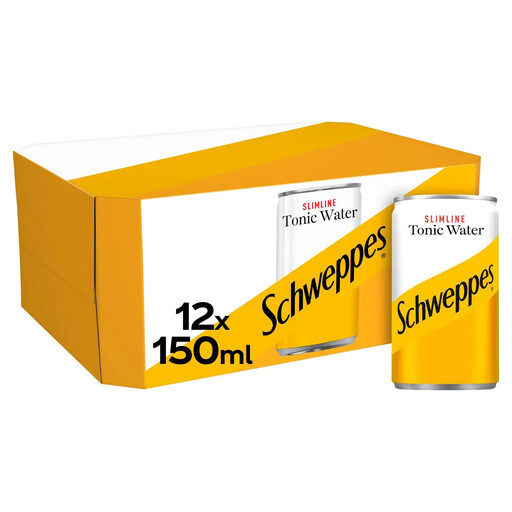
A tonic mixer to consider for occasions outside training, rather than as planned carbohydrate fuel. The listed pack contains 12 × 150 ml; check its current nutrition and ingredient label if sugar or sweetener content matters to you.
 No image available
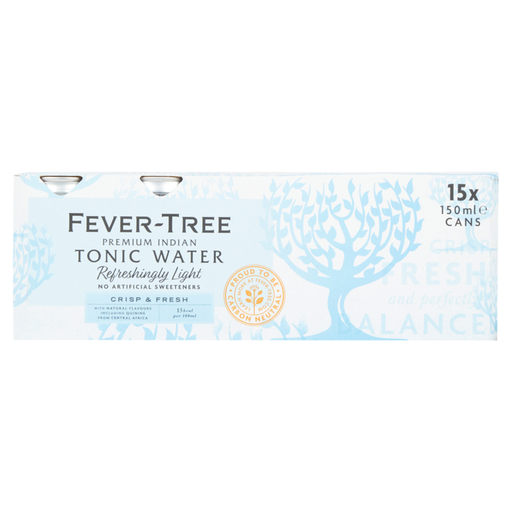
A light tonic mixer for occasions outside the fuelling plan, supplied as 15 × 150 ml. “Refreshingly Light” does not mean sugar-free; compare the current pack’s sugars and carbohydrate per serving before choosing it.
 No image available
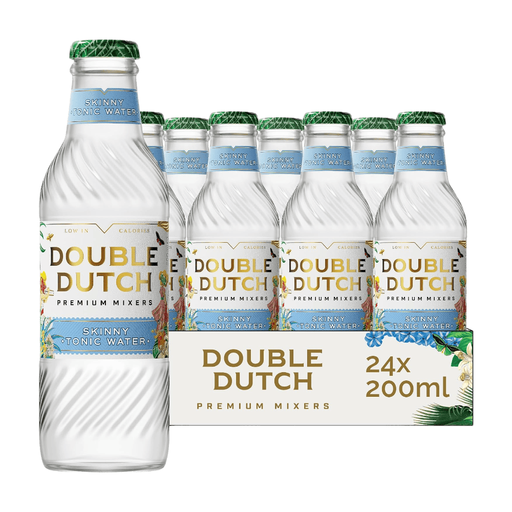
A tonic mixer in a listed pack of 24 × 200 ml. Do not use “Skinny” as a substitute for checking sugars and carbohydrate on the current pack, or assume this mixer fulfils a long-run fuelling plan.
Not as the carbohydrate component if its label lists no carbohydrate. Tesco Low Calorie Indian Tonic Water, for example, lists 0 g per 100 ml. World Athletics gives carbohydrate-intake guidance for prolonged endurance exercise, so plan an appropriate source separately when your run calls for fuel.
No. Fentimans lists 4.4 g carbohydrate per 100 ml for Premium Indian Tonic Water, but its contribution depends on how much you drink and the rest of your plan. For a long run, calculate intake from the label and practise the complete fluid and carbohydrate strategy in training.
Choose it as a mixer separately from your planned food and fluids. If sugar content matters, compare the current labels per 100 ml and per intended serving; Tesco Low Calorie, Sainsbury's Diet and Schweppes Slimline tonic products provide examples of labelled lower-sugar options.
Practise your chosen drink and fuelling format during training instead. World Athletics advises a personalised, practised race-nutrition plan that accounts for fluid, carbohydrate, practical opportunities and the risk of gut discomfort.