Runners comparing snack calories
If dried fruit is going into a meal or training snack, compare kcal per 100 g before considering how much of the pack you will eat. A small pack does not, by itself, mean a lower-calorie fruit.


For a lower-calorie dried-fruit choice, compare the exact packs on a per-100 g basis: Sainsbury's lists its SO Organic dried apricots at 228 kcal per 100 g and its prunes at 242 kcal per 100 g. For long-run fuel, calories alone are not the deciding measure; check carbohydrate per portion, ingredients and whether you can comfortably eat that portion during training.
If dried fruit is going into a meal or training snack, compare kcal per 100 g before considering how much of the pack you will eat. A small pack does not, by itself, mean a lower-calorie fruit.
If you plan to carry dried fruit on a run, carbohydrate per portion matters alongside pack size, chewing and how the food feels when eaten during exercise.
If sulphites, allergies or other dietary restrictions affect your choice, check the declaration on the exact pack. The Food Standards Agency notes that sulphur dioxide or sulphites are often used in dried fruit.
Start with the same per-100 g measure across products, then check what your intended portion supplies and whether its ingredients and format suit the occasion.
| Priority | What to check | Your needs |
|---|---|---|
| Calories and portion | Compare kcal per 100 g on the exact packs, then check the serving size. Sainsbury's lists SO Organic dried apricots at 228 kcal per 100 g, prunes at 242 kcal and mixed dried fruit at 324 kcal. | I want to compare fruit on equal terms before deciding how much to put in a snack or meal. |
| Carbohydrate for a run | Read carbohydrate grams for the portion you intend to carry. Sainsbury's lists 20.8 g per 30 g serving of its sultanas; the American College of Sports Medicine's 2025 endurance guidance discusses 30–60 g of carbohydrate per hour during exercise. | For a long run, I need to work out what my chosen portion contributes to my practised fuelling routine, rather than choosing by calories alone. |
| Texture and tolerance | Consider chewing, timing and fibre on the exact nutrition panel. Sainsbury's lists 8.8 g fibre per 100 g for its prunes; a different prune product needs its own label check. | Can I comfortably eat this fruit, in this portion, while running? I would try it during training rather than for the first time on race day. |
| Ingredients and warnings | Check the full ingredients and allergen declaration for the variant in hand. The Food Standards Agency notes that sulphites are often used in dried fruit; Sainsbury's 40 g apricots declare sulphur dioxide, while its SO Organic apricots list dried apricots as the ingredient. | I need a pack whose declared ingredients fit my requirements, without assuming that two apricot products have the same recipe. |
A lower-calorie portion may also deliver less carbohydrate than you planned to carry. The American College of Sports Medicine's endurance guidance discusses carbohydrate intake per hour, not a lowest-calorie food.
Decide whether the fruit is for an everyday snack or a run. For a run, calculate carbohydrate from the exact pack and practise the portion and timing in training.
Sainsbury's lists 324 kcal per 100 g for its mixed dried fruit, which contains sultanas, raisins, currants and candied mixed peel. Its SO Organic dried apricots list 228 kcal per 100 g and dried apricots as the ingredient.
Compare the nutrition panels on the same per-100 g basis and read the ingredients before substituting a mix for a single-fruit product.
Sulphur dioxide appears in the ingredients for Sainsbury's 40 g apricots and M&S Orchard Fruits Medley. An ingredient statement for another pack cannot establish what this one contains.
Check the current physical pack for sulphites and any other ingredients relevant to your requirements before eating it.
Dried fruit needs chewing, and the portion, fibre content and timing may affect whether it is practical to eat while running.
Try the exact product and intended portion on training runs. If that combination does not work for you, use a different fuelling approach you have practised.
These examples help identify label differences; a retailer or brand name does not determine the nutrition or ingredients of every product in its range.
Its checked own-label dried-fruit products include apricots, prunes, sultanas and mixed fruit in different pack sizes.
Its dried-fruit category lists several fruit types and pack formats, including dates, prunes, raisins and sultanas.
Orchard Fruits Medley is a mixed dried-fruit option rather than a plain single-fruit product.
Whitworths appears in dried-fruit listings with several fruit types and pack formats.
These Joybuy options cover figs, prunes, dates and longan for comparing dried-fruit formats. Check each product's current nutrition and ingredients before using it in a training snack or fuelling plan.
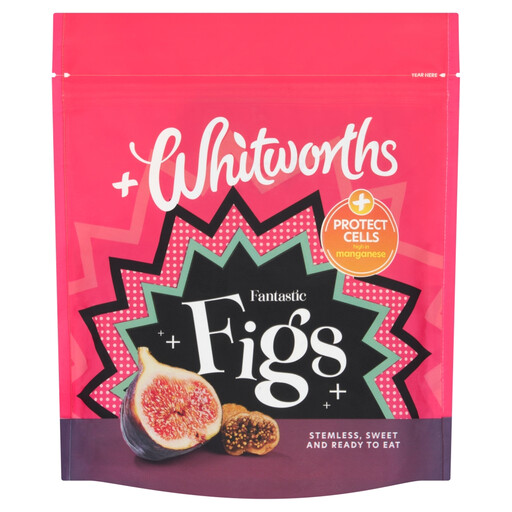 No image available
A fig option to compare with other dried fruit for snacks or planned run portions. Check the current pack for kcal and carbohydrate per 100 g, ingredients and allergen information.
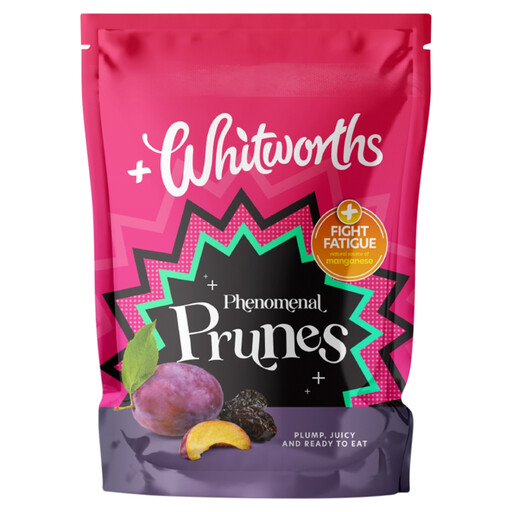 No image available
A prune format to consider if you plan to test a portion during training. Check the physical pack's allergen declaration before buying, particularly if a gluten declaration affects your choice.
 No image available
For a planned prune portion, compare the pack's carbohydrate and fibre figures with other products and try the intended amount during training.
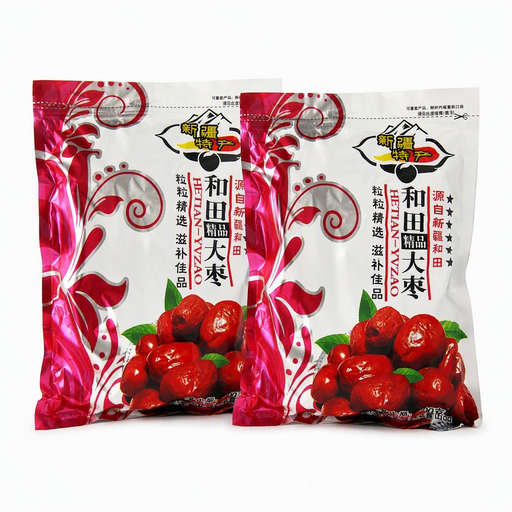 No image available
This two-pack of large dried dates is another fruit format to assess for planned portions. Compare the exact label's kcal and carbohydrate per 100 g rather than applying sultana figures to dates.
 No image available
Dried longan offers a different fruit and texture to try in a training snack. Check the physical pack for nutrition, fibre and allergen information when those details matter to your choice.
It depends on the exact fruit and portion. Sainsbury's lists its SO Organic dried apricots at 228 kcal per 100 g, its prunes at 242 kcal and its mixed dried fruit at 324 kcal. Those figures help compare the products, but carbohydrate per intended portion also matters when planning long-run fuel.
The NHS says 30 g of dried fruit counts as one 5 A Day portion. That definition is separate from the amount of carbohydrate you might plan to carry on a run; check the product's nutrition panel for the portion you intend to eat.
Do not assume a pack covers your whole fuelling plan. The American College of Sports Medicine's 2025 endurance guidance discusses 30–60 g carbohydrate per hour during exercise. Calculate what the exact dried-fruit portion supplies and practise your complete food and drink routine during training.
No single ingredient declaration applies to every dried-apricot product. Sainsbury's lists sulphur dioxide in its 40 g apricots, while its SO Organic apricots list dried apricots as the ingredient. Check the current pack of the variant you intend to eat.
Follow the storage instructions on the exact pack. Sainsbury's listing for its Ready To Eat Prunes 200 g specifies refrigeration after opening and use within four weeks; that instruction should not be assumed for every dried fruit.