What matters when choosing fuel?
Start with the carbohydrate portion and your planned intake schedule, then check how you will consume the product with fluids during a run. Practise the exact product and schedule in training rather than making the first trial on race day.
| Priority |
What to check |
Your needs |
| Portioned carbohydrate |
Read the carbohydrate amount per serving and decide how each portion fits your schedule. The Australian Institute of Sport gives 30–60 g per hour for endurance exercise lasting 1–2.5 hours and up to 90 g per hour for ultra-endurance events lasting more than 2.5–3 hours; those figures are guidance tied to duration, not a target inferred from a bag's total contents. |
I want to know how much carbohydrate each portion provides, so I can practise a repeatable plan for the duration of my run. |
| Eating and drinking on the move |
Check the serving format and directions for fluids. The Australian Institute of Sport says a typical sports gel provides 20–30 g carbohydrate and that most gels should be taken with water or another dilute fluid. |
A portion needs to be practical for me to carry and consume at my running pace. I also need to practise how it fits with my fluid plan and gut comfort. |
| Sugar-free toffee |
Check carbohydrate per piece, the sweeteners and any pack warning. Werther's Original lists maltitol, isomalt and sorbitol syrup in its Sugar Free Creamy Toffees and warns that excessive consumption may produce laxative effects. |
If I am considering sugar-free sweets, I do not want the words “sugar free” to stand in for a checked fuelling portion or a product I have tried during training. |
| Ingredients and allergens |
Read the current label for the exact flavour and pack. Tesco lists milk-derived ingredients and soya lecithin for its Werther's Original 135 g bag; Marks & Spencer lists milk and soya ingredients in its Toffee Assortment and advises checking the pack because product details may change. |
With a relevant allergy or intolerance, I need to assess the product I will actually eat, not rely on a different flavour or an older listing. |
Relevant brand references
These examples help distinguish ordinary toffee packs and their labels from portioned running fuel; a brand's inclusion does not make its confectionery a marathon-fuelling recommendation.
Werther's Original
Tesco lists a 135 g Werther's Original bag, while the manufacturer separately lists Sugar Free Creamy Toffees. Check which product you have: their ingredients and nutrition information are not interchangeable.
- Tesco lists 86.9 g carbohydrate per 100 g for the 135 g bag.
- That bag also lists 8.4 g fat per 100 g and milk-derived and soya ingredients; its bag-level figures do not set out a running intake schedule.
- The manufacturer warns that excessive consumption of its Sugar Free Creamy Toffees may produce laxative effects.
M&S
Marks & Spencer's 200 g Toffee Assortment is a chewy confectionery pack containing several flavours.
- Marks & Spencer lists 74.4 g carbohydrate per 100 g, giving buyers a figure to use when reading the pack.
- The assortment also lists 18.8 g fat per 100 g and milk and soya ingredients. Marks & Spencer advises reading the current label because product details may change.
Tesco
Tesco lists Werther's Original and a Tesco 175 g toffee product among traditional confectionery.
- Its Werther's Original listing provides per-100 g nutrition and ingredient information that can inform a pack comparison.
- A traditional-sweets listing does not establish a toffee's suitability for eating during a marathon. Check the current label of the product you choose.
Joybuy gel options
These gels represent the portioned sports-fuel route for runners comparing it with a toffee sharing bag. Check each pack's identity and directions, and practise your chosen fuel within your running and fluid routine.
 No image available
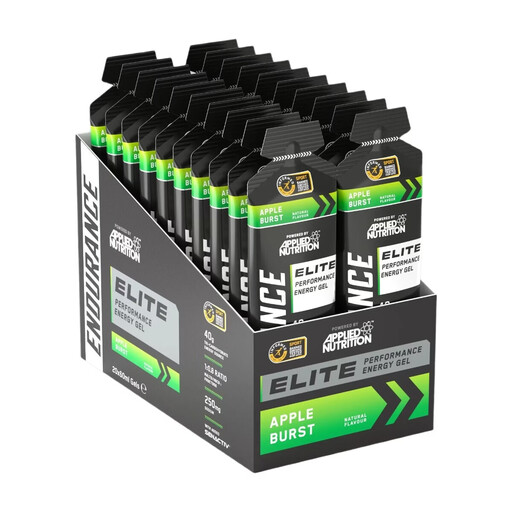
Applied Nutrition Endurance Elite Tri-Carb Energy Gel, Apple Burst (20 gels)
This portioned gel is an option for a long-run carbohydrate schedule rather than a toffee sharing bag. The listing states 40 g carbohydrate per gel; check how that amount fits your practised intake plan and the current pack directions. The listing also states age and other use restrictions, which should be checked on the pack before use.
View on Joybuy
 No image available
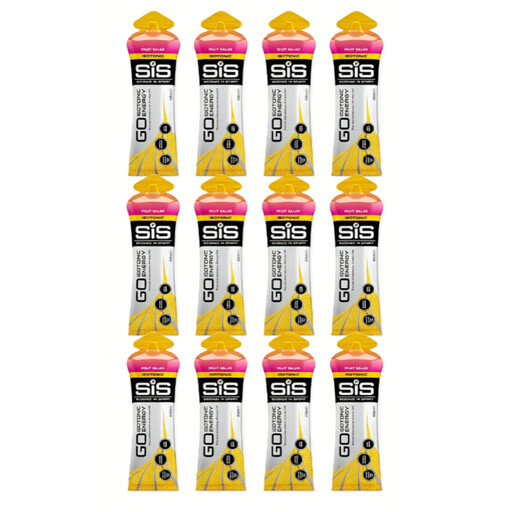
Science in Sport GO Isotonic Gel, Fruit Salad, 60 ml (12 packs)
This single-pack gel format is worth comparing if you want portions to carry on a long run. The listing title and description use different product names, so confirm the exact identity, carbohydrate amount and fluid directions on the current pack before building it into a fuelling plan. Practise using the product during training.
View on Joybuy
Questions about toffee and running fuel
Can a toffee sharing bag replace gels on a marathon long run?
A toffee sharing bag is not a useful foundation for a timed fuelling plan: choose labelled portions you can practise alongside your fluid routine instead. The Australian Institute of Sport relates carbohydrate guidance to exercise duration, giving 30–60 g per hour for 1–2.5 hours of endurance exercise and up to 90 g per hour for ultra-endurance events lasting more than 2.5–3 hours. The right practised plan also needs to account for individual gut comfort.
How much carbohydrate is in a typical sports gel?
The Australian Institute of Sport says a typical gel provides 20–30 g carbohydrate per sachet. Read the exact product label when calculating portions, because the amount can differ between gels.
Should I take water with a running gel?
The Australian Institute of Sport advises taking most gels with water or another dilute fluid to reduce the concentration of carbohydrate consumed and the risk of gut upset. Follow the directions for your exact gel, including any different instructions for a product labelled isotonic, and practise it with your fluid plan.
Are sugar-free toffees a better choice for fuelling a run?
Do not assume that sugar-free toffee provides a suitable running-fuel portion. Werther's Original lists maltitol, isomalt and sorbitol syrup in its Sugar Free Creamy Toffees and warns that excessive consumption may produce laxative effects. Check the carbohydrate amount and ingredients of the exact product instead of substituting it for a fuel you have practised.
What should I check if I need to avoid milk or soya?
Read the current ingredients and allergen declaration for the exact toffee and flavour before eating it. Tesco's Werther's Original listing includes milk-derived ingredients and soya lecithin, while Marks & Spencer lists milk and soya ingredients in its Toffee Assortment and notes that product details may change.


