Runners choosing an everyday fizzy drink
Plain sparkling water gives you a drink for routine use without treating the bottle as carbohydrate fuel for a long run. The NHS suggests sparkling water as an option for people who do not like still water.


Choose plain sparkling water for everyday drinking if you enjoy carbonation, but keep it separate from your plan for fuelling long or strenuous runs: it does not supply carbohydrate. If you want flavour without sugar, check the exact drink’s sugars and ingredients; ‘no added sugar’ can still describe a drink containing naturally occurring sugars or sweeteners.
Plain sparkling water gives you a drink for routine use without treating the bottle as carbohydrate fuel for a long run. The NHS suggests sparkling water as an option for people who do not like still water.
Compare unsweetened flavoured water with other no-added-sugar drinks. Sanpellegrino describes Essenza as containing no sugars or sweeteners, while its separate Zero Added Sugar range contains naturally occurring sugar.
Multipacks and larger bottles may fit home use; smaller bottles may be easier to take out. Check the bottle size and where you will store or carry the pack.
Decide whether the drink is for routine drinking or a long run, then compare labels and bottle formats within the type you want.
Choose it when: You want an unflavoured fizzy drink for routine use.
Keep in mind: It does not replace carbohydrate-containing food or drink in a long-run fuelling plan.
Choose it when: You want flavour without sugars or sweeteners; Sanpellegrino describes Essenza this way.
Keep in mind: Check the particular flavour’s label rather than assuming every flavoured drink has the same ingredients.
Choose it when: A flavoured drink fits your preferences after you have checked its full nutrition panel.
Keep in mind: Sanpellegrino says its Zero Added Sugar drinks contain naturally occurring sugar; Sainsbury’s describes one no-added-sugar flavoured water as containing sweetener.
| Priority | What to check | Your needs |
|---|---|---|
| Drinking and fuelling | Check whether the drink supplies carbohydrate if it is part of a long-run plan. The Health Research Authority notes that sportspeople may use carbohydrate-containing food or drink during prolonged, strenuous exercise. | I want fizzy water for routine drinking, but I’ll plan what to consume on a long run separately. |
| Sugars and ingredients | Read ‘of which sugars’ on the nutrition panel, using the unit shown on the pack, and check the ingredients for juice and sweeteners. Do not treat ‘no added sugar’ as ‘no sugars’. | If I’m avoiding sugar or sweeteners, I need the exact flavour to meet that requirement—not just a front-of-pack claim. |
| Bottle format | Compare the number of bottles and the volume of each one. Consider storage space and whether you intend to carry a bottle. | Smaller bottles suit the times I take water out; larger bottles or multipacks may suit drinking at home. |
Plain sparkling water provides a drink, not carbohydrate. The Health Research Authority notes that sportspeople may eat or drink carbohydrate during prolonged, strenuous exercise.
Make separate decisions about what you will drink and what you will use for fuelling. If you plan to drink sparkling water near a run, try it during training to see whether the carbonation suits you.
Fruit-based drinks can contain sugars even without added sugar. Marks & Spencer lists 6.6g sugars per 100g for its apple-and-elderflower sparkling drink.
Check ‘of which sugars’ and the ingredients on the particular pack. If zero sugar matters to you, do not rely on the no-added-sugar wording alone.
Sainsbury’s describes its Lemon & Lime no-added-sugar flavoured water as containing sweetener.
If you prefer to avoid sweeteners, check the ingredients of each flavour before choosing it.
These examples help distinguish plain water from flavoured drinks; each product’s own label determines what is in the bottle.
A plain sparkling-water option offered in different bottle and pack sizes.
A plain carbonated mineral-water option.
Its plain, Essenza and Zero Added Sugar products call for different label checks.
An own-label option for shoppers comparing plain sparkling-water pack formats.
Its sparkling-water range includes plain and flavoured options.
A useful reminder to read total sugars on fruit-led sparkling drinks.
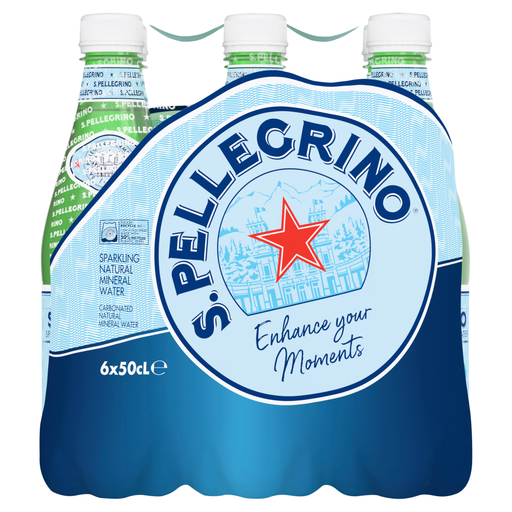
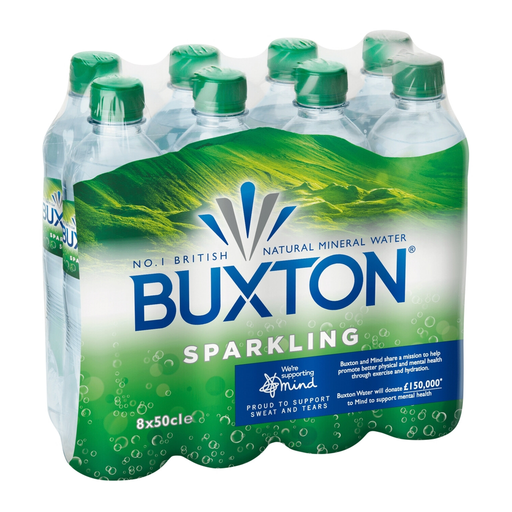
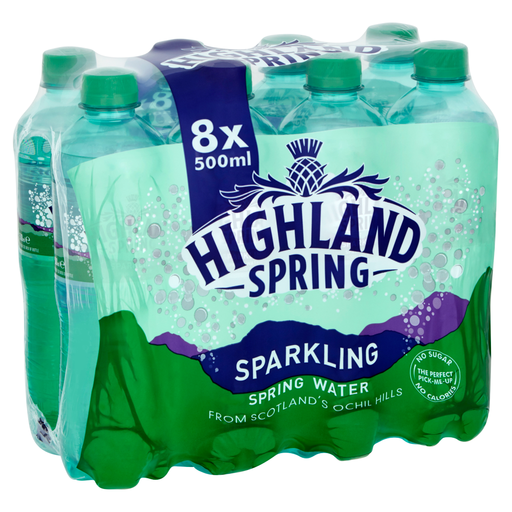
These plain sparkling-water multipacks offer different bottle sizes for routine drinking. Choose a format that fits where you will use it, and keep long-run fuelling as a separate decision.
 No image available
Six smaller bottles provide a format to consider when taking plain sparkling water out with you.
Arrange carbohydrate fuelling separately for long runs.
 No image available
Eight 500ml bottles are an option if you want smaller portions of sparkling water for routine drinking.
If you intend to drink it near a run, try the carbonation during training.
 No image available
Six 1L bottles provide a larger-bottle alternative for drinking at home.
Plain sparkling water is not a substitute for carbohydrate fuelling on a long run.
 No image available
Eight 500ml bottles offer smaller portions of plain sparkling spring water.
If a specific sugar value matters to your choice, check the bottle’s nutrition label.
 No image available
Six 1L bottles may be more convenient for keeping sparkling spring water at home than carrying individual small bottles.
Check the bottle’s nutrition label if you need to confirm a particular sugar value.
Plain sparkling water is not a carbohydrate-fuelling drink. The Health Research Authority notes that sportspeople may use carbohydrate-containing food or drink during prolonged, strenuous exercise, so plan fuelling separately from your choice of water.
No. Sanpellegrino says its Zero Added Sugar drinks contain naturally occurring sugar, and Marks & Spencer lists 6.6g sugars per 100g for its apple-and-elderflower sparkling drink. Check ‘of which sugars’ on the product you intend to buy.
Yes. Sainsbury’s describes its Lemon & Lime no-added-sugar flavoured water as containing sweetener. Read the ingredients if you want to avoid sweeteners.
Yes. The NHS suggests sparkling water for people who do not like still water. If you want to drink it immediately before or during a run, try that timing during training to see whether the carbonation suits you.
Choose a smaller bottle if you need to take water out, or consider larger bottles and multipacks for home use. Check the volume of each bottle, the number in the pack and the space you have to carry or store them.