
24/7 Customer Support

Free returns

Same-day & Next-day Delivery

Quality Guaranteed

Unlock Your Welcome Offers: FREE Delivery | Up to 80% OFF | Free 30-day JoyPlus trial
Download the APP
For many of us, a simple marinated egg is more than just a snack; it's a taste of home, a comforting flavour from a bustling night market or a key ingredient that completes a perfect bowl of congee. Yet, finding authentic marinated eggs in the UK can be a challenge. It's easy to be disappointed by products that don't live up to their promise, leading to wasted money and a less-than-satisfying meal.
As the Joybuy Product Recommendation Officer, I've seen the common issues shoppers face. Let's look at the main pitfalls to help you make a better choice next time you're browsing for these savoury treats.
To avoid these issues, it pays to understand a few core details. Focusing on these parameters will help you distinguish a high-quality product from a disappointing one.
The term "marinated egg" can be a broad category. Understanding the key differences is crucial for getting the flavour and texture you want.
A quick look at the ingredients can tell you a lot about the product's quality. For marinated eggs, look for a list that includes recognisable spices like star anise, cinnamon, fennel and cloves. If you're making your own, a good tea egg seasoning pack should list real black tea and whole spices. Be cautious of products where "flavouring" is listed high up or the list is dominated by numbers and chemical-sounding names, as this can be a sign of the "flavour disappointment" pitfall.
This principle applies to other ready to eat Chinese food as well. Whether you're buying prawn wontons or instant Asian egg noodles, a shorter, more natural ingredient list is often a good indicator of quality.
To make your choice easier, here are some recommendations matched to different needs and preferences, all of which meet our criteria for authentic flavour and quality.
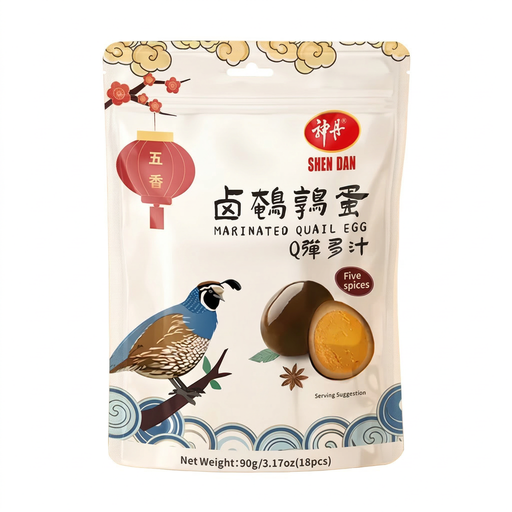
Why This Fits Their Persona: Perfect for busy professionals or students in the UK needing a quick, protein-rich snack. The individual packaging makes them ideal for lunchboxes, gym bags or a simple bite between meetings without any mess or preparation.
It delivers a consistent and authentic five-spice flavour, avoiding the blandness pitfall. The quail eggs have a satisfyingly firm texture, not the rubbery feel of lower-quality alternatives.
Ready-to-eat convenience and a classic, savoury flavour profile. The small, portion-controlled size makes it a sensible and satisfying snack.
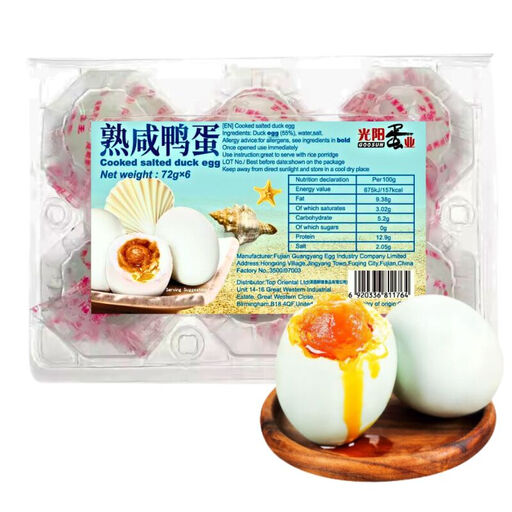
Why This Fits Their Persona: For those who cherish the ritual of a traditional breakfast, this is the quintessential partner for a bowl of plain congee. They are seeking that specific rich, briny flavour and oily yolk that perfectly seasons the rice porridge.
This product sidesteps the "chalky yolk" pitfall. The traditional curing method ensures a rich, sandy and oily yolk texture. The clear labelling as "Cooked Salted Duck Eggs" prevents any confusion with other egg types.
Delivers the sought-after rich, oily yolk and savoury white. Being pre-cooked and individually vacuum-packed makes it convenient and hygienic.
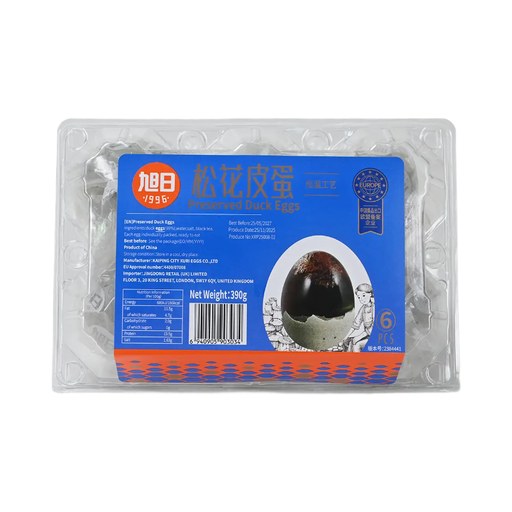
Why This Fits Their Persona: This is for the UK foodie who is keen to explore the unique flavours of East Asian cuisine. They're not just looking for a snack, but an ingredient to create authentic dishes like century egg with tofu or a flavourful congee.
It directly addresses the common fear of off-putting ammonia-like smells in preserved duck eggs by highlighting its black tea fermentation process, which results in a rich flavour "without any off-odours".
Offers a unique, complex flavour profile with a creamy yolk and smooth, jelly-like white. It's ready to eat after shelling, making it easy to prepare as a cold dish or add to other recipes.
We have compiled a complete, real-time list of products that fully satisfy these strict selection criteria and UK safety regulations.
Here are answers to a few common questions that arise when buying and enjoying these products.
A salted duck egg is cured in salt, resulting in a very salty white and a firm, oily and bright orange yolk. They are primarily used for their savoury flavour. A preserved duck egg (or century egg) is cured in an alkaline mixture, which chemically alters the egg. This results in a mild-tasting, jelly-like white and a creamy, dark-coloured yolk with a more complex, unique flavour.
Most vacuum-sealed marinated eggs are shelf-stable. However, once the package is opened, they should be treated like any other cooked food. It is recommended to store any leftovers in the refrigerator in an airtight container and consume them within 2-3 days for optimal freshness and safety. Always check the specific storage instructions on the packaging.
Yes, commercially produced century eggs that meet food safety standards are perfectly safe to eat. The preservation process uses an alkaline mixture to cure the egg, not decay. When buying, choose products from reputable brands that are properly packaged and clearly labelled. The distinctive appearance and smell are normal results of this traditional curing method.