
24/7 Customer Support

Free returns

Same-day & Next-day Delivery

Quality Guaranteed

Unlock Your Welcome Offers: FREE Delivery | Up to 80% OFF | Free 30-day JoyPlus trial
Download the APP
From labelling moving boxes to brainstorming on a whiteboard or adding flair to a journal, the humble marker pen is an indispensable tool. Yet, choosing the right one can be surprisingly complex. A marker that bleeds through paper can ruin hours of work, while one that fades can render important labels useless. As a Joybuy Product Recommendation Officer, my role is to help you navigate the options and avoid the common pitfalls that lead to wasted money and frustration.
Before you add another pack of pens to your basket, let's look at the frequent issues UK shoppers face and how to identify the right marker for your specific needs.
Many markers fail to live up to their packaging's promises. Here are three of the most common traps to watch out for:
To avoid these issues, you need to look beyond the marketing claims and focus on a few core technical details. Understanding these will ensure you get the right tool for the job every time.
The ink formula determines a marker's performance, permanence and surface compatibility.
The tip, or nib, dictates the kind of line you can create. The two most common types offer distinct advantages:
To help you make a confident choice, we've matched some reliable options to common user needs.
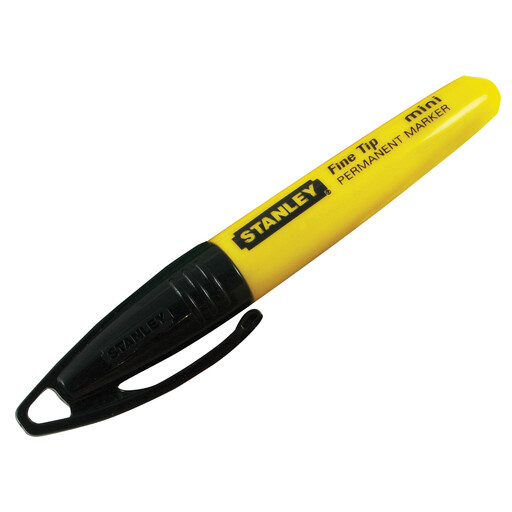
Why This Fits Their Persona: For busy offices, warehouses or schools, running out of essential supplies is not an option. This bulk pack offers excellent value and ensures a consistent, reliable marker is always on hand for labelling packages, marking documents or general administrative tasks.
The quick-drying, smudge-proof permanent ink provides a lasting mark that resists fading, directly countering the issue of disappearing labels on packages and files.
The fine tip allows for precise, clear writing in small spaces. The bulk 72-pack provides a long-term supply at a cost-effective price point.
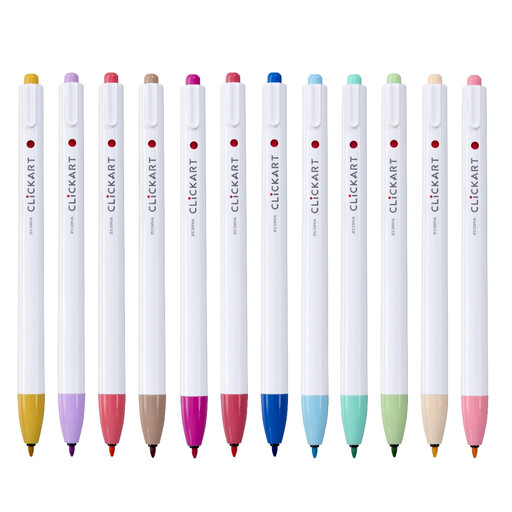
Why This Fits Their Persona: Ideal for students, artists and journal enthusiasts who value convenience and colour. The retractable design means no more lost caps, and the pastel palette is perfect for organised note-taking, hand lettering and creative projects without overwhelming the page.
The water-based ink is formulated to resist smudging and bleeding, tackling the common problem of messy highlighters. According to Zebra, its "Moist Keep Ink" technology prevents the tip from drying out, even without a cap.
The capless, retractable design is highly practical for quick use. The assorted colour marker set comes in a compact case for easy portability.
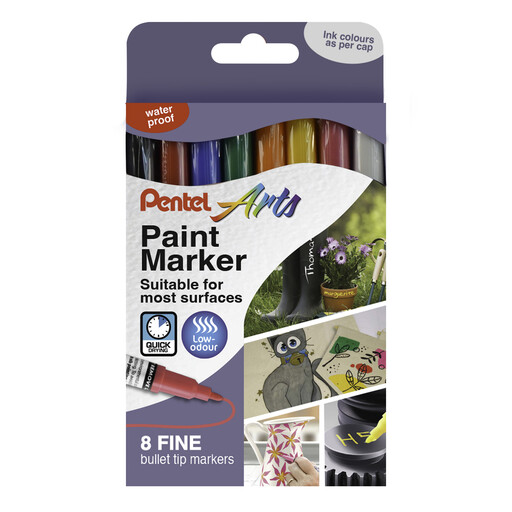
Why This Fits Their Persona: For hobbyists and crafters working with diverse materials, a standard marker won't do. This set of paint markers for crafts is designed to write on tricky surfaces like metal, glass, plastic and rubber, making it perfect for personalising items or industrial-style projects.
Unlike alcohol-based markers that can be rubbed off non-porous surfaces, this marker uses a permanent, opaque pigment-based ink that bonds strongly for a durable finish.
The opaque ink shows up clearly on both light and dark surfaces. Its durable aluminium barrel and 2.9mm bullet tip provide a robust feel and reliable ink flow.
We have compiled a complete, real-time list of products that fully satisfy these strict selection criteria and UK safety regulations.
The best practice is to always replace the cap securely immediately after use. For optimal longevity, especially with dual-tip or pigment-based markers, store them horizontally. This ensures the ink is evenly distributed across the internal reservoir and keeps the tip saturated. Avoid leaving them in direct sunlight or high temperatures, as this can cause the ink to dry out faster.
A dry wipe marker, also known as a whiteboard pen, uses an alcohol-based ink designed to be removed easily with a dry cloth or eraser from non-porous surfaces. A wet erase marker, such as a liquid chalk marker, uses a semi-permanent, paste-based ink. Once dry, it is smudge-resistant and requires a damp cloth for removal, making it ideal for signage like cafe menus that shouldn't be wiped away by an accidental touch.
It is highly inadvisable. The ink in permanent markers is designed to bond with surfaces and will not come off with a standard dry eraser. Attempting to remove it can lead to permanent staining or damage to the whiteboard's special coating. Always use markers specifically labelled as "dry wipe" or "whiteboard" markers for this purpose.