
24/7 全天候客户支持

免费退货

当日/次日达

品质保障

开启新人专享福利: 全场免邮 | 低至 2 折 | 免费试用 30 天 JoyPlus 会员
下载 Joybuy
Marker pens can look similar on a product page, yet their ink, tip and surface compatibility can make them suitable for completely different jobs. A fine tip marker pen for note-taking will not necessarily work on metal, while a permanent marker may ruin a reusable whiteboard.
Whether you are shopping for school supplies, office stationery, craft materials or trade tools, choosing by colour alone can lead to wasted money. This guide explains the key specifications to check and matches different marker pens to practical UK shopping needs.
“Multi-surface” descriptions need closer inspection. Water-based felt tip pens are generally designed for paper and card, while permanent markers, paint marker pens and solid paint sticks may be intended for materials such as glass, metal, wood or plastic.
Always check the product description for named surfaces. If you need to write on a whiteboard, choose whiteboard markers specifically labelled as dry-wipe. For windows or glass displays, check whether the marker is wet-erase and whether it should be removed with a damp cloth.
A broad chisel tip can cover large labels quickly, but may be awkward for small handwriting. Fine tip marker pens and fineliners provide more control for forms, diagrams and detailed illustrations. Brush tips are more suitable for lettering, shading and varied line widths.
A pack with many colours is not automatically practical if every pen has the same unsuitable tip. Consider the line width and tip shape before comparing colour counts.
Permanent markers are useful when marks must resist everyday handling, but they can stain skin, clothing and porous surfaces. Washable markers are more appropriate for children’s activities or temporary paper-based work, although “washable” does not mean suitable for every fabric or surface.
For temporary displays, chalk markers can provide strong contrast and wipe away from suitable non-porous surfaces. However, the Sharpie Chalk Markers Wet Erase Assorted Colours pack advises avoiding porous surfaces to support easier removal.
Do not rely on colour labels alone. Black marker pens may be available in permanent, washable, paint, fineliner and dry-wipe formats, each with different uses.
Fine tips are useful for forms, labelling and detailed drawings. For example, the STABILO Point 88 fineliner has a stated 0.4mm line width, while the BIC Velleda 1701 blue whiteboard marker specifies a 1.5mm line width.
Chisel tips can offer two marking styles: a narrow edge for finer lines and a broad face for headings. Brush tips are flexible and can create changing line widths depending on pressure. Dual tip art markers combine two functions in one pen, such as a 0.4mm fineliner and a 1–6mm brush tip.
Markers dry out when caps are loose or missing. Look for retractable designs if you often work between rooms or carry pens in a bag. Otherwise, replace caps firmly after use and follow the storage guidance, such as storing certain markers horizontally.
Pack size should reflect your usage. A three- or four-colour pack may be sensible for basic writing, while assorted colour markers or a larger tin can offer more flexibility for classroom displays, journalling and illustration. Businesses and workshops should also consider replacement frequency and whether the required colour is available in a multipack.
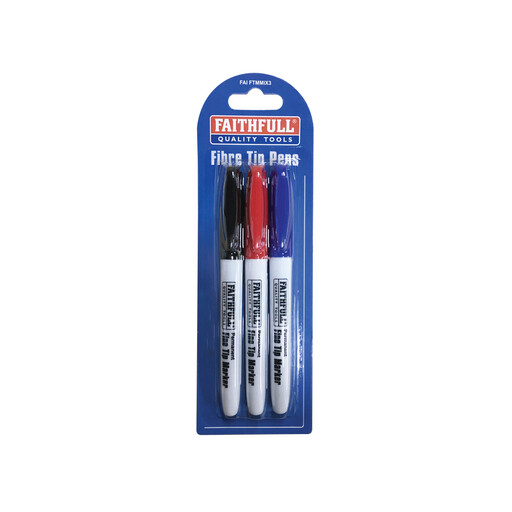
Why This Fits Their Persona: A compact three-colour option for students, home organisers and everyday writing tasks where a large art set is unnecessary.
The fine fibre tip is specified for precise lines, avoiding the mismatch of using a broad marker for small notes or labels.
Three assorted colours, a fine fibre tip and quick-drying ink described as smudge-resistant.
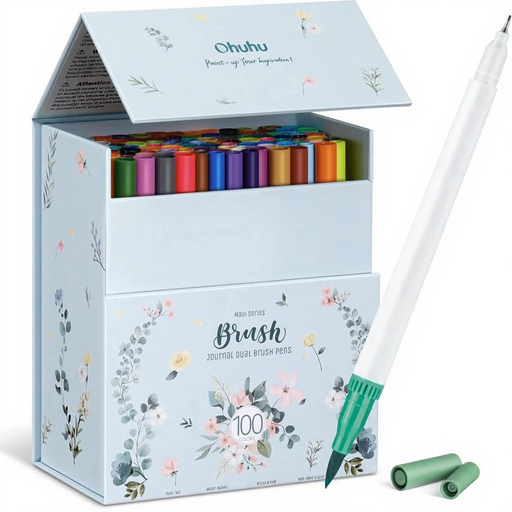
Why This Fits Their Persona: Suited to illustrators, adult colouring enthusiasts and crafters seeking a broad palette with separate detail and brush functions.
The two specified tips make the set more adaptable than a single-tip pack, while the swatch card helps identify colours before use.
100 numbered water-based colours, a 0.4mm fineliner, a 1–6mm brush tip and replacement tips.
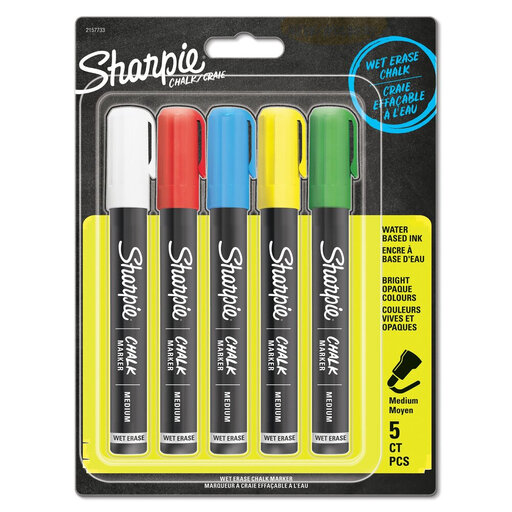
Why This Fits Their Persona: A practical choice for teachers, cafés, small businesses and households creating temporary signs or display messages.
It is identified as wet-erase rather than permanent, with removal instructions using a damp cloth. Porous surfaces should still be avoided.
Five assorted colours for visible displays and compatibility with blackboards, windows, glass and other listed non-porous surfaces.
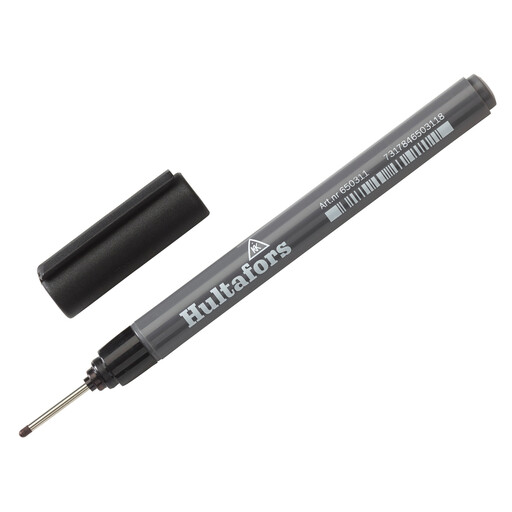
Why This Fits Their Persona: Designed for builders, carpenters, tradespeople and DIY users marking through narrow gaps or into deep holes.
Its narrow deep-hole format addresses access problems that ordinary marker pens may not solve.
Black ink for clear marks and stated use on wood, metal, plastic and other construction materials.
We have compiled a complete, real-time list of products that fully satisfy these strict selection criteria and UK safety regulations.
Usually not. Permanent markers can leave lasting stains on dry-wipe surfaces. Use whiteboard markers for routine notes, and check the board manufacturer’s care guidance before trying any alternative ink.
Lifespan varies with ink type, use and storage. Replace caps firmly, retract capless pens fully and keep markers away from heat and direct sunlight. Some products recommend horizontal storage, while others may have different instructions, so follow the packaging guidance.
Not necessarily. Compare the number of pens, refill or replacement-tip availability, surface suitability and how often you will use them. A larger assorted colour markers set may reduce the need for separate purchases, while a small pack can cost less and create less unused stock for occasional users.