
24/7 Customer Support

Free returns

Same-day & Next-day Delivery

Quality Guaranteed

Unlock Your Welcome Offers: FREE Delivery | Up to 80% OFF | Free 30-day JoyPlus trial
Download the APP
Marker pens can cover everything from quick note-taking to industrial identification, but choosing the wrong type often leads to wasted money. A permanent marker may ruin a reusable display, while a water-based felt tip pen may disappear from a rough workshop surface. Before buying assorted marker pens, match the ink, nib and intended surface to the task.
Marketing descriptions often use words such as “long-lasting” or “versatile” without making the removal method clear. Permanent markers are intended to leave durable marks on suitable surfaces, whereas wet-erase markers are designed for non-porous materials such as glass, boards and windows and can usually be removed with a damp cloth.
A permanent paint marker may be unsuitable for a menu board or classroom display. Conversely, a chalk marker used on porous wood or untreated card may soak in and become difficult to remove. Always check both the recommended surface and the cleaning method.
A large colour set does not compensate for an unsuitable tip. Fine-tip markers are useful for labels, outlines and small lettering, while broad chisel tips cover textbook lines quickly. Brush pens support variable-width lettering, but they require more pressure control than standard felt tip pens.
For children or everyday writing, a reliable fibre tip may be more practical than a delicate brush nib. For illustration, journalling and calligraphy, dual-tip colouring pens offer more flexibility.
Ink performance depends on how the pens are stored and used. Water-based stationery pens can bleed through thin notebook pages, while alcohol- or spirit-based formulations may have a noticeable odour and require ventilation. Caps that are not replaced securely can allow the nib to dry out.
Check whether the product recommends horizontal storage, whether the ink is water-based or oil-based and whether the manufacturer provides an anti-dry-out feature. Claims about fade resistance or longevity should be treated as product specifications rather than guarantees for every surface or environment.
Start with the surface:
For workplace or workshop use, also consider ventilation, contact warnings and whether the mark needs to withstand outdoor conditions.
Nib design determines control. A fine bullet tip supports small labels and detailed drawings. A chisel tip can create two line widths, making it useful for highlighting and underlining. A brush tip changes width with pressure and is suited to hand lettering, sketching and decorative writing.
Some markers require priming by pressing the nib down until ink flows. This is common with paint and liquid chalk markers. Prime them on scrap paper or card rather than directly on the final surface.
A three-pack may cover basic labelling, while a 12-, 15- or 60-colour set is more appropriate for classroom activities, adult colouring, event decoration or illustration. However, check whether the listed quantity includes a blender or duplicate shades.
For permanent and paint markers, high-contrast colours such as white, black and bright green may be more useful than a large pastel palette. For highlighters, consider whether you need a single colour for revision or several colours for organising notes.
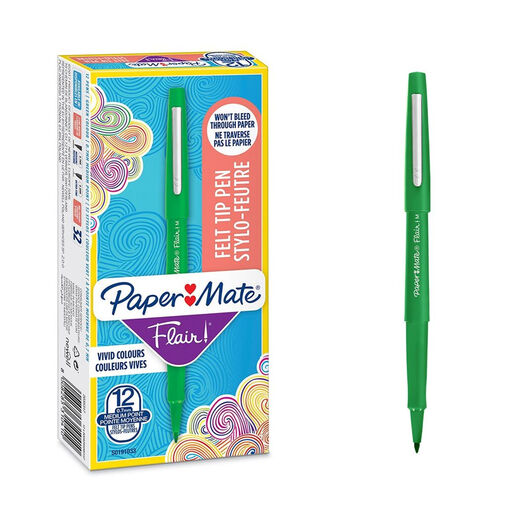
Why This Fits Their Persona: A straightforward option for students, families and journal users who need medium felt tip pens for everyday writing, doodling and note organisation.
The felt tip and paper-focused design make the intended use clearer than buying a multi-surface paint marker for notebooks.
Medium point; smudge-resistant ink is described as helping to reduce bleed-through on paper.
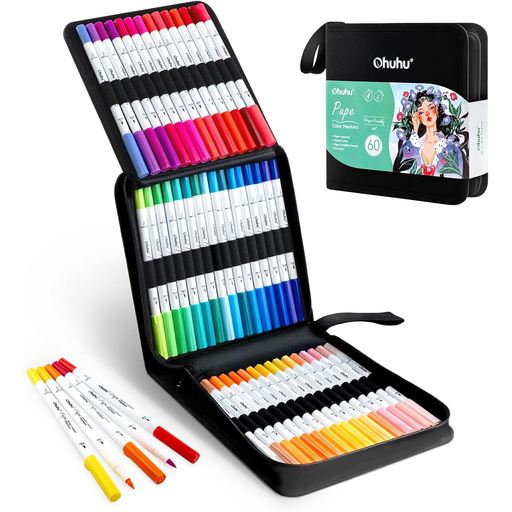
Why This Fits Their Persona: Suitable for adult colouring, illustration, calligraphy and journalling when a broad colour selection and two nib styles are important.
The specified 0.4mm fineliner and 1–5mm brush tip show exactly how the set provides detail and broader strokes.
Includes 59 colours and one colourless blender; water-based ink is described as paper-friendly and blendable.
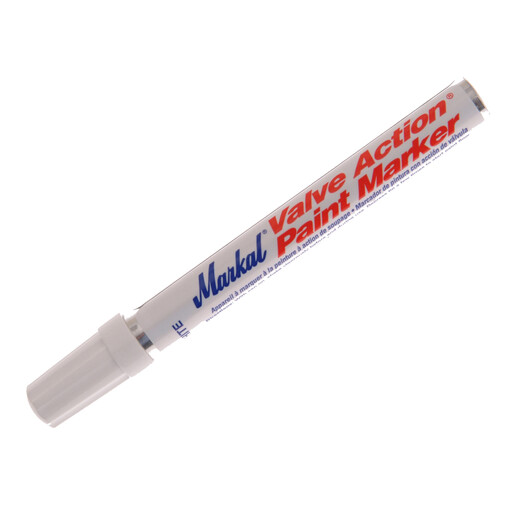
Why This Fits Their Persona: A practical match for tradespeople, maintenance teams and DIY users marking steel, plastic, glass, rubber, pipes or fabric.
The valve-action mechanism is specified for controlled paint release, reducing uncertainty when making precise marks.
White, opaque, spirit-based ink; metal barrel and a stated xylene-free formulation.
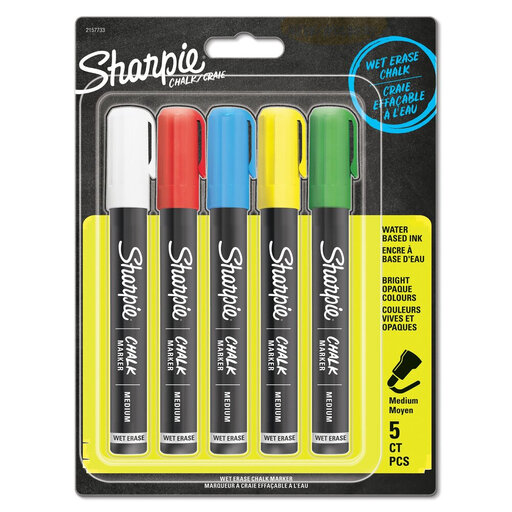
Why This Fits Their Persona: Designed for menus, classroom boards, shop windows and home displays where bright writing needs to be changed periodically.
The product is specifically described as wet-erase and intended for non-porous surfaces, unlike permanent markers.
Pack of five assorted colours; instructions specify wiping with a damp cloth for removal.
We have compiled a complete, real-time list of products that fully satisfy these strict selection criteria and UK safety regulations.
Lifespan varies with nib pressure, frequency of use, storage and cap seal. A marker used daily will run out sooner than one used occasionally. Anti-dry-out features may reduce drying when a pen is briefly left uncapped, but replacing the cap promptly remains the simplest way to protect the ink.
Follow the product warning and ventilation instructions. Water-based felt tip pens and highlighters are generally intended for routine paper use, while some permanent and paint markers may have stronger odours. Do not use solvent-based markers in an enclosed room without suitable ventilation.
It depends on the ink. Wet-erase and chalk markers made for non-porous surfaces are intended to be wiped away with a damp cloth. Permanent markers and paint markers may require a specific cleaner and can leave residue. Always check the product instructions and test a discreet section first.