
24/7 Customer Support

Free returns

Same-day & Next-day Delivery

Quality Guaranteed

Unlock Your Welcome Offers: FREE Delivery | Up to 80% OFF | Free 30-day JoyPlus trial
Download the APP
From brainstorming in the boardroom to colour-coding study notes, the right marker pen can make a task smoother and more effective. Yet, choosing one is often a gamble. We’ve all been there: the brand-new permanent marker that smudges, the highlighter that bleeds through a textbook page or the whiteboard pen that dries out in the middle of a crucial presentation. These small frustrations add up, wasting both money and time.
As the Joybuy Product Recommendation Officer, my role is to help you navigate the market and find tools that simply work. This guide cuts through the marketing clutter to focus on what truly matters, helping you select the right marker pens for your specific needs, whether for office supplies, school stationery or creative craft projects.
Before we look at what makes a good marker, let's identify the common traps that lead to a drawer full of duds.
To avoid these issues, focus on a few key technical specifications rather than just the packaging.
The shape of the tip dictates the kind of line you can create. Choosing the right one is essential for its intended function.
The ink inside the pen determines its permanence, vibrancy and suitability for different surfaces.
A marker's physical design can significantly impact its usability and lifespan. Look for ergonomic, comfortable grips for long sessions. An anti-roll cap or barrel is a simple but effective feature that stops your pen from disappearing off your desk. For those looking for more sustainable office supplies, consider eco-friendly pens made from recycled materials.
Instead of a generic list, we've matched specific products to the people who need them most.
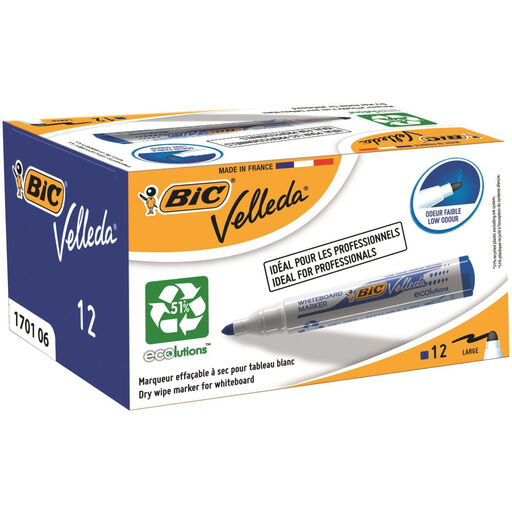
Why This Fits Their Persona: Ideal for teachers and office workers who rely on whiteboards daily. The low-odour ink is considerate in shared spaces and its eco-friendly construction aligns with corporate sustainability goals.
Its robust, blocked acrylic tip resists being pushed in and is designed to withstand being uncapped for short periods, directly addressing the pitfall of whiteboard markers drying out prematurely.
Made from 51% recycled materials. The 1.5mm line width provides clear, consistent writing visible from a distance.
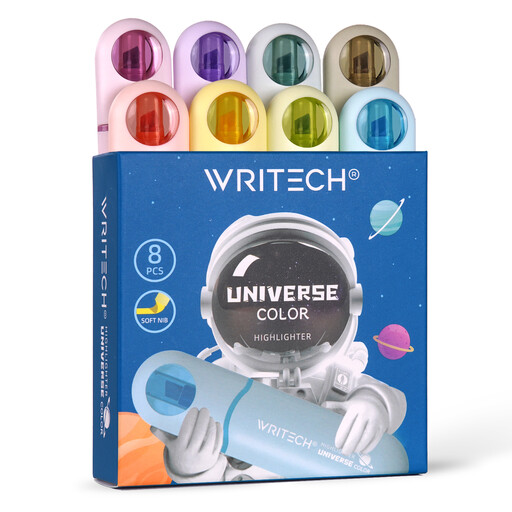
Why This Fits Their Persona: Perfect for students, bullet journal enthusiasts and anyone who needs to mark up books without causing damage. The assorted colours help with organisation and creative expression.
These are designed with vivid, water-based ink specifically for minimal bleed-through and smearing, directly solving the "bleed-through betrayal" on thin journal or textbook paper.
Features a soft, flexible chisel tip that allows for smooth highlighting without fraying. The unique oblate barrel design prevents it from rolling off a desk.
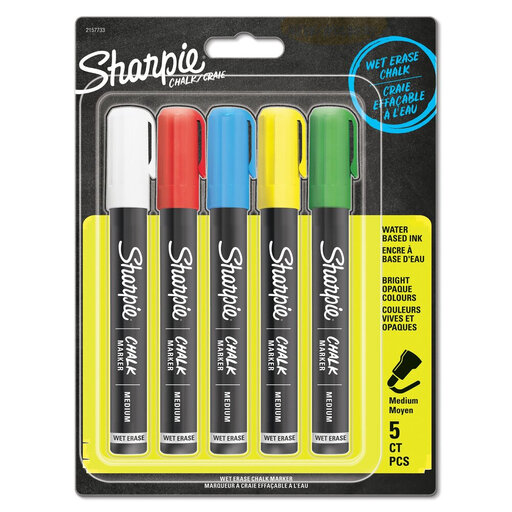
Why This Fits Their Persona: Excellent for cafe owners writing on menu boards, retailers creating window displays or anyone organising their home with labels on glass jars or plastic tubs.
Unlike permanent markers that can ruin expensive surfaces, these wet-erase chalk markers provide vibrant, eye-catching colour that can be wiped away with a damp cloth, offering creativity without commitment.
Works brilliantly on a variety of non-porous surfaces including blackboards, glass and whiteboards. The ink is bright and opaque for high visibility.
We have compiled a complete, real-time list of products that fully satisfy these strict selection criteria and UK safety regulations.
The most effective method is to always replace the cap securely and immediately after use. For optimal ink flow and longevity, it is also good practice to store most markers horizontally. Some modern felt tip pens, like the Zebra CLiCKART, feature retractable designs with special ink technology that absorbs moisture from the air to prevent drying without a cap.
A bullet tip has a rounded point and produces a line of a consistent, uniform width. This makes it ideal for writing, outlining and general-purpose drawing. A chisel tip has a slanted, flat edge that allows for variable line widths. You can use the broad side for wide strokes, like highlighting, and the sharp edge for creating fine, precise lines.
It is strongly advised not to. Permanent markers contain alcohol-based ink that is designed to bond with surfaces and resist removal. Using one on a whiteboard will likely result in a stain that cannot be removed with a standard dry eraser, potentially damaging the board's surface. Always use markers specifically labelled as whiteboard markers or dry wipe pens.