
24/7 Customer Support

Free returns

Same-day & Next-day Delivery

Quality Guaranteed

Unlock Your Welcome Offers: FREE Delivery | Up to 80% OFF | Free 30-day JoyPlus trial
Download the APP
From labelling moving boxes to creating detailed artwork, marker pens are a staple in UK homes, offices and workshops. Yet, choosing the right one can be surprisingly difficult. A marker that promises permanence might fade in a week, a set bought for crafting might not show up on plastic and a pack for the kids could lead to an afternoon of vigorous scrubbing. As the Joybuy Product Recommendation Officer, my role is to help you navigate these common issues and find the right tool for your specific task.
Before you add another pack of disappointing pens to your drawer, let’s look at the frequent pitfalls that lead to wasted money and frustration.
permanent markers only to find our labels have smudged or washed away from a lunchbox or outdoor plant pot. The term "permanent" is often relative; its effectiveness depends heavily on the ink formula and the surface you're writing on. What works on paper may fail completely on glass or metal.chisel tip pen is great for bold lines but lacks the precision needed for fine point art pens or detailed diagrams.To ensure you get a marker that performs as expected, focus on two core specifications: the ink type and the tip style.
The ink determines a marker's permanence, vibrancy and surface compatibility. There are three main types to consider:
permanent markers. It dries quickly and is water-resistant, making it ideal for writing on porous surfaces like paper and cardboard. For industrial or trade use on non-porous surfaces, look for specialised industrial markers with formulations designed to adhere to metal and plastic.kids colouring pens and washable felt tips, this ink has minimal odour and is easier to clean from skin and most fabrics. While safer and great for paper crafts, it can cause paper to buckle or bleed through if applied too heavily.paint markers contain opaque, liquid paint. They are the go-to choice for craft pens and writing on non-porous or dark surfaces where standard markers won't show up, such as markers for glass and plastic, metal, rubber and black card.The shape and size of the nib dictate the kind of line you can create.
fine point art pens for intricate illustrations, technical drawings and precise writing.dual tip markers provide excellent value and versatility, allowing you to switch between colouring large areas and adding small details without changing pens.To help you find the right fit, we've matched some reliable options to common user needs. These selections are based on their objective features and suitability for specific applications.
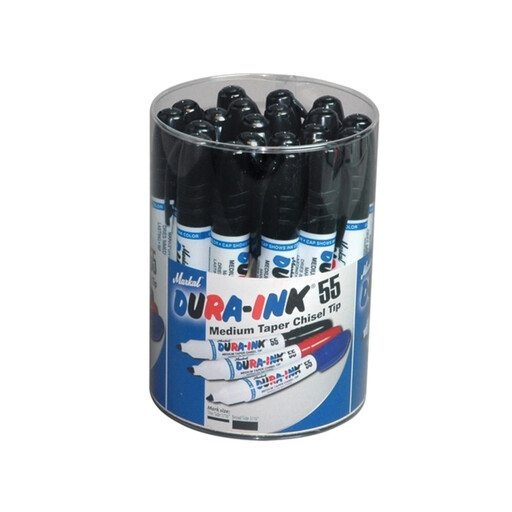
Why This Fits Their Persona: For professionals in construction, warehousing or logistics, a reliable marker is non-negotiable. This bulk pack is designed for heavy use on surfaces like metal, plastic and cardboard, where standard markers would fail.
It directly counters the "permanent ink illusion" by using a fade-resistant, waterproof ink formulated specifically for industrial applications, ensuring marks last on challenging surfaces.
The 20-pack offers excellent value for high-volume work, and the medium taper tip provides versatility for both bold labelling and finer notations.
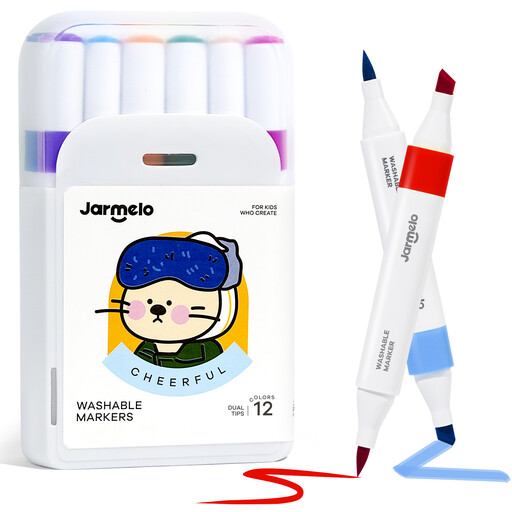
Why This Fits Their Persona: Ideal for parents and educators seeking a low-mess, safe and versatile art supply for children. The set is designed with kids in mind, from the ink formula to the physical design of the pens and case.
This set directly addresses child safety concerns. The water-based ink is highly washable from skin and most fabrics, and the caps are ventilated to reduce choking risks.
The dual-tip design (brush and chisel) offers creative flexibility, while the included storage case with a handle makes organisation and transport easy for children.
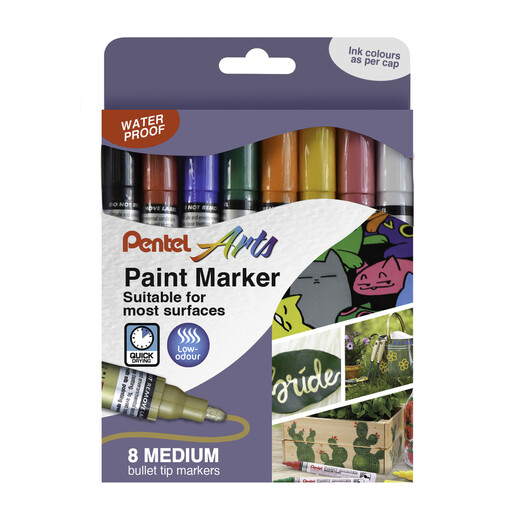
Why This Fits Their Persona: For hobbyists and crafters working with diverse materials, these paint markers provide the opacity and adhesion that standard markers lack. They are perfect for personalising items, creating signs or decorating non-paper surfaces.
This marker solves the problem of ink not showing up on tricky surfaces. Its opaque, pigment-based ink provides vibrant, permanent coverage on glass, plastic, metal and rubber.
The low-odour formula makes it more pleasant to use indoors compared to some solvent-based paint pens. The durable aluminium barrel and 4.5mm bullet tip ensure reliability.
We have compiled a complete, real-time list of products that fully satisfy these strict selection criteria and UK safety regulations.
Proper storage is key. Always replace the cap tightly immediately after use to prevent the tip from drying out. For most markers, storing them horizontally helps ensure the ink remains evenly distributed and ready to flow to the tip. Keep them in a cool, dry place away from direct sunlight, as heat can affect the ink.
The difference lies in the ink. A standard permanent marker uses a dye-based ink that soaks into porous surfaces like paper. A paint marker uses an opaque, pigment-based ink that functions like liquid paint, sitting on top of a surface. This makes paint markers far more effective on non-porous materials like metal, glass and plastic, and on dark-coloured surfaces where dye-based ink would not be visible.
While a 'non-toxic' certification is a crucial first step, it isn't the only safety factor to consider for young children. For peace of mind, also look for:
Washable felt tips are highly recommended to make cleaning up from skin, clothes and surfaces much easier.