
24/7 全天候客户支持

免费退货

当日/次日达

品质保障

开启新人专享福利: 全场免邮 | 低至 2 折 | 免费试用 30 天 JoyPlus 会员
下载 Joybuy
From vibrant art projects to essential office labelling, the right set of marker pens can make all the difference. Yet, the sheer variety available can be overwhelming, and it's easy to end up with a drawer full of pens that bleed, dry out or simply aren't fit for purpose. As a Joybuy Product Recommendation Officer, my role is to help you navigate the options and identify the features that truly matter.
Before you add another set to your basket, let's look at a few common pitfalls that lead to wasted money and frustration.
To make a smart purchase, focus on the technical specifications rather than the marketing hype. Understanding these three core parameters will ensure you get the right tool for your specific needs, whether you're looking for art markers or simple highlighters.
The ink inside a marker dictates its permanence, surface compatibility and overall behaviour.
The tip, or nib, determines the kind of line you can create. Many modern sets now feature dual tip pens to offer greater versatility in a single barrel.
Always consider the primary task. A set of permanent markers for labelling removal boxes has very different requirements from a set of brush pens for calligraphy. An artist might need a wide colour palette and blendable ink, while an industrial user needs a durable, waterproof marker that adheres to metal. Thinking about the end use first will narrow your choices considerably.
To help you find a suitable match, we've analysed several products based on their specifications and how they align with different user needs in the UK.
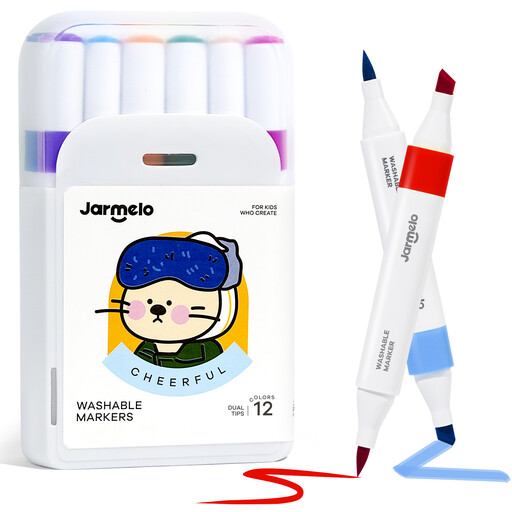
Why This Fits Their Persona: This set is designed with family life in mind. The highly washable ink gives parents peace of mind during creative sessions, and the dual-tip design provides children with tools for both broad colouring and finer details, all in one pen.
It directly counters the "washable" ink trap with a non-toxic, water-based formula specified as 90% washable from skin and most fabrics. The dual-tip (brush and chisel) design avoids the one-size-fits-all fallacy.
Features child-safe ventilated caps to reduce choking hazards and an ergonomic barrel for small hands. Comes in a portable storage case.
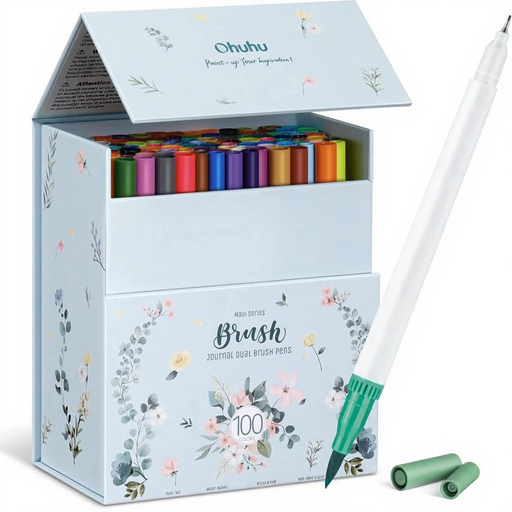
Why This Fits Their Persona: For those dedicated to adult colouring, bullet journaling or illustration, this set provides an enormous palette of 100 colours. The dual-tip design is perfectly suited for both detailed line work and broad colour application.
This set is the antithesis of the "one-size-fits-all" tip. Each pen combines a 0.4mm fineliner for precision with a flexible 1-6mm brush tip for colouring and calligraphy, offering maximum versatility in one tool.
An extensive 100-colour range with numbered barrels for easy identification. The set includes replacement tips (3 brush, 2 fineliner) and a storage case, providing excellent long-term value.
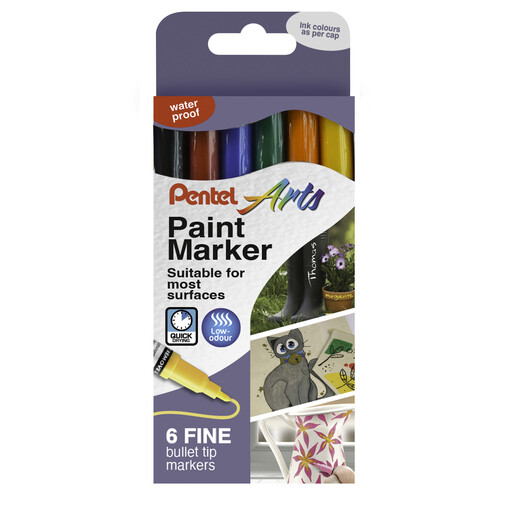
Why This Fits Their Persona: This is a purpose-built tool for demanding applications. It's ideal for crafters decorating non-porous items or for trade professionals who need to make durable marks on materials like metal, plastic and glass on a building site.
This marker avoids the trap of using the wrong ink for the surface. Its permanent, opaque pigment-based ink is specifically formulated to adhere to challenging surfaces where water or alcohol-based inks would simply wipe away.
Features a robust aluminium barrel for durability and a tough 2.9mm bullet tip that delivers consistent, reliable ink flow for clear and permanent marking.
We have compiled a complete, real-time list of products that fully satisfy these strict selection criteria and UK safety regulations.
The most effective method is to always replace the cap firmly immediately after use, ensuring you hear a 'click'. For dual-tip markers, it is advisable to store them horizontally. This ensures that ink flows evenly to both nibs, preventing one end from drying out. Finally, keep your pens away from direct sunlight and heat sources like radiators, as high temperatures can cause the ink to evaporate more quickly.
The primary difference lies in the solvent used for the ink, which affects their performance. Water-based markers are low-odour and their ink can be manipulated with water to create blends and washes, similar to watercolour paint. They are ideal for use on paper. Alcohol-based markers use alcohol as a solvent, which allows them to dry very quickly and be waterproof once dry. They are known for creating smooth, streak-free blocks of colour but have a stronger smell and are more likely to bleed through standard paper.
You should never use a permanent marker on a standard whiteboard. The permanent ink will bond with the surface and will not be removable with a standard dry eraser. Doing so can permanently stain and ruin the whiteboard. Always use markers specifically labelled as dry-erase or whiteboard markers, as their ink is designed to sit on top of the non-porous surface without bonding to it.