Joybuy Insights

Marker Pens Buying Guide: Types, Uses and What to Look For

From classroom whiteboards to industrial workshops, finding the right marker pen can feel surprisingly complicated. The market is filled with options that promise versatility but often fall short, leading to smudged presentations, faded artwork or markings that simply will not last. As a Product Recommendation Officer at Joybuy, my role is to help you navigate these choices and find a tool that genuinely fits your needs, without the marketing fluff.

Before you add another pack of disappointing pens to your basket, let’s look at the common pitfalls that catch out many UK shoppers.

  • The "Universal" Marker Myth: Many pens are advertised as suitable for all surfaces, but this is rarely the case. A marker that works beautifully on paper might bead up and smudge on plastic, while one designed for glass could be impossible to remove from a porous surface. This one-size-fits-all approach often leads to wasted money and messy results.
  • The Ghosting Nightmare: You’ve meticulously cleaned your whiteboard, yet a faint, ghostly image of last week's meeting notes remains. This is a frequent issue with lower-quality dry wipe markers. The ink pigments can permanently stain the board's surface, especially if left on for extended periods.
  • The Rapid Dry-Out: There is little more frustrating than reaching for a marker only to find it has dried out, despite being barely used. This is often a flaw in the cap design or ink formulation, where pens that claim to be "quick-drying" on the page also dry out just as quickly in the barrel.

Decoding the Essentials: What to Check Before You Buy

To avoid these issues, focus on a few core specifications. Matching the pen’s features to your specific task is the key to a successful purchase.

1. Ink Type: The Foundation of Performance

The ink formula determines a marker's permanence, surface compatibility and erasability. Understanding the main types is crucial.

  • Permanent Markers: Typically alcohol or oil-based, this ink is designed to be water-resistant and long-lasting on a variety of surfaces like paper, plastic and metal. They are ideal for labelling, shipping or any task where the mark should not be easily removed.
  • Dry-Erase (Whiteboard) Markers: These contain a specific pigment and release agent that prevents the ink from bonding with non-porous surfaces like whiteboards. This allows the markings to be wiped away easily with a dry cloth or eraser. Look for low-odour options for use in enclosed office or classroom spaces.
  • Wet-Erase (Chalk) Markers: Often sold as chalk pens for glass, these are perfect for non-porous surfaces like windows, mirrors and menu boards. The ink is semi-permanent, meaning it won't smudge with a dry touch but can be removed cleanly with a damp cloth.
  • Water-Based Art Pens: Found in colouring pens for adults and children's marker sets, this ink is typically non-toxic and sometimes washable. It is ideal for paper and card, allowing for blending and layering effects without bleeding through the page as aggressively as alcohol-based inks.

2. Tip Shape and Size: From Fine Lines to Bold Statements

The tip, or nib, dictates the kind of line you can create. Choosing the right one is essential for both clarity and creative expression.

  • Bullet Tip: Produces a consistent, uniform line width. It is a reliable all-rounder for general writing, notes on a whiteboard and clear labelling.
  • Chisel Tip: Features a slanted, rectangular tip that can create both broad, bold strokes and fine lines, depending on the angle you hold it. This versatility makes it popular for presentations, calligraphy and highlighting.
  • Fine Tip: Essential for detailed work. Fine liner pens are used for technical drawing, precise annotations and intricate artwork where accuracy is paramount.
  • Brush Tip: A flexible, paint brush-like nib that allows for variable line widths based on pressure. It is a favourite among artists and calligraphers for creating expressive, fluid strokes. Many modern art pens now come as dual tip markers, offering a fine tip on one end and a brush tip on the other.

Our Top Product Recommendations

Instead of a single "best" marker, the right choice depends entirely on you. Here are our recommendations, matched to different user needs across the UK.
MATCH FOR: The Busy Educator or Office Professional
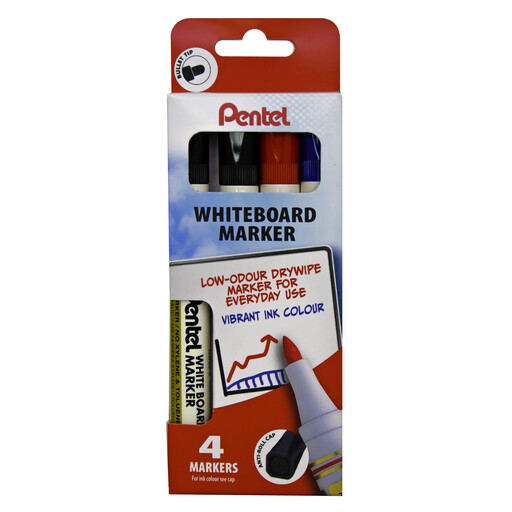
Pentel Whiteboard Marker Bullet Tip Assorted Pack of 4

Pentel Whiteboard Marker Bullet Tip Assorted Pack of 4

Why This Fits Their Persona: For daily use in meetings or lessons, reliability is key. This assorted marker pen set delivers consistent, vibrant ink that remains clear from a distance. The unique anti-roll cap is a small but practical detail that prevents pens from disappearing off a busy desk or lectern.

How It Avoids the Trap

It directly solves the "ghosting nightmare." The high-quality pigment-based ink is specifically formulated for dry-erase surfaces, wiping away cleanly without leaving stubborn stains or residue.

Key Advantage & Pros

Vibrant, pigment-based ink for excellent visibility. The 2.1mm line width from the bullet tip is ideal for clear, legible writing on standard whiteboards.
MATCH FOR: The Creative Hobbyist & Artist
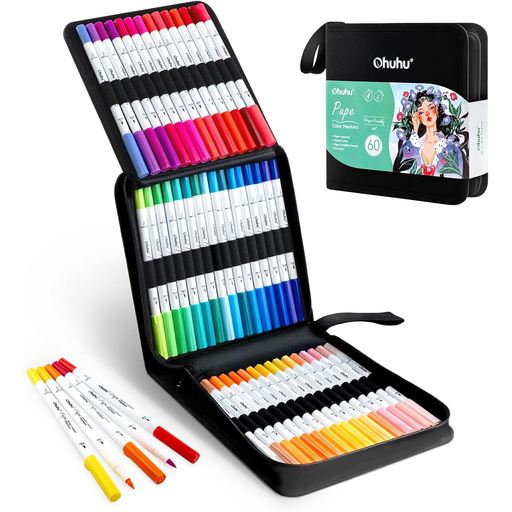
Ohuhu 60 Colours Colouring Pens, Dual Tips

Ohuhu 60 Colours Colouring Pens, Dual Tips

Why This Fits Their Persona: For those into adult colouring, journaling or illustration, versatility is paramount. This large set offers a huge palette of colours and a dual-tip design (fine liner and brush), providing everything needed for detailed work and broad-area colouring in one package.

How It Avoids the Trap

This set avoids the "universal" marker myth by excelling at its intended purpose. The water-based ink is described as "paper-friendly," formulated to reduce the paper fluffing and smudging that can ruin an art project.

Key Advantage & Pros

The dual-tip design (0.4mm fineliner and 1-5mm brush) offers great flexibility. The set includes a colourless blender for creating smooth gradients and watercolour effects.
MATCH FOR: The Tradesperson & Industrial User
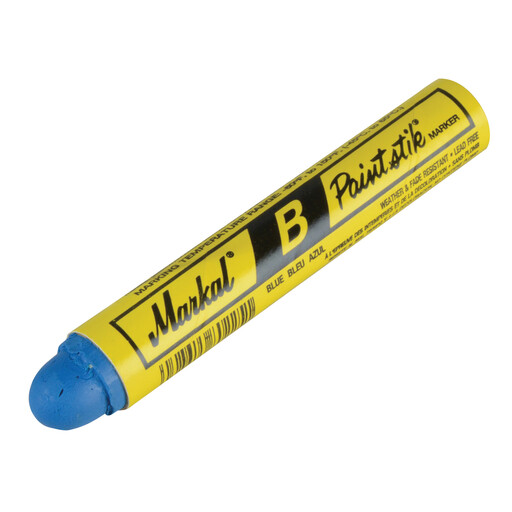
Markal Paintstik Cold Surface Marker Blue

Markal Paintstik Cold Surface Marker Blue

Why This Fits Their Persona: On a construction site or in a workshop, you need a marking tool that can handle rough, dirty and cold surfaces. This solid paint stick is an industrial paint marker designed for durability, providing clear, weather-resistant marks on metal, concrete, wood and plastic without a fragile tip to break.

How It Avoids the Trap

It completely avoids the rapid dry-out trap of liquid markers. As a solid paint stick, there's no liquid ink to evaporate or nib to clog, ensuring it's ready to use even after being stored in a toolbox in tough conditions.

Key Advantage & Pros

The solid, no-drip formula provides clean application on a huge range of surfaces. Its weather-resistant properties make it suitable for outdoor use.

Looking for More Options?

We have compiled a complete, real-time list of products that fully satisfy these strict selection criteria and UK safety regulations.

Frequently Asked Questions

How do I stop my marker pens from drying out?

The two most important habits are to always replace the cap securely immediately after use and to store the pens horizontally. Storing them horizontally ensures that the ink is evenly distributed and doesn't pool at one end, which helps keep the tip saturated and ready for use.

What is the difference between a dry-erase and a wet-erase marker?

A dry wipe marker (or dry-erase) is designed for standard whiteboards and can be removed with a dry cloth or eraser. A wet-erase marker, such as a chalk pen for glass, creates a more smudge-resistant mark and requires a damp cloth for removal. Wet-erase markers are better for surfaces like menu boards or signs that might be accidentally touched.

Can I use whiteboard markers on glass?

While you can, they often appear faint and less vibrant than on a white background. For a bold, opaque look on glass, windows or mirrors, a dedicated wet-erase chalk marker is a much better choice. They are specifically designed to provide bright colour on transparent or dark non-porous surfaces.