
24/7 Customer Support

Free returns

Same-day & Next-day Delivery

Quality Guaranteed

Unlock Your Welcome Offers: FREE Delivery | Up to 80% OFF | Free 30-day JoyPlus trial
Download the APP
From office presentations to creative journalling, the right marker pen can make all the difference. Yet, shopping for them often feels like a gamble. You might buy a set of vibrant colouring pens only to find they bleed through your notebook, or a permanent marker that smudges on the very surface you need it for. As a Joybuy Product Recommendation Officer, my role is to help you navigate these common issues and find the right tool for your task.
Before you add another set of disappointing pens to your drawer, let’s look at the frequent pitfalls that UK shoppers encounter:
By understanding a few core principles, you can avoid these issues and select a marker pen that performs exactly as you need it to.
Choosing the right marker goes beyond picking a colour. The ink formulation and tip design are the two most critical factors that determine a pen's performance.
The type of ink dictates a pen's permanence, vibrancy and surface compatibility. There are three main categories to consider:
The shape and size of the nib determine the kind of line you can create.
Understanding these differences is key. A whiteboard marker, for instance, uses a special non-permanent ink designed to be wiped away, whereas a permanent marker is formulated to stay put. Always match the ink and tip to your specific application.
To help you make a practical choice, we've matched some reliable options to common user needs, focusing on how they solve the pitfalls mentioned earlier.
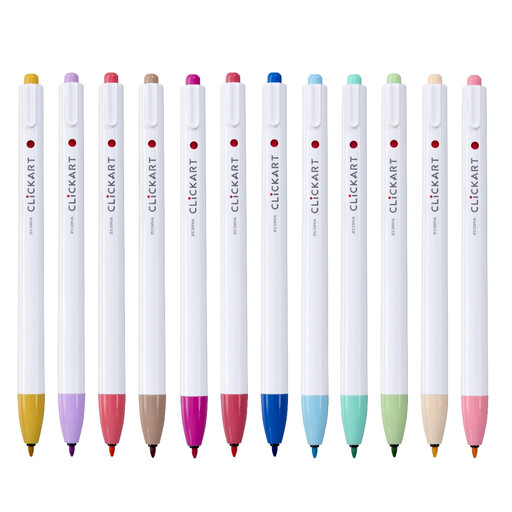
Why This Fits Their Persona: Ideal for those who frequently switch between colours for note-taking, planning or journalling. The retractable design eliminates the hassle of caps, making it perfect for fast-paced work in an office or university setting.
This pen directly solves the rapid dry-out problem. Its capless design is supported by an ink technology that absorbs moisture from the air, preventing the tip from drying out and saving you from the frustration of a ruined pen.
The main benefit is its convenient, one-handed retractable mechanism combined with its anti-dry ink. The water-based ink also provides clean, smudge-resistant lines suitable for planners.
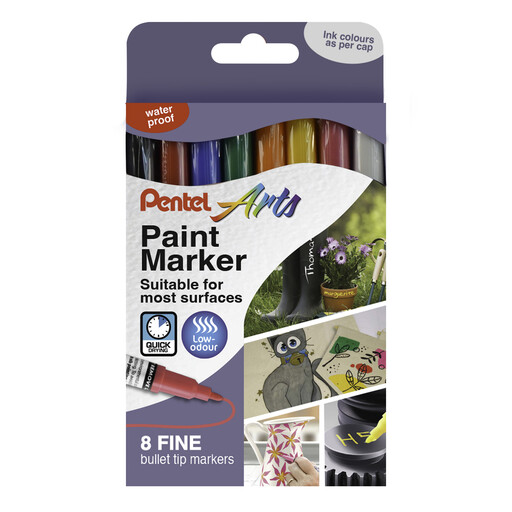
Why This Fits Their Persona: For hobbyists and crafters working with diverse materials. This user needs a pen that delivers vibrant, opaque colour on surfaces where standard markers fail, such as decorating plant pots, personalising glass jars or marking on metal.
This is a true paint marker that demolishes the "all-surface" myth. Its pigment-based ink is specifically formulated to be permanent and opaque on non-porous surfaces like metal, glass and plastic, providing the durability that crafters require.
Its primary advantage is its versatility across materials. The durable aluminium barrel and controlled ink flow provide a reliable tool for detailed and demanding craft projects.