
24/7 Customer Support

Free returns

Same-day & Next-day Delivery

Quality Guaranteed

Unlock Your Welcome Offers: FREE Delivery | Up to 80% OFF | Free 30-day JoyPlus trial
Download the APP
Marker pens are useful for far more than writing on paper. The right pen can label storage boxes, add detail to artwork, mark timber, identify metal components or create temporary displays on glass. The wrong one can bleed through materials, dry out quickly or leave a permanent mark where you expected an easy clean-up.
This guide explains the main types of marker pens available to UK shoppers, the specifications worth checking and our top recommendations for 2026.
A product described as “multi-surface” may still perform differently on porous wood, smooth plastic, powder-coated metal or glass. Fibre tip marker pens are generally designed for controlled writing on paper and card, while paint markers use pigment-based ink for more opaque marks on materials such as metal, glass, rubber and plastic.
Always check the stated surface compatibility before buying. If the mark needs to remain visible outdoors or in a workshop, choose a product specifically described for construction or industrial use rather than relying on a general stationery pen.
Permanent marker pens are intended to leave lasting marks, although permanence can vary by surface and exposure. Wet-erase markers are designed for non-porous surfaces such as glass, whiteboards and chalkboards, where the ink can be removed with a damp cloth. Washable children’s markers are a separate category and are not intended for durable labelling.
A common mistake is using chalk markers on porous walls, unfinished timber or unsealed stone. The ink may absorb into the surface and become difficult to remove.
A bulk marker pack may offer useful value for schools, offices or shared workshops, but only if the tip suits the task. Fine tip markers are better for small labels and detailed writing. Chisel tips can produce both broad strokes and narrower lines, while deep-hole construction markers are shaped for reaching through drilled holes and narrow gaps.
Test the pen on an inconspicuous area first, particularly on painted surfaces, coated plastics and valuable craft materials.
A fine fibre tip is suitable for handwriting, outlining and detailed work. A fine bullet paint tip offers controlled paint flow, while a chisel tip is more adaptable for headings and broad lines. Some art markers include two tips, such as a fine liner for detail and a brush tip for shading or calligraphy.
The stated measurement matters. For example, a 2.9 mm bullet tip offers a different level of control from a broad chisel tip, even if both are described as suitable for general marking.
Markers commonly need their caps replaced immediately after use. Several paint and chalk marker products recommend horizontal storage to support consistent ink flow. Keep pens away from excessive heat and direct sunlight.
For paint markers, use the product in a well-ventilated area and follow the label instructions. Keep all marker pens and marking refills away from young children. Refills and deep-hole markers may have pointed components, so avoid excessive pressure and store them securely.
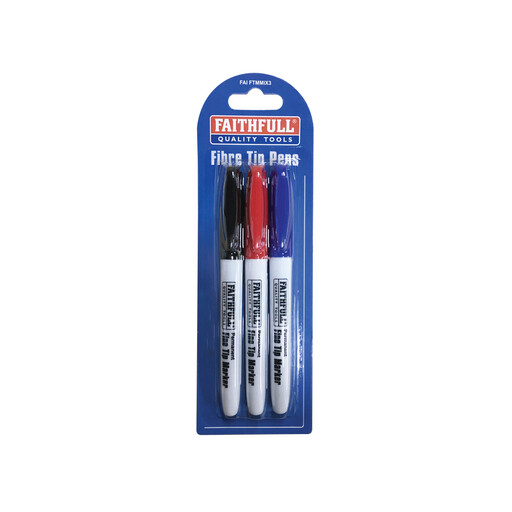
Why This Fits Their Persona: A compact choice for students, home offices, basic labelling and everyday colouring where fine, consistent lines are required.
The fibre tips and three-colour format make its intended paper-based use clear, avoiding the assumption that it is a heavy-duty surface marker.
Fine fibre tips, quick-drying ink and a lightweight ergonomic barrel.
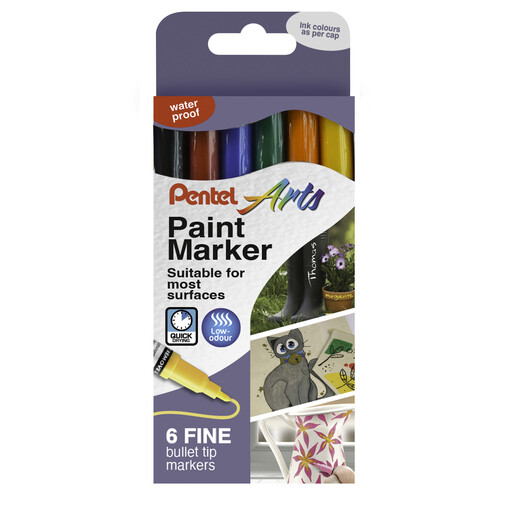
Why This Fits Their Persona: Suitable for crafters, hobby users and workshop tasks requiring opaque, controlled marks across several hard surfaces.
Its listed surface range and pigment-based formulation help distinguish it from ordinary fibre tip marker pens.
Fine 2.9 mm bullet tip, aluminium barrel and low-odour paint ink.
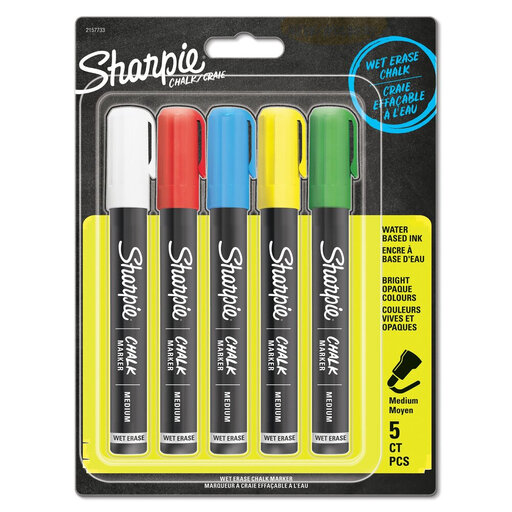
Why This Fits Their Persona: Designed for changing menus, classroom displays, shop windows and home notices on suitable non-porous surfaces.
The wet-erase format is clearly intended for removable display writing rather than permanent labelling.
Assorted bright colours and removal with a damp cloth on appropriate surfaces.
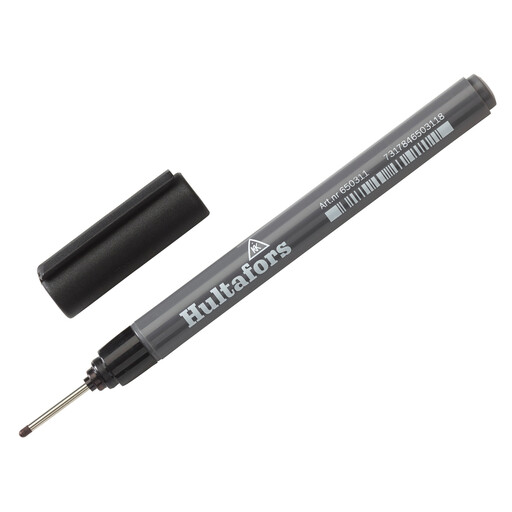
Why This Fits Their Persona: Its extended design is intended for marking inside deep holes, narrow gaps and other areas that ordinary marker pens cannot reach.
It solves a specific access problem instead of forcing a standard pen into a deep or restricted space.
Deep-hole access, bold black marks and a grip designed for regular workshop use.
Lifespan depends on ink type, frequency of use, tip pressure and whether the cap is replaced promptly. Store pens as directed, commonly horizontally for paint-based products, and recap them immediately after use. A marker that is used daily will naturally run out sooner than one used occasionally.
Removal depends on the ink formulation and surface finish. Some marks may lift with an appropriate cleaning product, while textured or porous plastic can retain pigment. Test any cleaning method on a hidden area and do not assume that “permanent” ink is removable without residue.
Some paint markers are described as low-odour, but this does not remove the need for ventilation. Follow the product warning, keep the cap secured when not in use and allow marks to dry in accordance with the instructions. For classrooms, bedrooms or enclosed offices, consider whether a water-based or wet-erase alternative is more suitable.