
24/7 Customer Support

Free returns

Same-day & Next-day Delivery

Quality Guaranteed

Unlock Your Welcome Offers: FREE Delivery | Up to 80% OFF | Free 30-day JoyPlus trial
Download the APP
Buying markers and pens can look straightforward until the first pen dries out, the ink bleeds through your notebook or a supposedly washable colour leaves a stain on clothing. From art markers and colouring pens to whiteboard markers and chalk markers, each type is designed for a particular surface and style of use.
The right choice depends less on the size of the colour set and more on the tip, ink formula, surface compatibility and storage design. This guide explains the practical details to check before buying, helping UK households, classrooms, offices and creative users avoid wasted money.
A 100-colour set may appear economical, but it is not automatically the right purchase. If you mainly write in a bullet journal, many colours may remain unused while you need reliable fine lines and subtle shades. Conversely, illustrators and users working on adult colouring books may benefit from a broader palette.
Check whether the set includes a swatch card, numbered colours or a storage case. These features make a large collection easier to organise and reduce the chance of buying duplicate shades later.
A broad brush tip is useful for filling areas, shading and expressive lettering, but it may be unsuitable for small labels or detailed drawing. A fine tip creates controlled lines, although it can be slow for larger areas.
Dual-tip brush pens combine both formats, while traditional felt tip pens with a bullet tip offer a more consistent line for notes, diagrams and simple illustrations. For calligraphy, look for a flexible brush or chisel profile rather than relying on colour count alone.
Water-based markers are often easier to clean than solvent-based alternatives, but “washable” does not mean every mark will disappear from every material. Fabric, unfinished wood and porous paper can absorb ink quickly.
Whiteboard markers are intended for non-porous boards. Chalk markers and glass markers generally work on glass, slate and other non-porous surfaces, but the removal method varies. Always read the product instructions and try a small, discreet area first.
Consider the type of marks you need:
A dual-tip set can be a practical option where one pen needs to handle both outlining and colouring.
Water-based markers are commonly chosen for paper crafts, schoolwork, colouring books and journals. They can often be blended with water or another colour, but the result depends on the paper weight and coating.
For detailed colouring, check whether the product description refers to paper-friendly ink, quick drying or reduced paper fluffing. Heavyweight paper is more suitable for watercolour-style blending. On thin notebook paper, even water-based ink may show through, so test a spare page before starting a finished design.
Use the following as a practical guide:
For children under three, check the warning information carefully. Several marker sets contain small components and are not suitable for this age group. Caps should also be replaced securely, and spills should be cleaned while fresh.
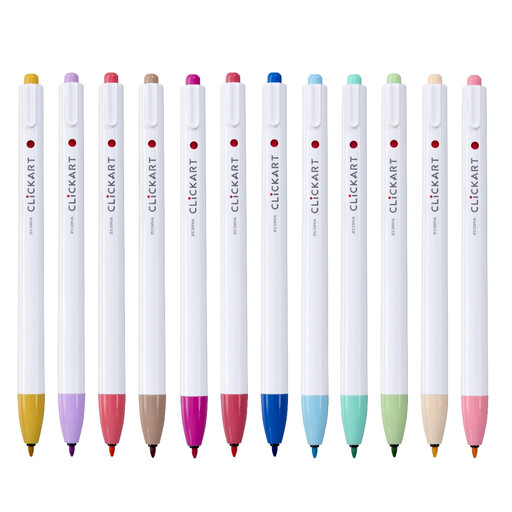
Why This Fits Their Persona: The 12-colour pastel palette is manageable for beginners, students and bullet journal users who want coordinated shades without storing a very large set.
The retractable capless design reduces the risk of losing caps. The pens should still be fully retracted after use, and storage conditions can affect performance.
12 assorted light colours, a 0.6mm line and a compact carry case. The water-based ink is described as blendable and smudge-resistant.
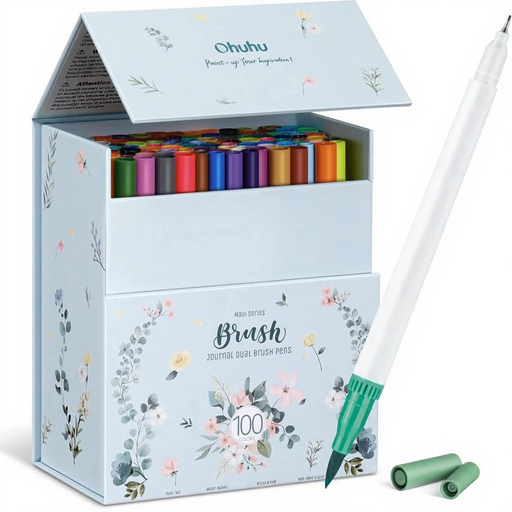
Why This Fits Their Persona: Illustrators and adult colouring book users who want a broad palette, organised storage and two nib styles in every pen may find this format more suitable.
The 0.4mm fineliner and 1–6mm brush tip address different tasks, while the numbered colours and DIY swatch card help prevent confusion across a large collection.
100 numbered colours, five replacement tips and water-based ink that can be blended with water on suitable heavyweight paper.
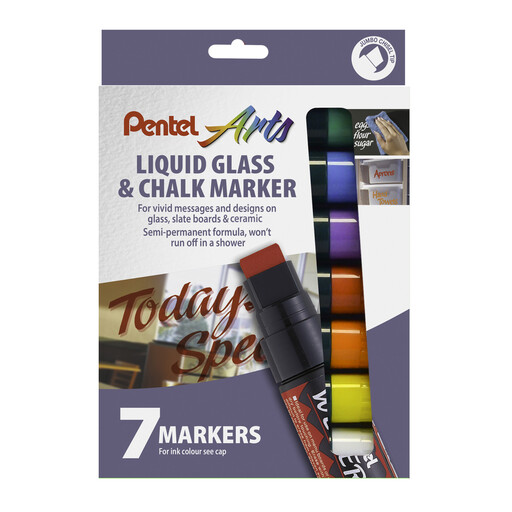
Why This Fits Their Persona: Businesses, cafés, schools and households creating menus, notices or large displays can use the broad chisel tip on suitable glass and slate surfaces.
The listing clearly excludes vinyl, wood and painted MDF chalk boards, helping users avoid applying semi-permanent ink to unsuitable porous surfaces.
A 10–15mm jumbo chisel tip covers large areas efficiently, and the semi-permanent ink is designed to resist running in a light shower once dry.
We have compiled a complete, real-time list of products that fully satisfy these strict selection criteria and UK safety regulations.
They can be suitable, particularly on thicker paper. Water-based ink may support layering or blending with water, but thin colouring-book pages can show bleed-through. Place a scrap sheet behind the page and test a colour in an unused area first.
Lifespan depends on usage, nib pressure, storage and whether the pen is capped or retracted correctly. Frequently used felt tip pens may run down sooner than occasional journalling pens. Some capless designs use moisture-retaining technology, but performance can still vary with the storage environment.
No. Chalk markers are generally intended for non-porous surfaces such as glass, slate or suitable display boards. Do not assume they will erase cleanly from wood, vinyl or painted MDF. Check the product instructions and test an inconspicuous section before creating a permanent display.