
24/7 Customer Support

Free returns

Same-day & Next-day Delivery

Quality Guaranteed

Unlock Your Welcome Offers: FREE Delivery | Up to 80% OFF | Free 30-day JoyPlus trial
Download the APP
Choosing markers and pens can seem straightforward until ink dries out, colours fail to show or a supposedly removable mark becomes difficult to clean. Different surfaces and tasks require different ink formulations, nibs and pack sizes. A marker suitable for a whiteboard may be unsuitable for glass, while a permanent paint marker can damage a surface that needs regular updates.
This guide from the Joybuy Product Recommendation Officer explains the practical details to check before buying, then matches several options to common UK shopping needs.
The phrase “chalk marker” does not always mean the same thing. Some are wet-erase markers designed for non-porous boards and glass, while others are semi-permanent and may resist light rain once dry. Neither type should automatically be used on porous materials such as untreated wood, fabric or some painted boards.
Always check:
Permanent markers and paint markers are useful for durable labelling, craft projects and marking materials such as metal, glass or plastic. However, permanent pigment-based ink is not intended for temporary menus, classroom schedules or frequently changed displays.
For notes and study, erasable gel pens may be more suitable. They allow corrections, but heat-sensitive or erasable ink should be tested before use on important documents, as it may not be appropriate for records that need long-term permanence.
A large stationery set may offer many colours but still be unsuitable if the nib is too broad for small writing or too fine for sign-making. Tip shape also affects control: bullet tips support consistent lines, chisel tips provide variable widths and sponge-style tips create dots and broad marks.
A smaller set with the correct nib, ink and surface compatibility can be more useful than a larger mixed pack.
Match the ink to the job:
A 0.5mm needle tip is suited to precise writing, forms and detailed notes. Fine paint marker tips around 2.9mm provide controlled lettering and craft details, while medium tips around 4.5mm offer more coverage. Jumbo chisel tips measuring approximately 10–15mm are intended for large notices, menus and display work.
If a marker has a reversible nib, check whether it offers both bullet and chisel options. This can reduce the need to purchase separate pens for headings and fine details.
Pack size should reflect how often the pens will be used. A 12-pack may make sense for a busy classroom or shared office, whereas a four- or six-colour set may be sufficient for occasional home projects.
To extend usable life:
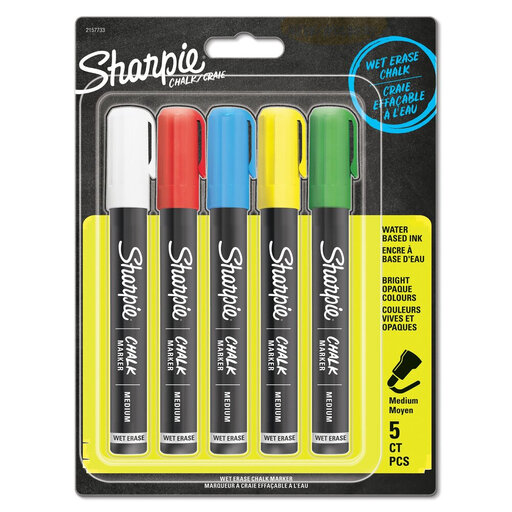
Why This Fits Their Persona: A five-colour set offers a practical starting point for home displays, classroom notices and creative projects without requiring multiple specialist packs.
It is specified for non-porous surfaces and can be wiped away with a damp cloth, helping avoid buying permanent ink for temporary displays.
Assorted vibrant colours; suitable for blackboards, light boards, whiteboards, windows and glass.
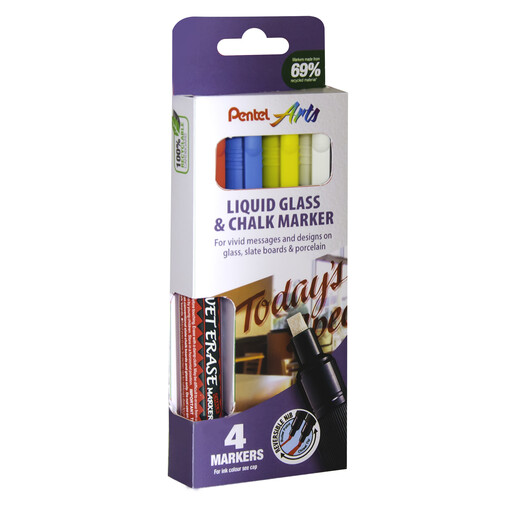
Why This Fits Their Persona: Suitable for polished menu boards, shop windows, events and home decoration where line variation and strong colour visibility matter.
The product information clearly identifies non-porous surfaces and damp-cloth removal, while the reversible nib reduces the need to buy separate tip styles.
Includes red, blue, yellow and white; reversible bullet and chisel nibs; made with a recycled plastic barrel.
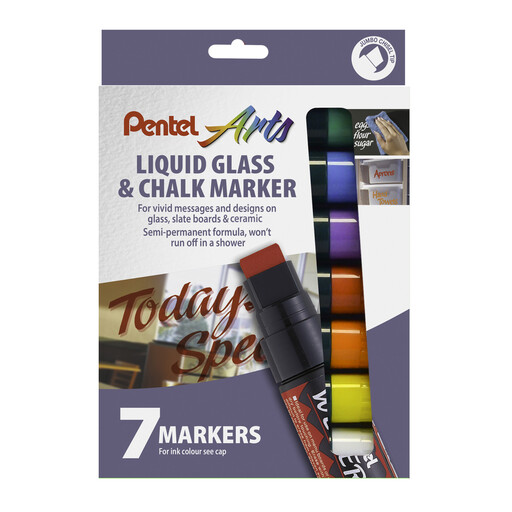
Why This Fits Their Persona: A practical match for cafés, market stalls, classrooms and event organisers creating large notices or frequently updated signage.
Its jumbo chisel tip is intended for large areas, and the instructions specify removal with a damp cloth or non-scratch scourer rather than promising universal wipe-off performance.
10–15mm chisel tip; suitable for slate chalkboards and glass; once dry, it resists a light shower.
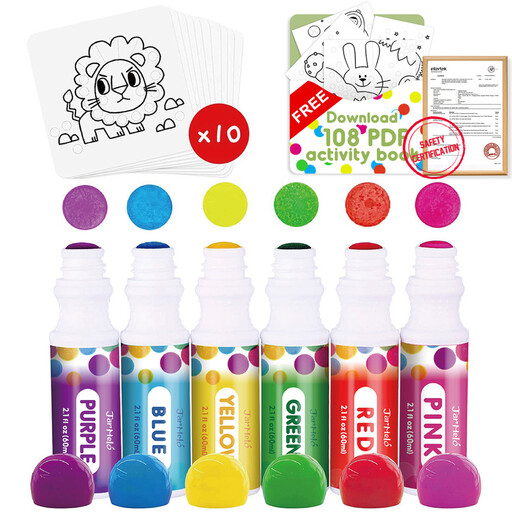
Why This Fits Their Persona: The jumbo format is designed for toddlers, while the included activity sheets can support colouring, early learning and supervised creative play at home.
The water-based, alcohol-free ink is described as washable from skin and most fabrics, while the large sponge pad creates dots without requiring fine motor control.
Six assorted colours; approximately 62ml ink capacity per marker; includes physical and downloadable activity pages.
We have compiled a complete, real-time list of products that fully satisfy these strict selection criteria and UK safety regulations.
For office schedules and lessons, compare whiteboard markers by erasability, tip shape and pack quantity. The BIC Ecolutions Velleda 1701 red whiteboard marker is supplied in a 12-pack and uses a durable bullet tip for consistent writing on whiteboards and other non-porous surfaces.
For crafts, signage and object labelling, paint markers offer a permanent opaque finish. Fine or medium tips are more manageable for lettering than jumbo tips. The Pentel Fine Paint Marker sets use a 2.9mm bullet tip, while the Pentel Medium Paint Marker set uses a 4.5mm bullet tip.
For everyday corrections, a 0.5mm black or blue erasable gel pen pack can cover schoolwork, drafting, journalling and office notes. Use caution with legal, archival or important paperwork, as erasability is a feature rather than a guarantee of long-term document security.
Some are, but the surface matters. Check whether the product is intended for conventional slate, glass, whiteboards or another non-porous material. Avoid porous surfaces unless the instructions specifically allow them, and test removal in a discreet area.
Lifespan depends on ink type, frequency of use, storage and whether the cap is replaced securely. Keeping pens capped, storing them as directed and avoiding heat or direct sunlight can help maintain ink flow. Paint and liquid chalk markers may also need shaking and priming before use.
No. Washable ink is generally easier to remove from skin and many fabrics, but results vary according to the material, drying time and cleaning method. Promptly rinse fresh spills with water, supervise young children and keep all stationery with small parts away from children under three.