
24/7 Customer Support

Free returns

Same-day & Next-day Delivery

Quality Guaranteed

Unlock Your Welcome Offers: FREE Delivery | Up to 80% OFF | Free 30-day JoyPlus trial
Download the APP
Buying markers and felt tip pens can appear straightforward until the ink dries out, bleeds through paper or fails to show clearly on the intended surface. UK shoppers often compare colour and pack size first, but the more important decisions involve the tip, ink formula and surface compatibility.
Whether you are a student organising notes, a teacher preparing classroom materials, an artist creating illustrations or a construction professional labelling metal and plastic, the right marker depends on how and where it will be used.
A large pack of assorted colour markers may look economical, but it can contain shades you rarely use or tips that are unsuitable for your work. A 72-pack of fine tip markers may be practical for a school or office, while a smaller set of paint markers may offer more value for occasional craft projects.
Check the number of useful colours, rather than the headline pack size. For business or industrial work, a smaller selection of high-visibility colours may be more suitable than a broad artistic palette.
Permanent markers are designed to leave lasting marks, but performance varies according to the surface. Paper, metal, plastic, glass, rubber and painted materials can all react differently to ink. A marker suitable for cardboard may not adhere properly to a smooth, non-porous surface.
For labelling tools, stock or building materials, look for clearly stated surface compatibility. For menus, shop displays and event signage, choose glass markers or chalkboard markers designed for non-porous surfaces instead of using a standard fibre tip marker.
A fine tip marker is useful for small labels and detailed writing, but it will be slow for filling large areas. Conversely, a jumbo chisel tip can produce bold lettering but may be awkward for compact handwriting.
The tip should match the task:
Water-based ink is commonly used in felt tip pens and journalling pens. It is generally suited to paper and can offer a smoother writing experience for notes, planners and creative work. Check whether the ink is described as smudge-resistant or designed to reduce bleed-through, particularly if you use thin notebook paper.
Permanent ink is more appropriate when marks need to remain visible on materials such as plastic, metal or wood. However, permanent ink may stain skin, clothing and surfaces, so follow the product warnings and use adequate ventilation where advised.
Paint and pigment-based ink can provide opaque coverage on materials including glass, metal, rubber and thick card. Paint markers usually need shaking and nib priming before use. Always test on an inconspicuous area first.
For a chalkboard or window display, semi-permanent wet-erase ink is a different option. It can usually be removed with a damp cloth from suitable non-porous surfaces, but it should not automatically be used on vinyl, wood or painted MDF chalkboards.
Look for the stated tip type and measurement where available. For example, a 2.9mm bullet tip offers more control than a jumbo chisel tip measuring 10mm to 15mm. A reversible nib can be useful when one pen needs to create both narrow and broad lines.
A durable felt tip should retain its shape during normal use, while a retractable felt tip pen can reduce the chance of losing a cap. Regardless of tip design, replace caps securely or retract the nib after use to help prevent drying.
Bulk marker packs can reduce the need for frequent replacement in offices, schools, warehouses and workshops. Before buying, consider:
For professional marking, a 20-pack or 48-pack can be practical where markers are used continuously. For home journalling, a 12-pack may provide enough colour variety without unnecessary duplicates.
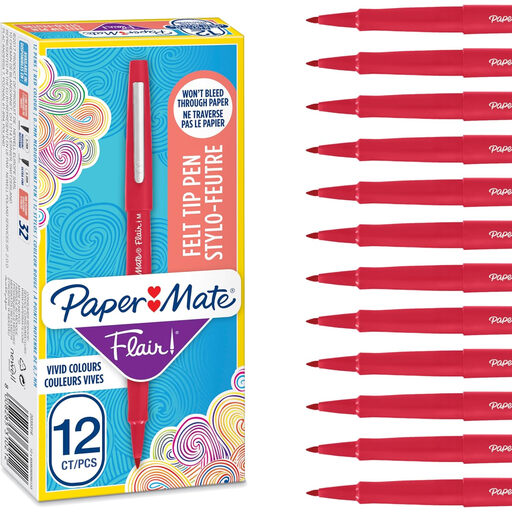
Why This Fits Their Persona: A practical choice for students, home users and note-takers who mainly write or draw on paper. The 12-pack suits everyday planning without requiring specialist ink.
It is positioned for paper use, avoiding the mistake of expecting a standard felt tip pen to mark metal, glass or plastic permanently.
Medium felt tip; smudge-resistant ink described as suitable for journalling, note-taking and art projects.
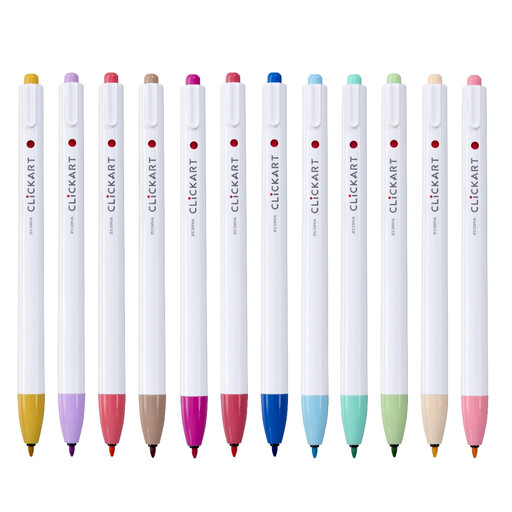
Why This Fits Their Persona: Useful for planners, bullet journals and portable writing where a lost cap is inconvenient. The assorted light colours suit colour coding and decorative notes.
The retractable design addresses cap loss, while the stated 0.6mm line width clarifies its intended fine-detail use.
2.0mm bullet tip; water-based ink described as blendable and suitable for fine lines.
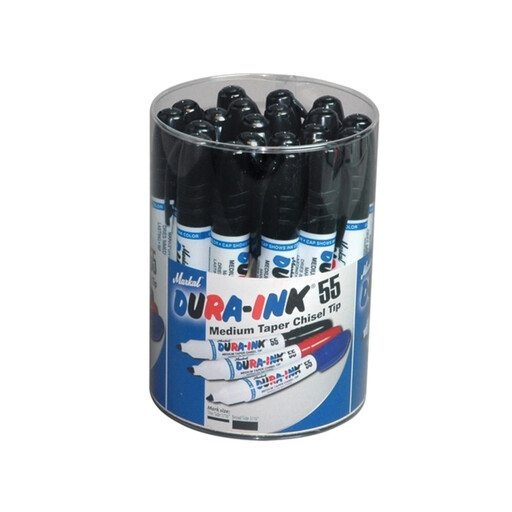
Why This Fits Their Persona: Designed for frequent marking in construction, workshops, warehouses and other professional settings where a steady supply is useful.
The product description specifies permanent ink, waterproof and fade-resistant properties, rather than leaving surface durability unclear.
Medium taper tip for broad and fine marks; 20 black markers for repeated use.
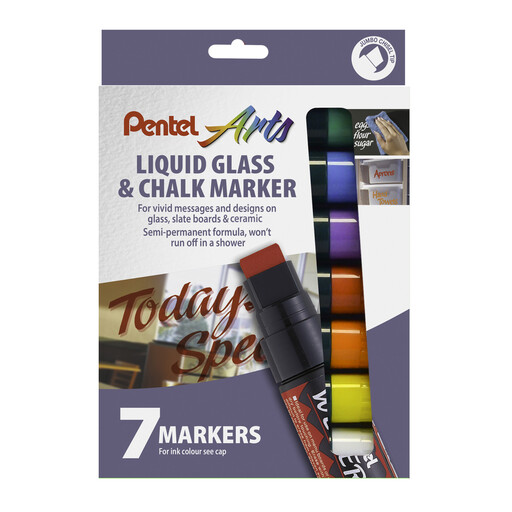
Why This Fits Their Persona: A suitable format for café menus, event notices, shop windows and artwork on conventional slate chalkboards or glass.
It clearly identifies suitable surfaces and removal instructions, helping prevent the common mistake of applying wet-erase ink to unsuitable boards.
Jumbo chisel tip measuring 10mm to 15mm; semi-permanent formula for indoor and outdoor display use.
We have compiled a complete, real-time list of products that fully meet these strict selection criteria and UK safety regulations.
Yes, water-based felt tip pens are commonly used for notes, planners, colour coding and creative writing. Check the paper compatibility and look for wording such as smudge-resistant or reduced bleed-through if you use thin notebooks.
Lifespan depends on ink type, frequency of use, storage and whether the cap is replaced correctly. Permanent markers and paint markers should be capped securely after use, while retractable pens should be closed fully. Store products in a cool, dry place and follow any horizontal-storage guidance.
Follow the product warning on the packaging. Some permanent and paint markers advise use in a well-ventilated area because of fumes. Keep markers away from young children, avoid eye and skin contact, and test the ink on a small area before marking valuable materials.