Runners testing food for long runs
An individually portioned bar makes the carbohydrate per item straightforward to count. Test the exact snack and timing in training before deciding whether to carry it for an event.


A single marshmallow bar can be a convenient carbohydrate top-up if you have tested it during training, but it is not a complete marathon-fuelling plan. The 35 g Mallow & Marsh Vanilla Bar listed by Waitrose provides about 27.1 g carbohydrate; count any bar alongside your other food and drinks, and plan for the length of the run rather than assuming one bar covers an hour.
A sweet snack is worth considering as one measured part of a running plan, not simply because it comes in a portable bar.
An individually portioned bar makes the carbohydrate per item straightforward to count. Test the exact snack and timing in training before deciding whether to carry it for an event.
A chocolate-coated bar, a cereal-based square and plain marshmallows can differ in carbohydrate per portion, fat and pack format. Compare the nutrition panels at the serving size you would actually carry.
Conventional marshmallows may contain beef gelatine, while a vegan label does not establish suitability for a particular food allergy. Check the current pack’s ingredients and precautionary allergen statements.
Start with carbohydrate per portion and the planned duration, then consider whether the format, ingredients and eating schedule work for your run.
| Priority | What to check | Your needs |
|---|---|---|
| Carbohydrate per hour | Read carbohydrate per bar or serving, then total everything planned for the hour. World Athletics gives 30–60 g per hour for endurance events lasting 1–2.5 hours and up to 90 g per hour for events over 2.5 hours; the higher intake calls for particular attention to carbohydrate sources. | I need to know what one portion contributes, rather than treating one bar as an hourly allowance. Waitrose lists the 35 g Mallow & Marsh Vanilla Bar at 77.5 g carbohydrate per 100 g, or about 27.1 g per bar. |
| Portion and carrying | Check whether the food is an individual bar or a pouch that needs portioning. Compare carbohydrate using the stated serving size: Sainsbury’s lists 24.1 g per four-sweet serving of its plain marshmallows. | A single bar is simpler for me to count and pack; if I choose a pouch, I would portion the sweets before setting out. |
| Format and tolerance | Check the exact product’s fat per portion and whether it is coated or cereal-based. World Athletics advises practising competition eating during training, including the food and fluid plan. | I want to find out during a training run whether I can comfortably eat and carry this particular snack. A familiar flavour alone does not answer that question. |
| Ingredients and allergens | Read the current ingredient list, declared allergens and precautionary statements. The Food Standards Agency says vegan labelling alone should not be used as a substitute for allergen labelling. | If I avoid animal-derived ingredients or need to manage an allergy, I need to check the exact product; a marshmallow flavour or vegan claim is not enough. |
One 35 g Mallow & Marsh Vanilla Bar provides about 27.1 g carbohydrate based on Waitrose’s nutrition listing. That is below the 30 g-per-hour lower figure in World Athletics’ guidance for 1–2.5-hour endurance events; longer events may call for a different hourly plan.
Read the amount per bar and add up the carbohydrate from all food and drinks you plan to take during each hour.
Whether a chocolate-coated snack works while running is an individual question. World Athletics advises practising competition eating in training.
Try the exact product, portion, timing and accompanying fluids on a training run before deciding whether it belongs in your event plan.
Sainsbury’s lists 24.1 g carbohydrate per four-sweet serving of its plain marshmallows. The Waitrose-listed 35 g Mallow & Marsh chocolate-coated bar provides about 27.1 g carbohydrate and 3.7 g fat. The serving sizes and formats differ.
Compare the nutrition panel for the exact portion you would eat, as well as how you would carry it.
The Food Standards Agency warns that vegan labelling alone is not a substitute for allergen labelling.
Check the current pack’s full ingredients, highlighted allergens and precautionary statements for the specific ingredients you need to avoid.
These examples show why the exact product matters: a single chocolate-coated bar and a sharing pouch are different choices for carrying and counting portions.
Waitrose lists a 35 g Vanilla Bar with milk chocolate as an individual snack bar.
Its plain marshmallows come in a 200 g pouch rather than an individual bar.
Its own-label pink-and-white marshmallows are a pouch product, distinct from the Mallow & Marsh bar it lists.
Its marshmallows come in a 180 g pouch, not a single-bar format.
Its Soft Marshmallows are a 180 g pouch; it also describes a separate Plant Kitchen marshmallow product as vegan.
This cereal-based marshmallow snack bar is an individually portioned option to assess as one part of a training-run carbohydrate plan, rather than a plain marshmallow bar or a complete fuelling plan.
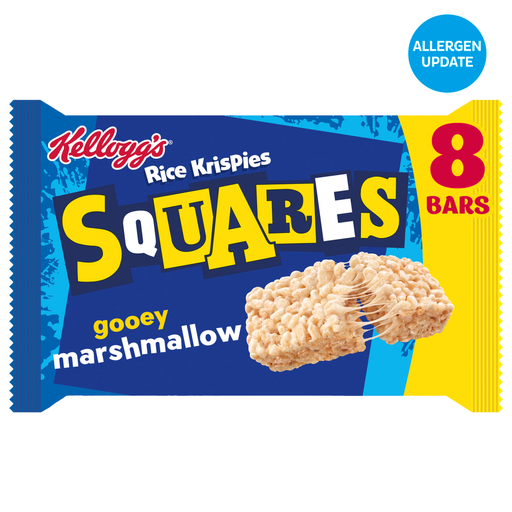 No image available
Each 28 g bar is a countable snack to test during training and include alongside other planned carbohydrate sources. Joybuy lists 21 g carbohydrate and 3.4 g fat per bar; one bar is below the 30 g-per-hour lower figure in World Athletics’ guidance for 1–2.5-hour endurance events. The ingredients include barley, wheat and milk, so check the current pack if these or other allergens matter to you.
Do not assume it can. World Athletics gives 30–60 g carbohydrate per hour for endurance events lasting 1–2.5 hours, while the 35 g Mallow & Marsh Vanilla Bar listed by Waitrose provides about 27.1 g. Add up the carbohydrate from the bar and any drinks or other food planned for that hour.
A tested bar can be one item in a plan, but a bar on its own does not establish that the plan meets your intended hourly intake. World Athletics gives guidance of up to 90 g carbohydrate per hour for events over 2.5 hours and discusses multiple-transportable carbohydrate sources, such as glucose plus fructose, at higher intakes. Check the carbohydrate amounts and sources across everything you intend to use.
Try the exact bar during training, not for the first time on race day. World Athletics advises practising competition eating in training, so test the portion, timing and fluids together.
Check the individual product: the listed conventional marshmallows from Sainsbury’s, Waitrose, Asda and M&S contain beef gelatine, as does the Waitrose-listed Mallow & Marsh bar. M&S describes a separate marshmallow product as vegan, but the Food Standards Agency cautions that vegan labelling alone does not establish suitability for a food allergy.
Read the current ingredient list, highlighted allergens and precautionary allergen statements for the exact product. The Waitrose listing for the Mallow & Marsh Vanilla Bar identifies milk and soya and notes possible egg, nut and peanut traces; the Food Standards Agency warns against using a vegan label in place of allergen information.