What should you check?
Start with the length and demands of the ride, then compare portions and ingredients against the snack you actually want to carry.
| Priority | What to check | Your needs |
|---|
| Ride duration |
Consider when you expect to eat and what else you plan to carry. British Cycling says rides up to about 90 minutes do not normally need additional fuel. |
For a shorter ride, I may not need to bring a bar for fuel. On a longer ride, I want any bar to fit my wider food and drink plan. |
| Carbohydrate per bar |
Compare the declared amount for the actual portion: Mallow & Marsh lists 27.1 g in 35 g, while Kellogg’s lists 21 g in 28 g. Check the amount alongside your other planned intake. |
If I am choosing a bar for carbohydrate during a longer ride, I need to know what one portion contributes rather than assuming it covers the ride by itself. |
| Portion and handling |
Check the bar size and whether the current pack contains individually wrapped portions. Consider where you can carry it and when you can eat it safely. |
I want a portion I can pack and access without relying on an awkward wrapper or trying to eat when I need both hands on the bars. |
| Ingredients |
Read the current ingredients, allergen and trace statements. Check gelatine and sweeteners if either affects your choice. |
Before packing a bar, I need its ingredients to suit my dietary requirements and my experience of eating during exercise. |
| Protein or ride snack |
Barebells declares 17 g protein and 17 g carbohydrate per 55 g Rocky Road bar. Compare both figures with the purpose of your snack. |
If protein is my reason for buying, I can choose on that basis without mistaking a protein-focused bar for the largest carbohydrate portion. |
A marshmallow-style bar on Joybuy
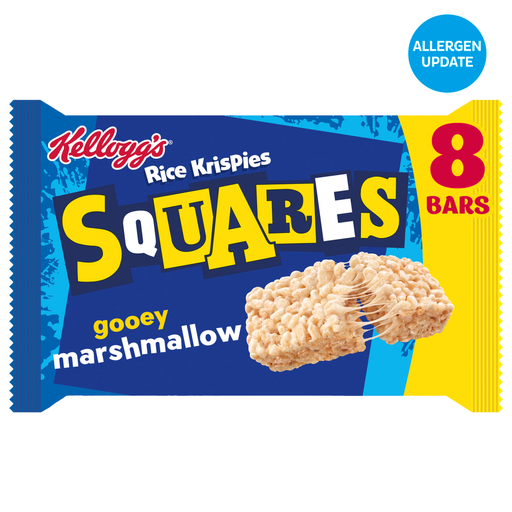
This Kellogg’s eight-bar pack offers 28 g cereal-and-marshmallow portions for riders considering a smaller carbohydrate serving. Check the pack format if you need to carry an individually wrapped bar.
 No image available
Kellogg’s Rice Krispies Squares Marshmallow Snack Bars, 8 × 28 g
Consider one bar when its declared 21 g carbohydrate fits your planned food intake for a ride. The pack contains eight 28 g bars; check whether each is individually wrapped if that matters for carrying it. The product information identifies barley, wheat, milk and beef gelatine, so check the current pack for ingredients and allergen statements.
View on Joybuy
Questions about bars for cycling
Do I need a marshmallow bar for every bike ride?
No. British Cycling says additional fuel is not normally needed for rides up to about 90 minutes. For a longer or harder ride, consider any bar as part of your wider food and drink plan rather than an automatic requirement.
Which of these bars contains the most carbohydrate per portion?
Of the three bars discussed here, the Mallow & Marsh Vanilla bar has the largest declared amount: 27.1 g carbohydrate per 35 g bar. Kellogg’s declares 21 g per 28 g Gooey Marshmallow bar, and Barebells declares 17 g per 55 g Rocky Road bar, according to their respective product information.
Is one Mallow & Marsh Vanilla bar enough for a longer ride?
Do not assume so from its 27.1 g carbohydrate declaration alone. The UK Sports Institute says longer, more intense exercise requires more carbohydrate; consider the ride and your other planned food and drink when deciding where one bar fits.
Should I choose the Barebells bar because it contains protein?
Choose it if a protein-focused sweet snack is what you want, not simply because the flavour is marshmallow-style. Barebells declares 17 g protein and 17 g carbohydrate per Rocky Road bar and warns that excessive consumption may have laxative effects.
What should I check if ingredients restrict my choice?
Read the current pack’s ingredients, allergen and trace statements before buying. The bars discussed here have different ingredient profiles, including gelatine in the Mallow & Marsh Vanilla and Kellogg’s marshmallow bars, while the Barebells Rocky Road bar contains sweeteners.


