For guests who can chew and swallow normally, choose a sharing pouch if you are happy to serve portions yourself; choose a vegan product when avoiding animal-derived ingredients matters. Separate marshmallow-based portions can make serving easier, but check their ingredients and allergens rather than assuming they are equivalent to plain marshmallows. If a guest follows a dysphagia diet, follow their individual swallowing advice instead: University Hospitals Birmingham NHS Foundation Trust excludes sticky marshmallows from its Level 6 Soft and Bite-Sized guidance.
Who is this for?
Hosts serving guests without chewing or swallowing restrictions
A sharing pouch lets you put out portions in a bowl; separate units make it easier to allocate a serving to each guest. Check the ingredients and nutrition panel for the particular product.
Hosts serving vegan or gelatine-avoiding guests
Check the dietary statement and gelling ingredients rather than judging by colour or texture. Waitrose Pink and White Marshmallows and M&S Soft Marshmallows list beef gelatine; M&S labels its Plant Kitchen alternative vegan.
Hosts serving someone with dysphagia
Use the guest’s individual swallowing plan to choose what to serve. University Hospitals Birmingham NHS Foundation Trust lists marshmallows among sticky foods excluded from its Level 6 Soft and Bite-Sized guidance; a product described as soft does not override clinical texture advice.
What should you check?
Settle any swallowing restrictions before choosing a pack format. Then compare how you will serve it, the ingredients and the nutrition information on the current pack.
| Priority |
What to check |
Your needs |
| Swallowing texture |
Check whether a guest has a prescribed texture-modified diet or advice to avoid sticky foods. University Hospitals Birmingham NHS Foundation Trust excludes marshmallows from its Level 6 Soft and Bite-Sized guidance; follow the individual clinical plan. |
If someone has swallowing restrictions, I need to choose a sweet option permitted by their own plan, not rely on a marshmallow’s soft appearance. |
| Portions and sugars |
Compare servings or units per pack and sugars per 100g. Waitrose lists approximately 26 servings in its 200g pouch; Tesco lists Tunnock’s Snowballs as eight 30g units. A pack’s total-sugars figure is not necessarily the same measure as free sugars in NHS guidance. |
I want to decide how many portions to put out rather than use the whole pouch or multipack as my serving plan. |
| Ingredients and allergens |
Read the current ingredients, dietary statement and allergy information. The standard Waitrose and M&S products list beef gelatine; M&S labels its Plant Kitchen marshmallows vegan but states they are not suitable for people with milk, nut or peanut allergy. |
For guests avoiding animal products or particular allergens, I need to check the exact pack instead of assuming all marshmallows have the same ingredients. |
| Serving format |
Check whether the pack contains loose marshmallows or separate units, and whether any coating changes the ingredients. Tesco lists Tunnock’s Snowballs as eight coconut-covered marshmallow units, rather than plain marshmallows in a sharing pouch. |
Separate portions would help me serve each guest, but I may prefer a plain pouch if I am serving from a bowl and the guests’ ingredient requirements allow it. |
Buying mistakes to avoid
-
Assuming a soft sweet suits every older guest
Marshmallows are sticky. University Hospitals Birmingham NHS Foundation Trust specifically excludes them from its Level 6 Soft and Bite-Sized dysphagia guidance, regardless of how soft a product sounds.
Ask about swallowing restrictions before choosing the menu. Where a texture-modified diet applies, use the person’s clinical plan and advice from their speech and language therapist or clinician.
-
Treating separate units as plain marshmallows
Tunnock’s Snowballs come as eight units, but the Tesco product information describes a coconut-covered confection and lists ingredients including milk, egg, soya, wheat and sulphites.
Choose separate units when that serving format is useful, and check the full ingredients against each guest’s requirements.
-
Assuming vegan also means suitable for allergies
M&S labels its Plant Kitchen marshmallows vegan, but states that they are not suitable for people with milk, nut or peanut allergy. Its listed sugars value is 66.6g per 100g.
Use the vegan label to check animal-product suitability, and assess allergies and nutrition separately on the current pack.
-
Letting pack size determine the serving
A sharing pouch and a multipack contain different numbers and sizes of potential servings. Sugars figures printed per 100g cannot, on their own, tell you the amount in the portion you serve.
Check the stated serving or unit information and decide how much to put out before opening the pack.
Brand and product-line examples
These products illustrate different formats and ingredients; the details apply to the named products, not every item sold by each brand.
Waitrose
Waitrose Pink and White Marshmallows illustrate a plain 200g sharing pouch, listed by Waitrose as approximately 26 servings.
- Waitrose publishes the pack size, serving information, ingredients and sugars value of 61.5g per 100g.
- The ingredients include beef gelatine. Check the current pack because recipes and allergy information can change.
M&S
M&S lists both Soft Marshmallows and a Plant Kitchen product labelled vegan, offering a choice between different gelling ingredients.
- The standard product lists beef gelatine; the vegan product lists carrageenan.
- M&S lists 63.1g sugars per 100g for Soft Marshmallows and 66.6g per 100g for its vegan product. It states that the vegan product is not suitable for people with milk, nut or peanut allergy.
Tunnock’s
Tesco lists Tunnock’s Snowballs as eight 30g coconut-covered marshmallow units, a different serving format from a plain sharing pouch.
- The separate units make the number of servings straightforward to plan.
- This is a coated confection rather than a plain marshmallow; check its ingredients and declared allergens, including milk, egg, soya, wheat and sulphites.
Joybuy marshmallow options
These options include sharing bags, grape marshmallows described as individually wrapped, and a blueberry-flavoured bag. Compare the actual pack format and ingredients before choosing for your guests.
 No image available
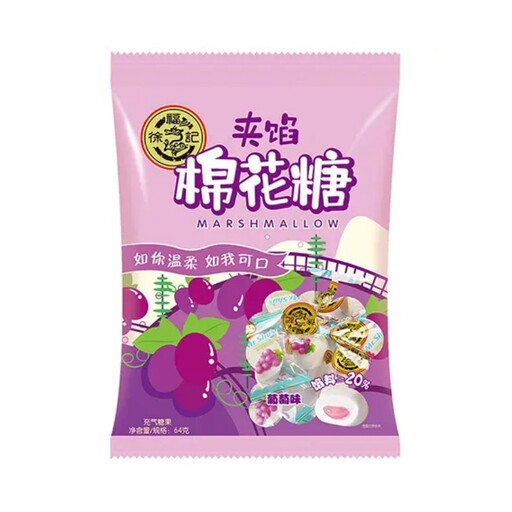
HSUFUCHI Grape Marshmallows 64g
The product description says the pieces are individually wrapped, which may help when serving guests separately. The 64g pack lists 65g sugars per 100g and contains egg and gelatine. Check the current pack for dietary and allergy suitability; do not use its portion format as a reason to disregard swallowing advice.
View on Joybuy
 No image available
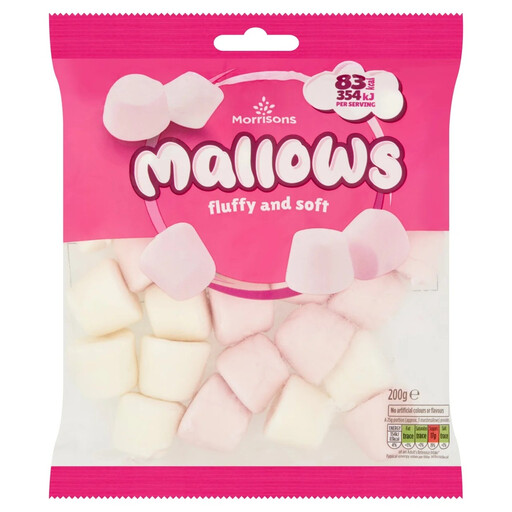
Morrisons Marshmallows 200g
This 200g bag can be portioned into a serving bowl, and the product description says to reseal it after opening. It lists 54.1g sugars per 100g and contains gelatine; check the current pack if the gelatine source matters to a guest. A soft texture does not establish suitability for someone following a dysphagia diet.
View on Joybuy
 No image available
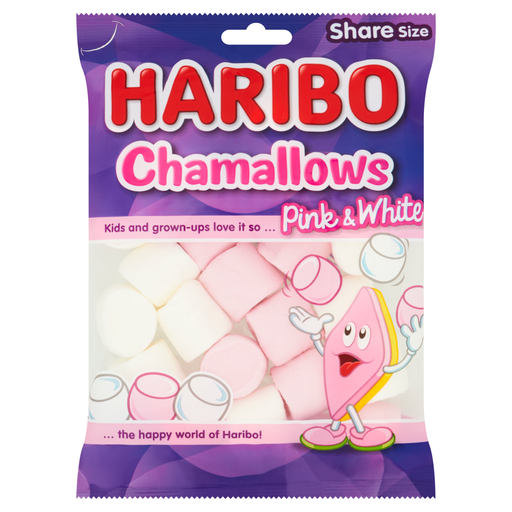
Haribo Chamallows 140g
This 140g bag is an option when the host wants to serve marshmallows from a shared pack. Its description lists 58g sugars per 100g, pork gelatine and possible traces of milk. Check the current packaging against guests’ dietary needs and any swallowing restrictions.
View on Joybuy
 No image available
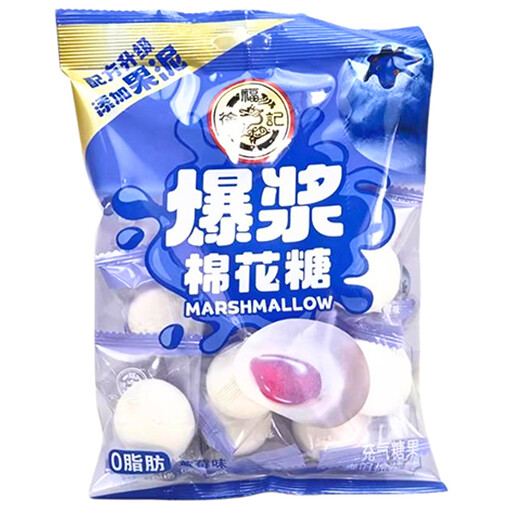
HSUFUCHI Blueberry Flavoured Marshmallows 64g
This 64g bag contains ready-to-eat marshmallows; check the pack if separate pieces or wrapping matter to your serving plan. The description lists 65g sugars per 100g, gelatine and sweetener E420. Check the current ingredients, allergy information and on-pack consumption warning before serving.
View on Joybuy
Questions about serving marshmallows
Are marshmallows suitable for an older guest with dysphagia?
Do not assume they are suitable. University Hospitals Birmingham NHS Foundation Trust excludes sticky marshmallows from its Level 6 Soft and Bite-Sized guidance. Follow the guest’s individual texture plan and their clinician’s or speech and language therapist’s advice.
Does a soft marshmallow suit someone with swallowing difficulties?
A soft description does not establish swallowing suitability. M&S describes its conventional marshmallows as soft, while University Hospitals Birmingham NHS Foundation Trust identifies marshmallows as a sticky food to exclude from its Level 6 Soft and Bite-Sized guidance. Use the person’s individual clinical texture advice.
How can I tell whether marshmallows are vegan?
Check the current dietary statement and ingredients for the exact product. M&S labels its Plant Kitchen marshmallows vegan and lists carrageenan; Waitrose Pink and White Marshmallows and M&S Soft Marshmallows list beef gelatine.
What should I check for a guest with an allergy?
Read the allergy information and ingredients on the pack you will serve. Products differ: M&S states that its vegan marshmallows are not suitable for people with milk, nut or peanut allergy, while the Tesco listing for Tunnock’s Snowballs identifies several different allergens.


