Gym-goers sharing a sweet treat
A marshmallow bag can be something sweet to divide after training. If the snack is intended to include protein as well, check what else you plan to eat: Tesco lists just 0.7g protein in a 25g marshmallow portion.


A 140g or 200g marshmallow bag can suit a post-gym sweet treat if the size works for everyone sharing it. Do not mistake marshmallows alone for a protein-containing recovery snack: Tesco lists 0.7g protein per 25g portion, while University College London Hospitals describes exercise snacks that combine carbohydrate and protein. Check the portion information and ingredients on the exact bag you choose.
A marshmallow bag can be something sweet to divide after training. If the snack is intended to include protein as well, check what else you plan to eat: Tesco lists just 0.7g protein in a 25g marshmallow portion.
Ingredient lists matter here. M&S labels its vegan marshmallows as free from animal products, whereas the Waitrose and Sainsbury's bags described below list beef gelatine.
Pack weights and labelled servings give you different ways to plan a share. A 140g bag may be enough for a smaller group; check the serving basis before comparing its nutrition figures with those of a 200g bag.
Start with how many people will share the bag, then check the portion information, ingredients and intended use on the pack.
| Priority | What to check | Your needs |
|---|---|---|
| Post-exercise use | Check protein per labelled serving and decide whether this is simply a sweet treat. University College London Hospitals describes exercise snacks that combine carbohydrate and protein; Tesco lists 0.7g protein per 25g of its marshmallows. | I'm happy to share something sweet after training, but I do not want to treat the bag alone as a protein-containing snack. |
| Sugars and portions | Compare sugars per 100g, then check the amount in the share you intend to eat. Tesco lists 15.4g sugars per 25g; Sainsbury's lists 19.3g per four sweets. Those are different serving bases. | It would help to decide how to divide the bag before opening it, rather than comparing per-serving numbers without checking portion sizes. |
| Ingredients | Read the current ingredient and allergen statements for the exact product. Waitrose and Sainsbury's list beef gelatine; Epic Giant Toastin' Marsh-Mallows list pork gelatine, while M&S labels its vegan marshmallows as free from animal products. | If I avoid animal-derived ingredients or need to account for an allergen, the label on the bag matters more than its appearance. |
| Bag size and use | Match the weight to the number sharing and the occasion. The cited Haribo bag is 140g, Tesco's is 200g, and Epic's 300g bag is positioned for toasting. Epic warns that hot marshmallows can cause burns or choking. | For an immediate snack, I want enough for the group without choosing a toasting bag unless we will use it that way. |
Tesco lists 15.4g sugars and 0.7g protein per 25g of its marshmallows. University College London Hospitals describes carbohydrate-and-protein snacks for exercise, so the marshmallows alone do not provide that combination.
Decide whether you want a treat or a snack that also includes protein, and plan any accompanying food accordingly.
Tesco gives figures for 25g, while Sainsbury's uses four sweets as a serving. A per-serving number does not tell you which bag has less sugar for the same weight.
Use the per-100g figures for a like-for-like label comparison, then check the sugars in the amount you intend to share out.
Waitrose and Sainsbury's list beef gelatine in their standard bags, while Epic lists pork gelatine. A vegan label is also not a substitute for checking allergen information.
Read the ingredients and allergen statements on the current pack, particularly when buying for someone with a dietary restriction.
Epic's 300g Giant Toastin' bag is positioned for toasting and warns that hot marshmallows can cause burns or choking. Those cautions matter if the bag will also be used around children.
Choose the larger format for a planned group or toasting occasion, and follow the pack's handling instructions if you heat the marshmallows.
Tesco's 200g marshmallow bag gives shoppers a stated 25g portion to use when dividing a conventional sharing bag.
Waitrose Pink and White Marshmallows are a 200g own-label option for a group comparing standard bags.
M&S Plant Kitchen Vegan Marshmallows offer a 140g bag for shoppers who require animal-free ingredients.
Sainsbury's 200g marshmallow bag uses four sweets as its stated serving.
Asda lists Dandies Vegan Vanilla Flavoured Marshmallows in a 200g bag for shoppers considering a vegan option.
These 140g marshmallow bags are options for a post-gym sweet treat to share. Check the current pack's portions and ingredients against the needs of your group.
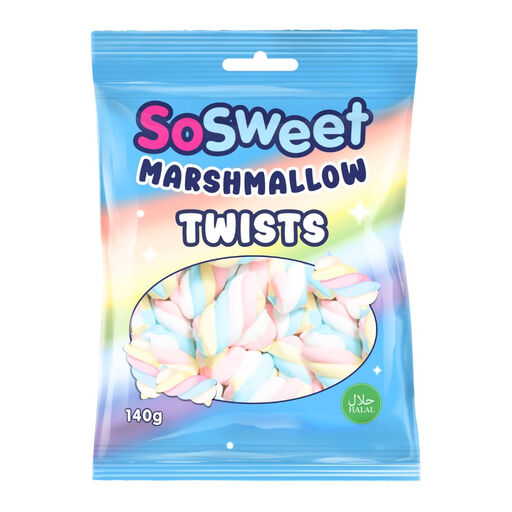 No image available
The 140g bag is an option when you want marshmallows to share after training. Check its labelled serving information before dividing it, and read the current ingredients if gelatine source or allergens matter to anyone in the group.
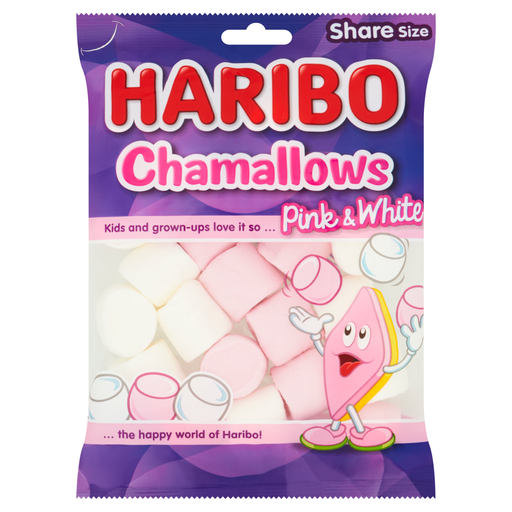 No image available
This 140g Haribo bag is a smaller branded option for a shared sweet treat. Check the pack for its serving size, ingredients and allergen information before choosing it for the group.
No: Tesco lists 0.7g protein per 25g portion of its marshmallows. University College London Hospitals describes exercise snacks that combine carbohydrate and protein, so consider what else you will eat if that combination is your aim.
Read the ingredients and dietary-suitability statement on the exact pack. M&S labels its Plant Kitchen marshmallows vegan, whereas Waitrose and Sainsbury's list beef gelatine in their standard bags and Epic lists pork gelatine. Check allergen statements separately.
Check the serving size as well as the sugar figure: Tesco lists 15.4g sugars per 25g, Sainsbury's lists 19.3g per four sweets, and Waitrose lists 4.7g per its stated serving. Compare per-100g labels for the same weight, then look at the portion you plan to have.