Hosts with a small breakfast table
If marshmallows are one sweet extra for several guests, consider a regular 200g bag. Tesco lists a 200g bag, while Waitrose places its 200g Pink and White Marshmallows in its sharing-pouches category.


For a small continental-breakfast table, a regular 200g bag is a starting point when marshmallows are an optional sweet to share. A 140g bag may be enough if only a few guests will take some; choose giant 300g mallows when toasting is part of the occasion. If guests have dietary requirements, check the ingredients and allergen information on the exact pack before serving it.
The useful distinction for a breakfast table is between regular marshmallows for sharing, a smaller pack for fewer takers and giant pieces intended for toasting.
If marshmallows are one sweet extra for several guests, consider a regular 200g bag. Tesco lists a 200g bag, while Waitrose places its 200g Pink and White Marshmallows in its sharing-pouches category.
Check each pack rather than treating marshmallows as interchangeable. Waitrose lists beef gelatine in its Pink and White Marshmallows; M&S separately lists a Plant Kitchen Vegan Marshmallows product.
Epic describes its 300g Giant Toastin' Mallows as intended for grilling and skewering. That format makes sense when toasting is part of the event, rather than when guests will simply take marshmallows from a bowl.
Decide how guests will use the marshmallows, then compare pack sizes and check the exact label for anyone with dietary requirements.
| Priority | What to check | Your needs |
|---|---|---|
| Pack size | Compare the stated weights: Tesco lists regular 200g marshmallows and Haribo Chamallows in a 140g bag. Match the amount to the likely number of takers. | I want enough to share without a large quantity left over. If only a few guests will take some, a 140g bag may be sufficient. |
| Intended use | Check whether the product is a regular marshmallow or a giant toasting format. Waitrose describes Epic Giant Toastin' Mallows, in a 300g pouch, for grilling and skewering. | Will guests take marshmallows from a bowl, or are we planning to toast them? The activity changes which format is useful. |
| Ingredients | Read the exact pack's ingredients and allergen information. Waitrose lists beef gelatine and wheat glucose syrup; M&S lists a separate Plant Kitchen Vegan Marshmallows product. | I need to know whether the marshmallows suit guests who avoid animal gelatine or have specific ingredient or allergen requirements. |
| Sugar information | Compare labelled sugars per 100g, or per serving when serving sizes are the same. The NHS notes that total sugars on a label are not necessarily the same as free sugars. | Marshmallows will be an optional sweet extra, and I want to use the label to decide how much to put out. |
Epic's 300g Giant Toastin' Mallows are described for grilling and skewering, a different use from taking regular marshmallows from a breakfast bowl.
Choose that format when toasting is planned; otherwise compare regular bags by weight.
Waitrose Pink and White Marshmallows list beef gelatine and wheat glucose syrup. A familiar appearance does not establish whether a product meets someone's dietary requirements.
Check the current pack's full ingredients and allergen information, and select a separately checked option where needed.
The NHS explains that the total-sugars figure on a food label can include sugars other than free sugars, so the two figures should not be treated as identical.
Use labelled sugars to compare products on the same basis, without calculating free sugars from that figure alone.
These examples show how regular, toasting and vegan-labelled formats differ; check the exact product rather than applying one pack's details to a whole brand.
Tesco lists its own-label marshmallows in a regular 200g bag.
Waitrose places its 200g Pink and White Marshmallows in its sharing-pouches category.
Epic Giant Toastin' Mallows are a 300g format described for grilling and skewering.
M&S describes raspberry-and-vanilla Soft Marshmallows and separately lists Plant Kitchen Vegan Marshmallows in a 140g pack.
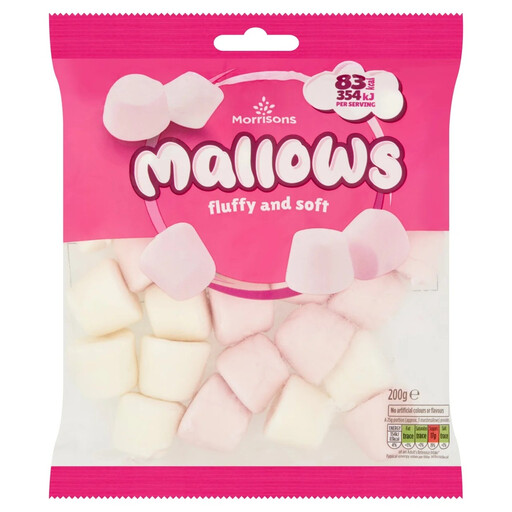
This 200g Morrisons bag is a regular-size marshmallow option to consider as an optional sweet extra for a small breakfast table.
 No image available
The 200g bag is an option when several guests may take marshmallows as a sweet extra. It contains gelatine, so consider it only if that ingredient suits your guests; check the current pack's allergen information before serving anyone with specific requirements.
They can be offered as an optional sweet extra rather than a main breakfast food. If the amount matters to your guests, use the pack's serving and sugars information to decide how much to put out; the NHS advises cutting down on foods containing free sugars, including sweets.
A regular 200g bag is a starting point for sharing: Tesco and Waitrose both list one. A 140g bag may suit fewer takers, while Epic's 300g giant mallows are described for toasting rather than an ordinary breakfast bowl.
Do not assume they are. Waitrose Pink and White Marshmallows list beef gelatine, while M&S separately lists Plant Kitchen Vegan Marshmallows. Check the ingredients and allergen information on the exact pack you intend to serve.
Read the exact pack's ingredient and allergen information, including any relevant warnings, before serving it. GOV.UK guidance for UK food businesses identifies cereals containing gluten, including wheat, among the allergens that must be declared when present as ingredients.