Commuters looking for one portable bite
An individually portioned bar needs no preparation. The useful distinction is whether you want a sweet treat for the journey or a bar with a stated protein amount for a missed breakfast.


If protein is your priority and one bar is all you can grab, a marshmallow-flavoured bar with a stated protein amount gives you more to assess than a conventional marshmallow treat, but the protein claim alone does not tell you what the whole bar contains. For a sweet or cereal-based bar, check sugars and saturated fat per 100g as well as the portion you will eat; check the current pack for allergens whichever type you choose.
An individually portioned bar needs no preparation. The useful distinction is whether you want a sweet treat for the journey or a bar with a stated protein amount for a missed breakfast.
Chocolate-coated marshmallow and cereal bars are easy to pick up quickly. Their flavour and cereal or protein wording cannot replace a look at the portion, sugars, saturated fat, fibre and protein on the label.
Marshmallow-style bars have different ingredients. Read the current pack for highlighted allergens and precautionary statements, particularly if milk, soya, cereals containing gluten, peanuts, nuts or eggs matter to you.
Decide whether you need a bar with a declared protein amount, a sweet treat or a small cereal snack. Then compare labels on the same per-100g basis before considering the individual bar.
| Priority | What to check | Your needs |
|---|---|---|
| Protein and portion | Look for a stated protein amount per bar, then read the full nutrition panel. Sainsbury's lists 20g protein for its 65g Optimum Nutrition Marshmallow Crunch bar; that figure does not describe other bars. | If a bar has to bridge a missed breakfast, I want to know how much protein is in the portion I will actually eat, not just see the word “protein” on the front. |
| Sugars and saturates | Compare total sugars and saturated fat per 100g, then per bar. NHS food-label guidance uses more than 22.5g sugars or 5g saturated fat per 100g as its high thresholds for foods. | A “no added sugar”, cereal or marshmallow description will not answer my question about total sugars and saturated fat. |
| The rest of breakfast | Check the bar's fibre and protein figures and consider what else you will eat. NHS Grampian describes a planned breakfast as potentially including a fibre-rich carbohydrate, a protein source and fruit or vegetables. | When this is a regular breakfast rather than a snack until my next meal, I want to consider the meal as a whole, not assume one sweet bar covers it. |
| Allergens | Read the current ingredients and precautionary statements. The products described by Waitrose and Sainsbury's differ: their listings identify milk and soya, cereals containing gluten, or peanuts in particular bars. | If I avoid an ingredient, the actual pack matters more than the flavour name or an older product photograph. |
“Cereal”, “marshmallow” and “protein” describe different aspects of a product, not its complete nutrition panel. In a November 2025 analysis of 458 snack bars from 10 UK retailers, Action on Salt and Sugar reported that 37% were high in sugars and 55% were high in saturated fat.
Compare total sugars, saturated fat, protein and fibre on the current label. If the bar is replacing breakfast, consider what else you will eat with it.
A 28g cereal bar and a 65g protein bar are different-sized portions, so their per-bar figures alone are not a like-for-like comparison.
Use the per-100g figures to compare products, then check the values for the portion you plan to eat.
Waitrose lists milk and soya for its Mallow & Marsh bar, with may-contain statements for eggs, nuts and peanuts. Sainsbury's describes the Barebells Marshmallow Rocky Road bar as containing peanuts and milk chocolate.
If an allergy or intolerance is relevant, read the current pack's ingredients and precautionary statements before buying.
These examples illustrate different kinds of marshmallow-style bar; the details apply to the named products, not every product from each brand.
Sainsbury's lists Marshmallow Crunch as a single-serve 65g protein bar.
Waitrose lists its Vanilla Bar with Milk Chocolate as an individually portioned 35g marshmallow bar.
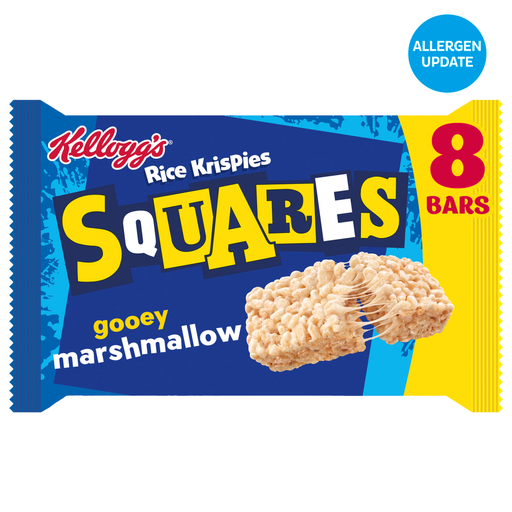
Waitrose lists Rice Krispies Squares Marshmallow as a pack of four 28g cereal snack bars.
Sainsbury's describes its 55g Marshmallow Rocky Road Soft Protein Bar as containing peanuts, a marshmallow-taste layer and milk-chocolate coating.
This cereal-and-marshmallow option suits a small snack until you can eat a fuller meal; its presence here does not make it a substitute for every breakfast.
 No image available
For a quick cereal-and-marshmallow snack when a small bar is enough until your next meal. The pack contains eight 28g bars; check the current pack if you need its nutrition or allergen details.
A conventional marshmallow or chocolate-coated marshmallow bar is better treated as a sweet snack than assumed to be a complete breakfast. If a bar is all you can grab, check its portion and nutrition panel; NHS Grampian's breakfast guidance also describes including a fibre-rich carbohydrate, a protein source and fruit or vegetables when practical.
No: “no added sugar” does not state the bar's total sugars. Check total sugars per 100g and per bar on the current pack, alongside saturated fat, protein and fibre.
Compare their nutrition figures per 100g first, then check the figures for each individual bar. That keeps differences in portion size from obscuring a comparison of sugars, saturated fat, protein or fibre.
Read the current pack's ingredients and precautionary statements for the particular bar. Retailer listings identify milk and soya in the Mallow & Marsh example, cereals containing gluten and milk in the Kellogg's example, and peanuts in the Barebells example; recipes and labels can change.