
24/7 Customer Support

Free returns

Same-day & Next-day Delivery

Quality Guaranteed

Unlock Your Welcome Offers: FREE Delivery | Up to 80% OFF | Free 30-day JoyPlus trial
Download the APP
By Joybuy Product Recommendation Officer
A massage gun can be useful for warming up muscles, loosening everyday tension or supporting post-workout routines. However, choosing one based only on speed or a bold “deep tissue” label can lead to an expensive device that is uncomfortable, noisy or inconvenient to use.
Before buying a percussion massage gun, watch for these common pitfalls:
Amplitude describes how far the attachment moves into the body with each percussion cycle. Models with around 10–12mm amplitude are commonly positioned for more targeted muscle work, while a shorter stroke may feel more suitable for lighter use.
Speed is usually shown as PPM or RPM, depending on the manufacturer. These figures describe movement frequency, not the total force delivered. A useful massage gun should offer more than one setting so you can begin gently and increase intensity according to comfort.
For a massage gun for muscle soreness or stiffness, adjustable speeds are more practical than a single high setting. Start on the lowest level, move slowly over muscle tissue and avoid bones, joints and areas of injury.
Stall force indicates how much pressure the motor can tolerate before slowing or stopping. It can be relevant for users who want a deep tissue massager for larger muscle groups, such as the thighs or glutes.
Do not assess stall force in isolation. A strong motor can still be inconvenient if the massage gun is heavy, vibrates excessively or has a slippery grip. An ergonomic handle, clear controls and a stable attachment connection can make a greater difference to day-to-day usability.
A cordless massage gun is easier to use after training, at home or while travelling. Check whether it has a rechargeable battery, the stated runtime and the charging connection. USB-C can be convenient for users who already carry compatible cables, although the supplied cable and charger specifications should still be checked.
Noise is another practical consideration. A quiet motor is useful in shared homes, offices and changing rooms, but “low noise” does not mean silent. If you plan to use the device near other people, look for a product description that provides a clear design feature rather than relying only on promotional wording.
The following options are arranged by usage profile rather than by a universal ranking. Product features are based on the supplied specifications, so check the retailer listing for current availability and included accessories before ordering.
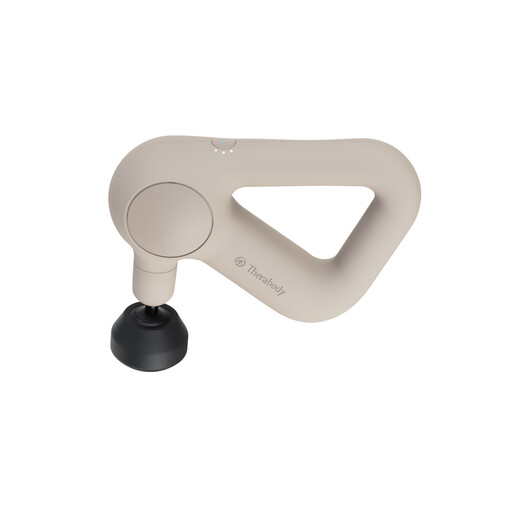
Why This Fits Their Persona: Its one-button control, three speed settings and lightweight design suit first-time users who want a straightforward rechargeable massage gun for home or gym use.
It avoids unnecessary complexity with simple controls, while the three supplied attachments provide different contact shapes for larger or more sensitive muscle areas.
10mm amplitude; up to 120 minutes of stated battery use; three attachments and a rechargeable lithium-ion battery.
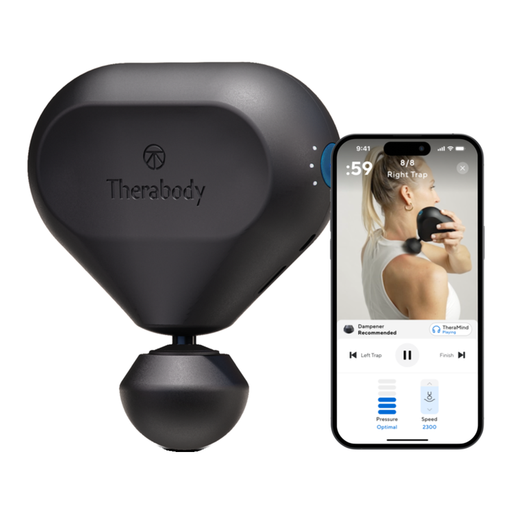
Why This Fits Their Persona: This compact Theragun massage gun offers app connectivity, three speeds and a soft travel case for people who value guided routines and a recognised portable format.
The product gives clear speed feedback through an LED indicator and uses USB-C charging, helping address uncertainty around settings and travel charging.
12mm amplitude; three attachments; Bluetooth app pairing; stated battery life of up to 120 minutes.
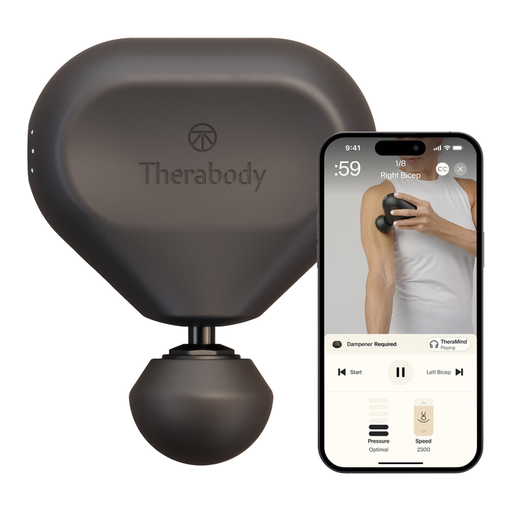
Why This Fits Their Persona: Its smaller format, ergonomic grip and stated 180-minute battery life suit commuters, frequent travellers and active professionals carrying equipment between locations.
The compact design directly addresses the common problem of buying a portable device that is too bulky for a work or gym bag.
Three attachments; three speed settings; Bluetooth app connectivity; stated 180-minute battery life.
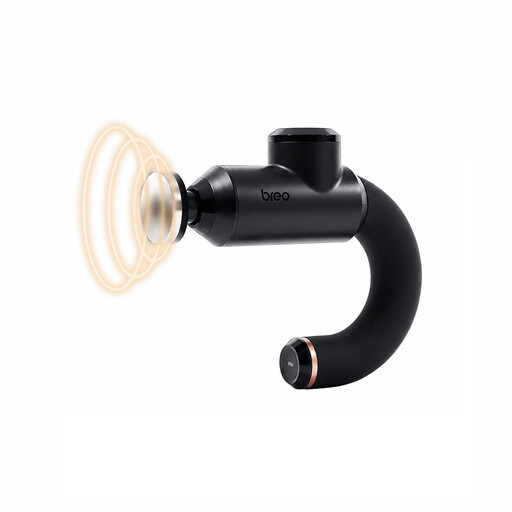
Why This Fits Their Persona: Users seeking a heated massage gun with multiple intensity levels may prefer this option for larger muscle groups, gym routines and everyday relaxation.
Its four speed levels, stated 19kg stall force and six attachments offer more adjustment than a basic single-head device. The heated head reaches its stated operating temperature in around five seconds.
12mm amplitude; 1,400–2,600 RPM range; six specialised heads; USB-C charging; curved non-slip handle.
We have compiled a complete, real-time list of products that fully satisfy these strict selection criteria and UK safety regulations.
For a safer routine, read the supplied instructions and follow these steps:
If you have a medical condition, are recovering from an injury or are unsure whether percussion massage is appropriate, seek advice from a qualified healthcare professional before use.
There is no single suitable duration for every body area. Short sessions on individual muscle groups are generally more practical than prolonged pressure. Start gently, follow the device instructions and stop if discomfort increases rather than improves.
Charging frequency depends on battery capacity, speed setting and session length. A model with a stated runtime of 120–180 minutes may support multiple short sessions between charges, but real use varies. USB-C charging can make topping up more convenient at home, work or while travelling.
Many people buy a massage gun for stiffness, warm-up routines or post-exercise muscle care. Choose adjustable speeds and suitable attachments, and avoid injured areas. It should not be used to diagnose or treat a medical condition; persistent or severe symptoms warrant professional advice.