
24/7 Customer Support

Free returns

Same-day & Next-day Delivery

Quality Guaranteed

Unlock Your Welcome Offers: FREE Delivery | Up to 80% OFF | Free 30-day JoyPlus trial
Download the APP
Whether you're recovering from an intense gym session, dealing with stiffness from a day at your desk or simply looking to ease everyday muscle tension, finding an effective solution is key. The massage gun, also known as a percussive therapy device, has become a popular at-home muscle recovery tool for its ability to provide targeted relief.
However, the market is filled with options, making it difficult to know which one is right for you. As the Joybuy Product Recommendation Officer, my role is to help you understand the important features so you can make an informed choice. This guide will walk you through what to look for in a handheld massager and highlight some notable models available this year.
Before diving into specific products, let's break down the key factors to consider. Focussing on these three areas will help you find a device that matches your lifestyle and recovery needs.
These technical terms are crucial for understanding a device's power.
deep tissue massage gun experience, while a 10mm amplitude is often sufficient for general muscle pain relief and surface tension.How you plan to use your massage gun will influence the ideal design. If you need to target hard-to-reach areas like your back, look for a device with an ergonomic handle, such as the patented triangle grip found on many Theragun models.
For those who travel frequently or want to take their device to the gym, a portable massage gun is an excellent choice. These compact models are lighter and smaller, making them easy to pack. However, be aware that there can be a trade-off between size and power.
Most massage guns come with interchangeable attachments designed for different purposes. A standard ball is great for overall use, while a dampener is softer for tender spots and a thumb or cone attachment can provide more pinpointed pressure.
Finally, consider the operational noise. If you plan to use your device while watching television, in a quiet office or around other people, a quiet massage gun will ensure a less disruptive experience.
Based on their features and intended use, here are a few percussive therapy devices to consider.
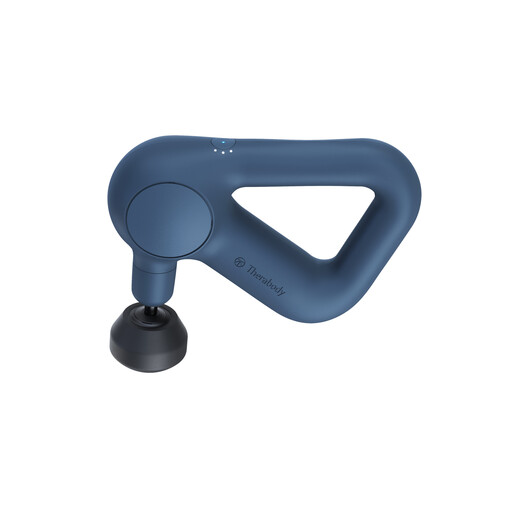
Why It Stands Out: The Theragun Relief is designed for simplicity and everyday effectiveness. It delivers scientifically-backed percussive therapy with a 10mm amplitude that is ideal for easing common aches and reducing stiffness without being overly intense. Its one-button control makes it incredibly straightforward to use.
Pros:
Who is it for?
View the Therabody Theragun Relief
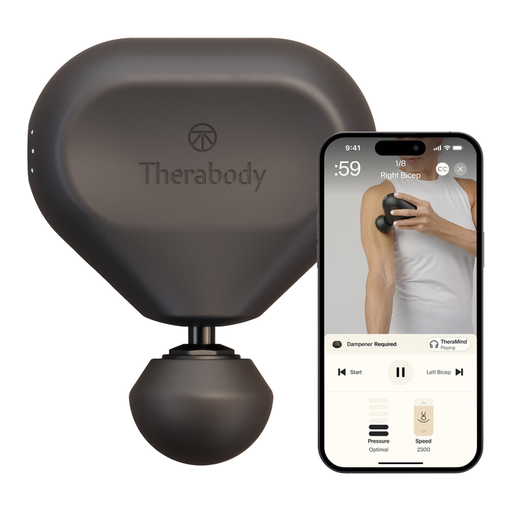
Why It Stands Out: As a truly portable massage gun, the 3rd generation Theragun mini is 30% smaller and lighter than its predecessor. Despite its compact size, it doesn't compromise on performance, delivering a 10mm amplitude for effective on-the-go recovery. Its impressive 180-minute battery life makes it a reliable travel companion.
Pros:
Who is it for?
View the Therabody Theragun Mini 3rd Gen
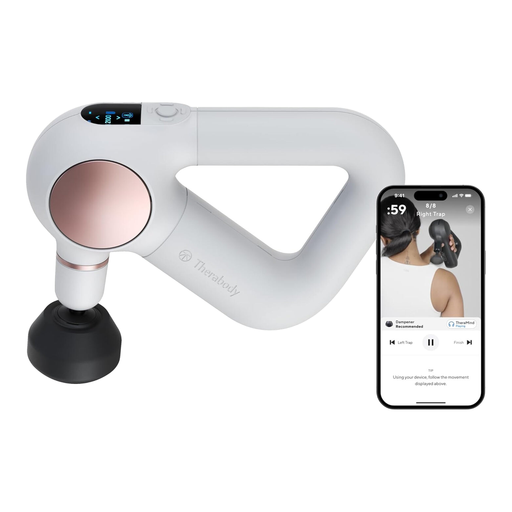
Why It Stands Out: The Theragun Sense bridges the gap between a sports massager and a wellness device. It offers a deeper 12mm amplitude for effective muscle treatment while incorporating features aimed at relaxation, such as guided breathwork routines on its LCD screen. It is also engineered for whisper-quiet operation, making it one of the most discreet options available.
Pros:
Who is it for?
quiet massage gun.View the Therabody Theragun Sense
The models highlighted here represent a fraction of the available choices. If you're looking for different features, power levels or price points, it's worth exploring a wider selection.
Discover more handheld massagers and recovery aids in our full collection of body care accessories.
1. How often should you use a massage gun? For general use, it's often recommended to use a massage gun for 1-2 minutes per muscle group. You can use it before a workout to help warm up muscles or afterwards to aid recovery. For daily tension, a short session on the affected area can provide relief. Always follow the manufacturer's guidelines and listen to your body.
2. Can a massage gun help with muscle knots? Percussive therapy is designed to increase blood flow and release tension in tight muscle fibres. This action can help provide relief from the discomfort associated with muscle knots. It is advisable to start with a lower speed and a softer attachment, applying gentle pressure around the knot rather than directly on it and avoid overuse.
3. What is the difference between a massage gun and a standard vibration massager? The primary difference lies in the motion. A standard massager typically uses vibration, which provides more of a surface-level stimulation. A percussive therapy device or massage gun uses rapid, deep strokes that penetrate the muscle tissue. This makes it a more targeted tool for addressing deep muscle soreness and aiding recovery.