Hosts planning brewed tea for 240
Tea bags suit a conventional cup-by-cup service with little preparation. Clearspring’s 20-bag Matcha Sencha packs can be combined to reach 240 bags, but their sencha-led blend is not a pure-matcha drink.


For around 240 brewed cups, pre-portioned matcha-containing tea bags offer a simpler service: twelve 20-bag Clearspring boxes provide 240 bags, though the drink is predominantly sencha rather than pure matcha. Choose powder if you intend to make whisked matcha, lattes or recipes; select the grade for that use and set the amount per drink before calculating how much to buy.
The service method matters more than a “240” label: brewed bags, plain whisked matcha and prepared drinks call for different purchases.
Tea bags suit a conventional cup-by-cup service with little preparation. Clearspring’s 20-bag Matcha Sencha packs can be combined to reach 240 bags, but their sencha-led blend is not a pure-matcha drink.
Bulk powder is relevant when staff repeatedly make lattes or blended drinks and can measure a consistent amount for each recipe. Matcha Wholesale lists 1kg powders for these types of service.
Powder suits a station where matcha is whisked into water and consumed with the drink, rather than infused in a bag. JING Tea describes this preparation method; Matcha Wholesale positions its ceremonial grade for traditional preparation.
Decide what guests will receive, then work back from the serving method to the pack count or powder quantity.
Choose when: Staff need a conventional brewed-tea service with one bag per cup.
Trade-off: A matcha-containing blend is not the same drink as pure matcha whisked into water.
Choose when: The menu calls for plain whisked matcha, lattes or drinks made to a set recipe.
Trade-off: Staff must measure and mix each portion; pack weight alone does not establish the number of drinks.
| Priority | What to check | Your needs |
|---|---|---|
| Drink format | Read the ingredient percentages and preparation directions. Clearspring lists its Matcha Sencha bags as 97.5% sencha and 2.5% matcha; JING Tea describes powder whisked into water as a different preparation. | I want to know whether guests expect an infused green tea or a drink made from matcha powder. |
| Portions and service | For bags, multiply the count per box by the number of boxes: twelve Clearspring 20-bag boxes give 240 bags. For powder, decide the grams used in each drink before calculating the quantity required. | Will staff be preparing individual cups quickly, or can they measure and mix each drink to a recipe? |
| Powder grade | Check the supplier’s intended use against the menu. Matcha Wholesale positions ceremonial grade for traditional preparation, premium grade for lattes and blended drinks, and culinary grade for recipes. | For plain whisked cups, I would assess the powder in water; for lattes or food, I would test it in the intended recipe. |
| Bulk-stock handling | Check the exact pack’s storage directions, ingredient and allergen information, and the documentation for the batch being supplied. Plan how opened powder will be stored during service. | Before ordering a large bag, I need a workable storage plan and current product information for the drinks being served. |
Clearspring lists its Matcha Sencha as 97.5% sencha leaves and 2.5% matcha powder. An infused cup from that blend is different from powder whisked into water.
Check the ingredient percentages and choose the format that matches what guests expect to drink.
The drink count changes with the amount of powder used per cup and with the recipe. A 1kg pack does not, by itself, establish a 240-drink yield.
Test the recipe, record the grams used per drink and calculate the quantity for the planned service.
Matcha Wholesale describes its culinary grade as more bitter and less sweet than its premium grades, while positioning ceremonial grade for traditional preparation.
Test the exact powder in water before committing to a plain whisked-matcha menu.
A large bag may remain open across several rounds of service, unlike individually portioned tea bags.
Calculate the amount the recipe requires and follow the delivered pack’s storage and handling directions.
These examples illustrate distinct formats and uses; a brand’s inclusion does not mean every product it sells suits a 240-serving event.
Clearspring’s Organic Japanese Matcha Sencha is a 20-bag brewed-tea blend.
JING Tea offers a 30g organic ceremonial matcha powder for a different style of service from bagged tea.
This supplier lists premium, ceremonial and culinary matcha in 1kg bags for different preparation methods.
Teapigs has a dedicated matcha category alongside its wider tea range.
This matcha-containing tea-bag option is for an infused-tea service, not a plain whisked-matcha station.
 No image available
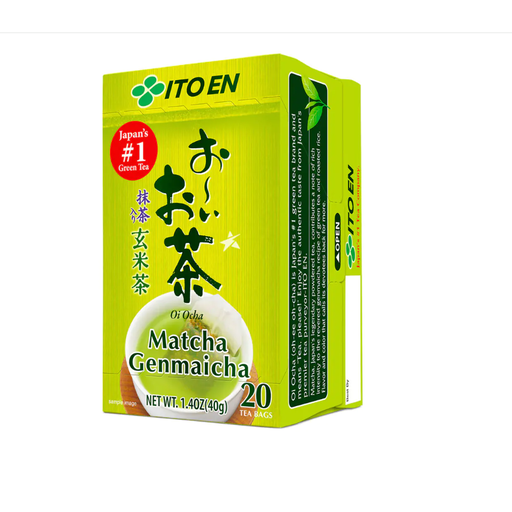
The 20 tea bags suit individually portioned brewed cups at an afternoon break. This is a genmaicha blend listed with 60% roasted rice and 3% matcha, not pure matcha powder. Check the pack’s brewing directions before planning service; one pack contains 20 bags, so it does not cover 240 cups on its own.
No. Clearspring lists its Matcha Sencha bags as 97.5% sencha leaves and 2.5% matcha powder. The bag is used to infuse tea, whereas JING Tea describes matcha powder as whisked into water and consumed with the drink.
If one bag is used per cup, twelve Clearspring 20-bag boxes provide 240 bags. Check that the sencha-led blend is the drink you want to serve; this calculation describes multiple boxes, not a single 240-count carton.
That depends on your recipe. Measure the grams of powder used in a tested drink, then calculate how much powder the planned number of servings requires; the bag weight alone does not establish a yield.
Matcha Wholesale positions ceremonial grade for traditional preparation, premium grade for lattes and blended drinks, and culinary grade for recipes. These are the supplier’s intended uses, so test the chosen powder in the drink or food you plan to serve.
Check the delivered product’s ingredient and allergen information, storage directions and any batch documentation needed for your service. Set the recipe and storage plan before calculating how much powder to order.