Households planning around 80 drinks
If you prefer tea bags, four packs of 20 give you 80 bags. If you prefer powder, use the serving directions for the particular product to plan the quantity.


Choose matcha powder if you want matcha as the ingredient in a whisked drink, latte or dessert; choose matcha-green-tea bags if you would rather make an infusion. For around 80 bagged drinks, four 20-bag packs give you 80 bags, but check the ingredients: Tesco Groceries lists its Twinings 80-bag Green Tea as 100% green tea, not matcha. If the drink is close to bedtime, take caffeine into account whichever matcha format you choose.
Start with the drink you intend to make, then work out how many portions or bags you need.
If you prefer tea bags, four packs of 20 give you 80 bags. If you prefer powder, use the serving directions for the particular product to plan the quantity.
Powder provides matcha as an ingredient to mix into a drink or recipe. A matcha-green-tea bag instead makes an infusion, so check which format the recipe calls for.
Allow for caffeine when choosing a post-dinner drink. NHS Borders advises avoiding caffeine-containing hot drinks close to bed because they can disrupt sleep.
Decide between powder and an infusion before comparing pack counts; the number on a box does not tell you whether it contains matcha.
| Priority | What to check | Your needs |
|---|---|---|
| Matcha format | Read the ingredients to distinguish matcha powder from a green-tea blend. For example, Clearspring lists its Premium Matcha as 100% matcha powder and its Matcha Sencha sachets as 97.5% sencha and 2.5% matcha. | I want matcha to be an ingredient in my latte or dessert, rather than a small part of a tea-bag infusion. |
| Quantity | Check the bag count or the powder’s serving directions, then calculate the quantity you need. Tesco Groceries lists Twinings Green Tea in an 80-bag box with 100% green tea; its Super Green Matcha is a separate 20-bag product. | For about 80 bagged drinks, I can buy four identical 20-bag matcha blends—but I still need to check that the packs contain the blend I want. |
| Flavour and effort | Check whether preparation calls for whisking powder or infusing a bag. Clearspring’s Matcha Genmaicha combines sencha, roasted brown rice and matcha; JING describes different intended uses for matcha whisked plain and matcha used in lattes. | After dinner, I may prefer the ease of a bag, a roasted-rice blend or a powder I can use in a milk-based drink. |
| Evening timing | Look for product-specific caffeine information and consider when you will drink it. Clearspring estimates approximately 32mg of caffeine per 1g of its Premium Matcha powder, based on Japanese food-composition data; that figure does not describe every tea bag or powder. | If I am having the drink near bedtime, caffeine matters more to my choice than the word “matcha” on the front of the pack. NHS Borders advises avoiding caffeinated hot drinks close to bed. |
| Ingredients | Check the exact pack’s ingredients and allergen declaration, especially for a flavoured blend or latte mix. GOV.UK guidance says that any of the 14 regulated allergens present as ingredients in prepacked food or drink must be clearly labelled in the ingredients list. | I need to know what else is in the product rather than assuming all matcha-labelled drinks have the same ingredients. |
Tesco Groceries lists the Twinings 80-bag Green Tea product as 100% green tea. Its Super Green Matcha is a different product sold in a 20-bag format.
Check the product name and ingredients before using the bag count to plan your supply.
A bagged blend is an infusion, not a measured portion of powder for a latte or recipe. The matcha proportion also varies: Clearspring lists 2.5% in Matcha Sencha, while Tesco Groceries lists 15% in Twinings Super Green Matcha.
Choose powder when the drink or recipe needs matcha as an ingredient; choose bags when you want to steep a tea.
NHS Borders advises avoiding caffeine-containing hot drinks close to bedtime because they can disrupt sleep. A caffeine figure for one powder cannot be applied to every blend.
Consider an earlier serving time or a non-caffeinated alternative if caffeine is a concern, and check the information for the exact product.
“Matcha” can describe a powder or a blend in which green tea and other ingredients make up much of the product.
Read the ingredients, preparation directions and, where relevant, the allergen declaration on the exact pack.
These examples show how product formats differ; a brand name alone does not establish a pack’s ingredients or serving count.
Clearspring lists both matcha powder and matcha-green-tea sachets, making it useful for comparing a mixed powder drink with an infusion.
JING distinguishes matcha intended for whisking plain from powder intended for milk-based drinks and cooking.
The Tesco Groceries listings provide a clear example of why bag count and matcha content need separate checks.
Pukka Organic Supreme Matcha Green is a pre-portioned infusion rather than matcha powder.
These options include matcha powders, a matcha genmaicha tea bag and portioned latte sachets. Compare their formats and pack quantities against the drink you want; a pack is not automatically an 80-serving supply.
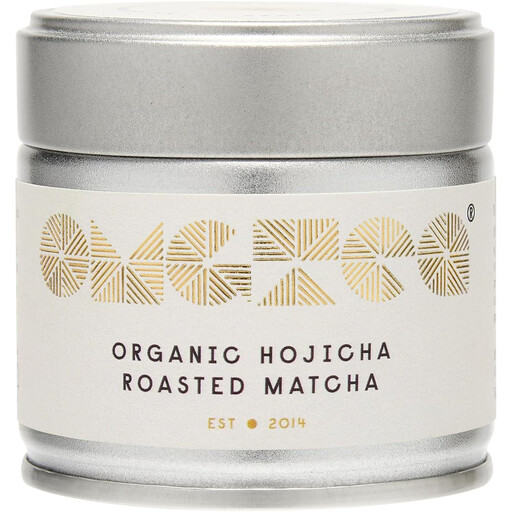 No image available
A 30g roasted matcha powder option if you want a roasted flavour in a mixed drink rather than a tea-bag infusion. Check its preparation directions to work out how many servings a tin provides.
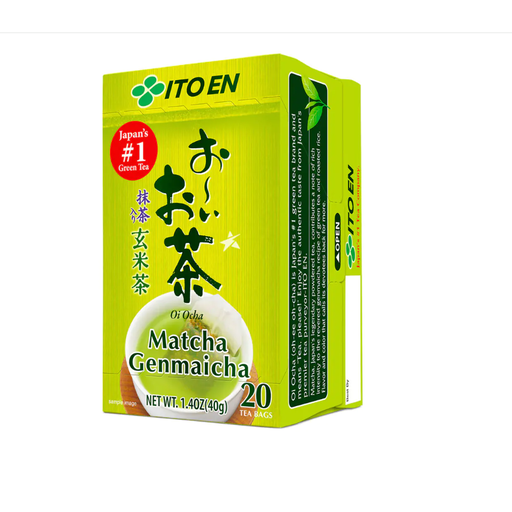 No image available
A tea-bag option for an infusion rather than a powdered drink. Four 20-bag boxes would provide 80 bags; check the ingredients and preparation directions for this blend.
 No image available
Six portioned sachets offer a different route from measuring plain powder or steeping tea bags. This is a vanilla latte product, not an 80-serving pack; check the exact pack’s ingredients and allergen declaration.
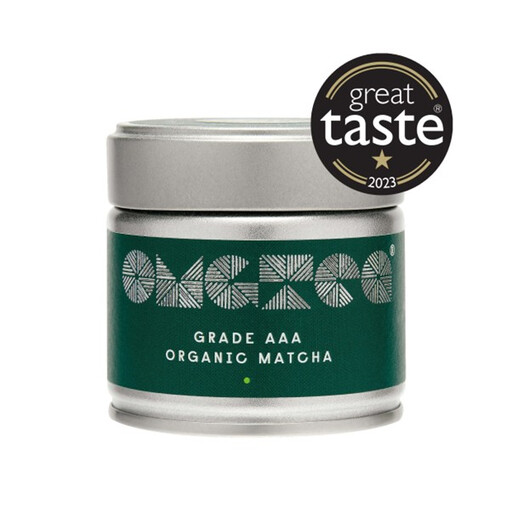 No image available
A 30g matcha option for shoppers choosing powder instead of an infusion. Use the product’s serving directions, rather than the tin weight alone, to plan a supply of around 80 drinks.
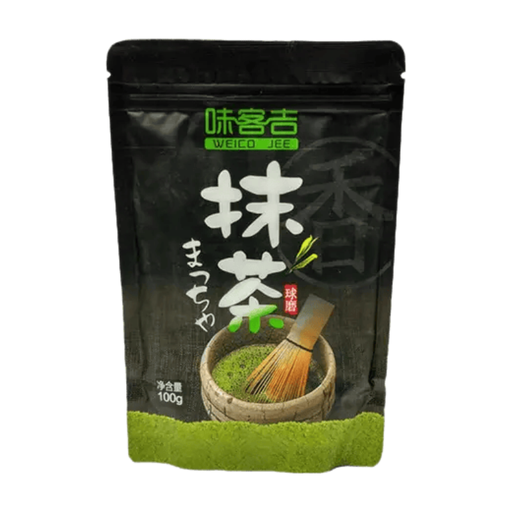 No image available
A 100g powder pack to consider when you want matcha for mixed drinks or recipes rather than tea bags. Check the ingredients and serving directions before treating the pack weight as a particular number of portions.
Not necessarily. Tesco Groceries lists its Twinings 80-bag Green Tea product as 100% green tea, while Twinings Super Green Matcha is a separate 20-bag blend containing 15% matcha. Check the ingredients of the exact box; four identical 20-bag matcha blends would give you 80 bags.
Choose a powder or latte product whose directions cover milk-based drinks, rather than assuming a tea bag will replace it. JING distinguishes matcha intended for whisking plain from powder intended for lattes and cooking; follow the directions for the product you buy.
You do not need to choose by the word “ceremonial” alone. JING describes its ceremonial matcha as intended for whisking plain with water and distinguishes powder intended for lattes, baking and cooking. Check the individual product’s stated use.
Take caffeine and serving time into account. NHS Borders advises avoiding caffeine-containing hot drinks close to bed because they can disrupt sleep. Clearspring estimates approximately 32mg of caffeine per 1g of its Premium Matcha powder, but that estimate should not be applied to other products or tea-bag infusions.
Check the ingredients list on the exact prepacked product, particularly when choosing a blend or latte mix. GOV.UK guidance says that any of the 14 regulated allergens present as ingredients must be clearly labelled in that list; the matcha category name does not establish a product’s allergen suitability.