Shoppers requiring the FAIRTRADE Mark
If Fairtrade certification is non-negotiable, look for the FAIRTRADE Mark and read its claim on the product pack. Organic certification or a different fair-trade label does not answer the same question.


Choose pure ceremonial matcha for a plain, whisked afternoon cup, or a matcha blend if you want its added flavours and accept its certification basis. If the FAIRTRADE Mark is essential, check the mark and its claim on the pack before buying: organic, direct-sourcing and Fair for Life statements are not substitutes for it.
If Fairtrade certification is non-negotiable, look for the FAIRTRADE Mark and read its claim on the product pack. Organic certification or a different fair-trade label does not answer the same question.
For matcha whisked with water and served without added flavours, look at single-ingredient ceremonial powder rather than a flavoured blend.
If matcha will go into milk drinks or desserts, consider a powder positioned for those uses. Check whether the pack contains pure matcha or a blend with other ingredients.
Decide which certification you require, then choose the ingredient format and serving style that fit your afternoon tea.
| Priority | What to check | Your needs |
|---|---|---|
| Certification | Look for the FAIRTRADE Mark and read its on-pack claim if you require Fairtrade certification. Fairtrade International distinguishes its mark from other sourcing statements; Fair for Life is a separate scheme. | Fairtrade certification matters more to me than a general ethical-sourcing statement, so I need to check the particular label on the pack. |
| Ingredients | Read the ingredient list for 100% matcha or a stated matcha proportion and added flavours. Ocado lists Pukka Matcha Vanilla Chai as 67% matcha, with ginger, liquorice, cinnamon and vanilla. | For a plain whisked cup, I want matcha without added flavours. For a spiced drink, the blend’s other ingredients may be part of the appeal. |
| Serving style | Check whether the powder is intended for whisking with water, milk drinks or recipes, and follow its serving instructions. Clearspring gives a 1 g preparation for its ceremonial matcha and positions its premium grade for drinking and baking. | If I am serving matcha plain, I will look at ceremonial powder; if I am baking, I need a powder suited to recipes. |
| Caffeine | Measure the powder used and check the product’s serving information. During pregnancy, the NHS advises no more than 200 mg of caffeine a day from all sources combined. | When I am keeping track of caffeine, the size of the bowl alone does not tell me how much matcha I have used. |
Organic certification, responsible-sourcing statements and Fair for Life certification do not establish that a product carries the FAIRTRADE Mark.
If that particular certification matters, check the mark and associated claim on the pack. Treat other schemes on their own terms.
A blend can change both the flavour and the proportion of matcha. Ocado lists Pukka Matcha Vanilla Chai as 67% matcha, alongside spices and vanilla.
Choose an ingredient list stating 100% matcha for a plain whisked serving; choose a blend because you want its listed additions.
Matcha sold for whisking plain and matcha positioned for recipes serve different uses. Clearspring describes its premium grade as suitable for drinking and home baking.
If cakes or milk drinks are the main use, check the powder’s recipe guidance rather than selecting ceremonial grade by name alone.
A small serving can still contribute to daily caffeine intake. The NHS pregnancy guidance limits caffeine from all sources to 200 mg a day.
Measure the matcha serving and account for other caffeine sources when that limit applies to you.
These product examples illustrate different matcha formats and claims; a brand name alone does not establish a particular certification.
Clearspring offers organic Japanese matcha in ceremonial and premium grades.
JING Tea describes its ceremonial matcha as an organic, single-cultivar Okumidori powder for drinking plain.
Pukka Matcha Vanilla Chai is a flavoured matcha powder rather than single-ingredient matcha.
These matcha powders are options for a plain afternoon cup. If the FAIRTRADE Mark is essential, confirm the mark and its claim on the pack before choosing either one.
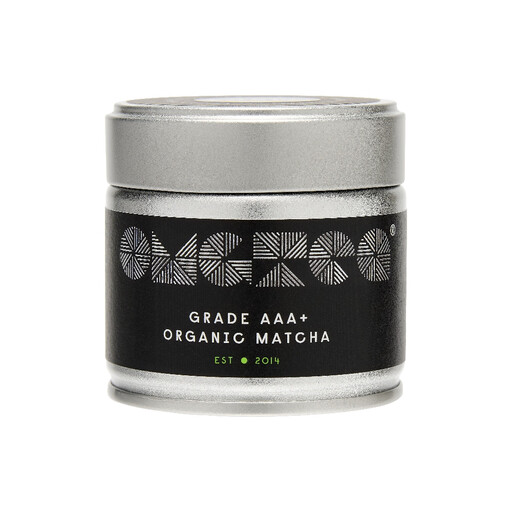 No image available
The product description presents this as ceremonial matcha for a plain, whisked drink. If Fairtrade certification is essential, check the physical pack for the FAIRTRADE Mark and its claim.
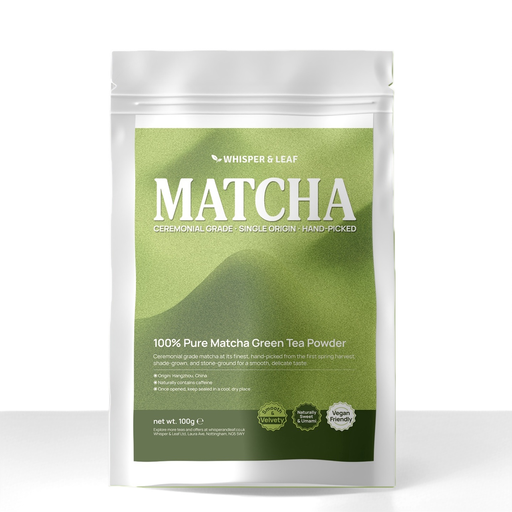 No image available
The product description presents this ceremonial powder for traditional matcha preparation. Check the pack’s serving guidance if you measure portions, and look for the FAIRTRADE Mark and its claim if that certification is essential.
Look for the FAIRTRADE Mark on the pack and read its associated claim. Fairtrade International says the mark relates to its Fairtrade Standards; organic wording or a different fair-trade scheme does not establish the same certification.
No. Ocado lists Pukka Matcha Vanilla Chai as having 77% Fair for Life-certified fair-trade ingredients by weight. That statement describes a different certification scheme, not a FAIRTRADE Mark claim.
Choose single-ingredient ceremonial matcha if you plan to whisk it with water. JING positions ceremonial matcha for drinking plain, while Clearspring’s ceremonial product lists 100% organic matcha and gives a preparation using 1 g of powder.
Follow the instructions for the product you buy. Ocado’s listing for Clearspring premium matcha says to reseal and refrigerate it after opening.
Yes. The NHS advises no more than 200 mg of caffeine a day during pregnancy and includes tea among caffeine sources. Measure the matcha you use and account for other caffeine-containing food and drinks that day.