Hosts serving individual cups
Matcha-containing tea bags let guests prepare an infusion without a whisk. Check the ingredients if the matcha content matters to your menu.


For a cream tea needing 80 individual matcha-containing tea bags, four identical 20-bag packs can provide that count; an 80-bag box of ordinary green tea is not a matcha substitute. Matcha-blend bags offer individual servings, while pure matcha powder needs separate preparation and is not an 80-bag option. Check the ingredients, pack count and preparation instructions before ordering.
Matcha-containing tea bags let guests prepare an infusion without a whisk. Check the ingredients if the matcha content matters to your menu.
Choose powder labelled as 100% matcha rather than a tea bag made chiefly from other green tea. Allow for the preparation specified on the powder pack.
Decide whether you need 80 tea bags or 80 prepared cups. Four identical 20-bag packs provide 80 bags, but powder quantity depends on the dose used for each cup.
Settle the serving format first, then check the quantity and ingredients of the exact product you plan to order.
| Priority | What to check | Your needs |
|---|---|---|
| Quantity | Check whether 80 refers to tea bags, prepared cups or product weight. For bags, confirm the count in each pack and whether a multipack meets your plan. | I need a bag for each of 80 servings. Four identical 20-bag packs would give me 80 bags, though not one 80-bag box. |
| Ingredients | Read the matcha percentage and the other ingredients. Clearspring lists 2.5% matcha in its Matcha Sencha bags and 100% matcha in its ceremonial powder. | If I promise guests pure matcha, a green-tea bag containing a small proportion of matcha is a different drink. |
| Preparation | Check the instructions for the exact product. Tea bags are infused; matcha powders have their own dose and whisking or shaking directions. | For guests preparing their own cups, I would choose bags. For a whisked serving, I need time and equipment to prepare the powder. |
| Caffeine | Check the product and serving size rather than applying one powder's figure to every blend. Clearspring estimates approximately 32mg of caffeine per 1g of its matcha powder. | Where guests are limiting caffeine, I need to know what I am serving. For pregnancy, the NHS advises no more than 200mg of caffeine a day from all sources. |
A bag count does not tell you whether matcha is among the ingredients.
Check both the count and the ingredient list before choosing a box for a matcha-themed cream tea.
Clearspring's Matcha Sencha bags contain 2.5% matcha, while the Pukka bags listed by Waitrose contain 2%.
Choose a product labelled 100% matcha powder if a pure-matcha serving is essential.
Powder and bags have different preparation instructions. JING, for example, specifies 70°C water and whisking or shaking for its ceremonial powder.
Follow the directions for the exact product rather than applying one method to every matcha format.
Caffeine depends on the product and serving. Clearspring estimates approximately 32mg per 1g of its matcha powder; that figure does not describe every tea bag.
Check the item and dose, and offer another drink for guests who are avoiding caffeine. The NHS advises pregnant people to keep total caffeine from all sources to no more than 200mg a day.
These examples show why pack size, ingredients and format matter; they are separate from the Joybuy products below.
Clearspring lists both 20-sachet Matcha Sencha tea and 30g ceremonial matcha powder.
JING lists 30g ceremonial matcha powder made from the Okumidori cultivar.
Waitrose lists Pukka Supreme Matcha Green as a 20-bag product.
Tesco lists Twinings Super Green Matcha in a 20-bag format alongside other matcha products.
Teapigs lists Mao Feng green tea in a 15-temple pack.
M&S has a broader tea range that includes everyday and herbal varieties.
These options cover individual matcha-containing tea bags and a matcha powder format. The bags listed here come in 20-bag packs; the powder is sold by weight.
 No image available
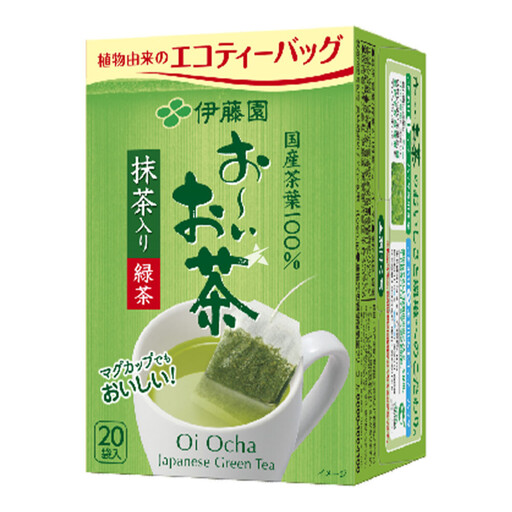
Individual bags suit guests making an infused tea. This green-tea-and-matcha product contains 20 bags per pack, so four identical packs would provide 80 bags; check its preparation instructions for serving.
 No image available
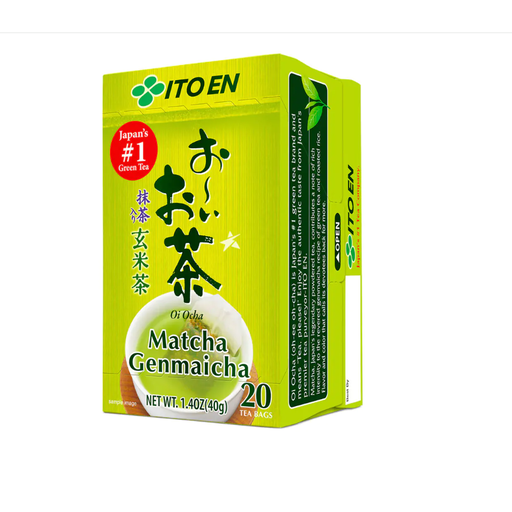
This 20-bag genmaicha format is an infused tea option for individual servings, not pure matcha powder. Check its ingredients if the roasted-rice blend matters to your menu; four identical packs would provide 80 bags.
 No image available
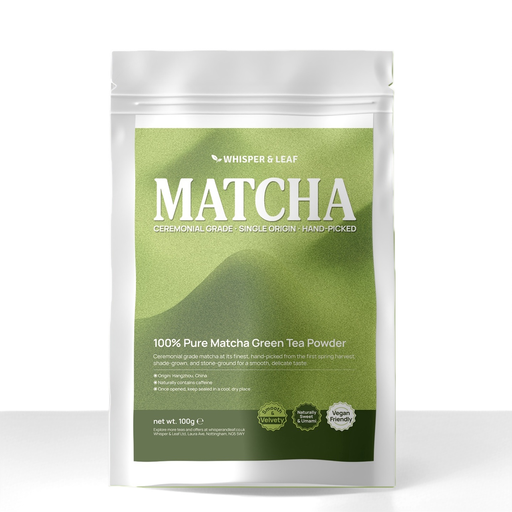
The 100g powder bag is an option for preparing matcha drinks rather than handing out tea bags. Check the recommended dose and preparation instructions to plan the number of servings and the work involved.
Four identical 20-bag packs provide 80 tea bags if you use one bag per serving. That is not a single 80-bag box; check that each pack contains the matcha blend you intend to serve.
No. Clearspring lists 97.5% sencha and 2.5% matcha in its Matcha Sencha bags, compared with 100% matcha in its ceremonial powder. The bag makes an infusion; the powder is prepared separately.
Follow the directions for the powder you choose. Clearspring instructs buyers to use 1g with 30ml of hot water and whisk it; JING specifies 1.5g or one teaspoon per 160ml cup, 70°C water, and whisking or shaking for 30 seconds. These are instructions for different products, not a universal recipe.
Check the caffeine information and serving size for the exact drink, and offer an alternative. Clearspring estimates approximately 32mg per 1g of its matcha powder, which should not be applied to other products. For pregnant guests, the NHS advises no more than 200mg of caffeine a day from all sources.