Who is each format for?
The useful distinction is whether guests will make their own drinks or someone will prepare each serving.
Hosts planning around 80 self-service cups
Tea bags give guests individual portions without measuring powder. Clearspring lists 20 bags per Matcha Genmaicha pack, and Waitrose & Partners lists 20 per Clearspring Matcha Sencha pack; four packs of either provide 80 bags. Plan separately for guests who may want another cup.
Hosts making matcha or lattes to order
Pure powder suits a staffed drinks station where each portion can be measured and whisked or shaken. JING Tea gives a preparation measure of 1.5g per 160ml cup for its 30g matcha pack, which works out to about 20 cups per pack on that basis.
Hosts checking ingredients for a group
Decide whether the intended drink is infused green tea with matcha, pure matcha or a latte mix before choosing packs. Ingredient and allergen declarations matter: Joybuy’s Ma Yu Shan Matcha Milk listing, for example, identifies milk powder and sugar and declares milk as an allergen.
What should you check before ordering?
Set the drink format first, then calculate portions from the pack count and the preparation measure for that specific product.
Matcha-green-tea bags
Choose when: Guests will prepare their own cups and an infused tea blend is what you intend to serve.
Trade-off: These are not cups of whisked pure matcha; the listed Clearspring bags contain sencha and a small proportion of matcha.
Pure matcha powder
Choose when: Someone can measure and prepare drinks to order, including plain matcha or lattes.
Trade-off: Every drink takes preparation rather than simply steeping a bag.
Pre-portioned pure-matcha sachets
Choose when: Individual measures matter but a host can still prepare powdered drinks.
Trade-off: A clear sachet count does not remove the need to check preparation directions and the number of packs required.
| Priority |
What to check |
Your needs |
| Portion count |
Check bags or sachets per pack, not just the outer bundle count. Clearspring and Waitrose & Partners list 20-bag matcha blends, so four packs provide 80 bags; Clearspring lists eight 1g Matcha Shot sachets per pack, requiring ten packs for 80 sachets. |
I need to know how many individual portions will be on the table, and whether to allow for second cups. |
| Preparation |
Check the brewing directions for the chosen tea bags. For powder, check the measure and method: JING Tea specifies 1.5g per 160ml cup and whisking or shaking for 30 seconds for its ceremonial matcha. |
Will guests be making their own drinks, or can someone prepare each cup? |
| Ingredients |
Read the ingredient list rather than relying on “matcha” in the name. Waitrose & Partners lists Clearspring Matcha Sencha as 97.5% sencha and 2.5% matcha; Clearspring lists its Matcha Shot sachets as 100% matcha powder. |
I want guests to know whether they are being offered infused green tea or powdered matcha. |
| Flavoured mixes |
Check sweeteners, milk ingredients and allergen declarations on the actual pack. Joybuy’s Ma Yu Shan Matcha Milk listing identifies milk powder, sugar and 11% matcha powder, and declares milk as an allergen. |
If I put out a latte mix, guests need to be able to distinguish it from plain matcha. |
| Equipment and caffeine information |
Confirm any machine compatibility or mixing tools before ordering. If coffee and matcha will both be served, make the product and portion information available; Food Standards Agency and Food Standards Scotland guidance on caffeinated food supplements advises considering caffeine alongside other sources, including tea and coffee. |
Can guests make the drink with the equipment on hand and identify what is in each serving? |
Brands and retail references
These examples illustrate different formats and ingredient lists; a retailer listing is a reference for the named product, not a claim about every product it sells.
Clearspring
Clearspring lists matcha-containing tea blends in 20-bag packs and 100% matcha powder in eight 1g sachets.
- Its Matcha Genmaicha page lists a four-pack case, providing 80 bags when each pack contains 20.
- The listed Matcha Sencha and Matcha Genmaicha bags are tea blends, not pure powdered matcha.
JING
JING Tea’s 30g ceremonial matcha is a powder for drinks prepared by whisking or shaking, rather than a tea-bag option for an unattended table.
- JING Tea gives a 1.5g measure for a 160ml cup, allowing hosts to calculate roughly 20 cups per 30g pack on that basis.
- Each drink needs measuring and preparation; the cup calculation changes if the portion size changes.
Waitrose
Waitrose & Partners lists Clearspring Organic Matcha Sencha as a 20-bag, 36g product.
- Its listing identifies the sencha and matcha ingredient proportions, helping distinguish the infusion from pure matcha.
- Waitrose & Partners advises checking packaging because recipes can change; use the current pack when checking ingredients for guests.
Joybuy matcha drink options
These Joybuy options cover tea-bag infusions, portioned powder or pods, and sweetened drink mixes for a coffee morning. Their pack counts and preparation requirements differ, so an 80-drink plan needs to be calculated for the chosen format.
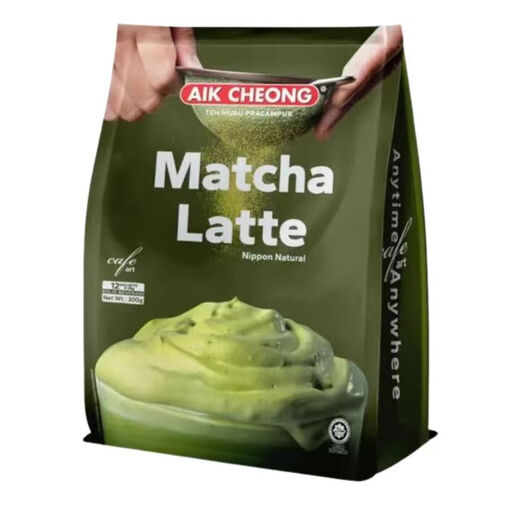 Image unavailable
Aik Cheong Matcha Latte Instant Green Tea Powder, 25g x 12 sachets
For guests expecting a latte-style mix rather than plain matcha, each box has 12 sachets; seven boxes provide 84 sachets. The product description identifies matcha powder, milk powder, sugar and creamer, and says the mix can be made with hot water or milk. It also notes possible soy cross-contact, so check the current pack’s allergen declaration before serving.
View on Joybuy
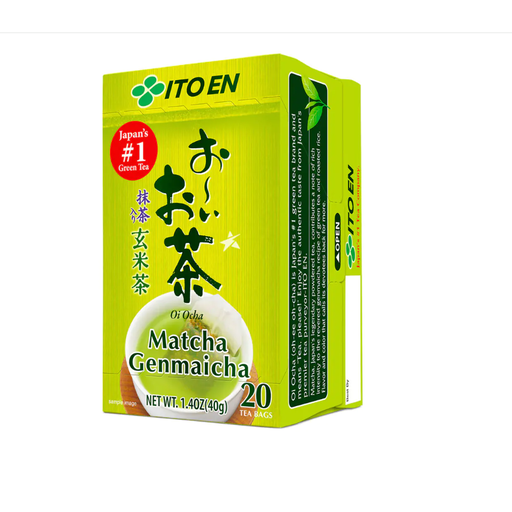 Image unavailable
Itoen Oi Ocha Japanese Matcha Genmaicha Tea Bags, 20 bags, 40g
For individually portioned infusions, four 20-bag boxes provide 80 tea bags. The product description identifies a roasted-rice green-tea blend containing 3% matcha and 60% roasted rice, not pure matcha powder. Check this product’s brewing directions when arranging hot water for guests.
View on Joybuy
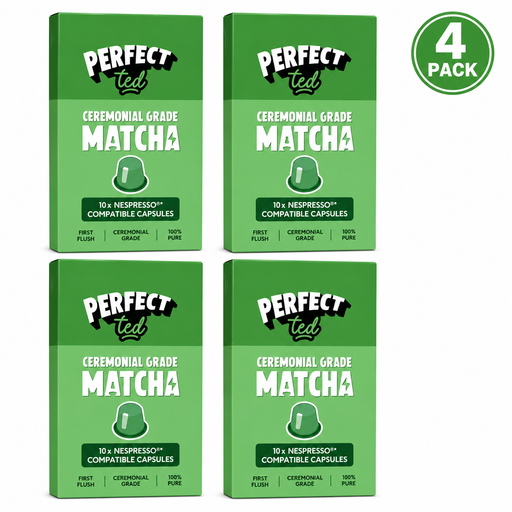 Image unavailable
Perfectted Ceremonial Grade Matcha Pods, 10 pods x 4 packs
For an event with a Nespresso Original line machine, the four-pack bundle contains 40 pods; two bundles provide 80 pods. The product description specifies Nespresso Original line compatibility, so confirm the machine and drink preparation before choosing pods for group service.
View on Joybuy
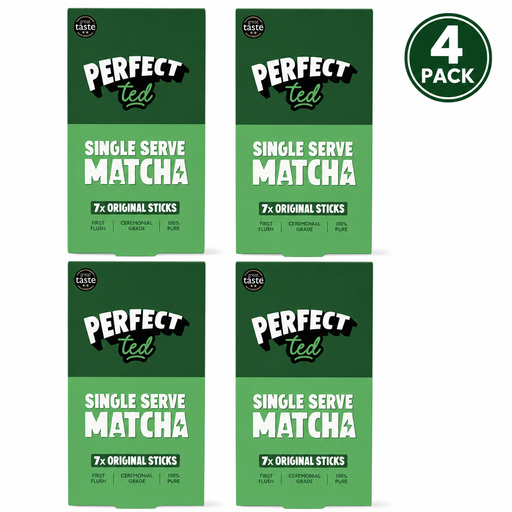 Image unavailable
Perfectted Matcha Powder Sachets, 7 x 1.5g (4 packs)
For measured powder portions, each four-pack bundle contains 28 sachets; three bundles provide 84 sachets. The product description identifies 100% matcha in 1.5g sachets. Check the directions and liquid measure for this sachet before setting up a preparation station.
View on Joybuy
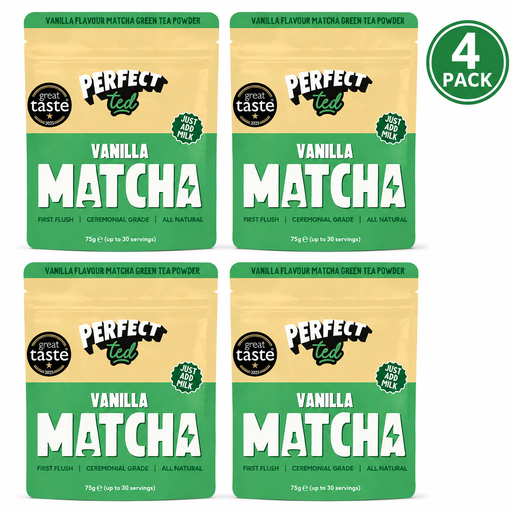 Image unavailable
Perfectted Vanilla Matcha Powder, 75g (4 packs)
For a flavoured drink mixed with water or milk, this bundle contains four 75g tins. The product description gives 15–30 servings per tin, or 60–120 across the bundle; reaching around 80 depends on the portion used. Its listed ingredients include coconut sugar, natural flavour and coconut milk, so it should not be presented as plain matcha.
View on Joybuy
Coffee-morning matcha questions
Will 80 matcha tea bags make 80 cups?
They provide 80 individual tea-bag portions if one bag is used per cup. Clearspring and Waitrose & Partners list the named matcha-green-tea blends in 20-bag packs, so four packs provide 80 bags. Allow for additional bags if your event plan includes second cups or tasting portions.
Should I use tea bags or pure matcha powder?
Use matcha-green-tea bags when guests need to make their own infused drinks; use pure powder when someone can measure and prepare each cup. For its 30g ceremonial matcha, JING Tea specifies 1.5g per 160ml cup and 30 seconds of whisking or shaking, which works out to about 20 cups per pack at that measure.
Is a matcha latte mix the same as plain matcha?
No: check the ingredients of the particular mix before serving it as a matcha drink. Joybuy’s Ma Yu Shan Matcha Milk listing identifies 45% milk powder, sugar and 11% matcha powder, and declares milk as an allergen; those ingredients differ from plain matcha powder.
What if guests will also be drinking coffee?
Make the matcha product and its portion information clear so guests can take account of other caffeinated drinks. Food Standards Agency and Food Standards Scotland guidance on caffeinated food supplements says caffeine from sources such as coffee and tea should be considered together; it does not provide a preparation rule for a particular matcha drink.


