Commuters changing one coffee occasion
A tea bag is a straightforward starting point if you can make a drink at home or work with a kettle and mug. Check the brewing time rather than assuming green tea will taste or feel like coffee.


For a low-step alternative to one of your commuter-coffee drinks, start with an organic-labelled green-tea bag and check its brewing instructions and product-specific organic information. A matcha-containing bag is still a blend, while matcha powder makes more sense when you have time and equipment to prepare it before travelling; none of these formats is established as a like-for-like substitute for coffee.
A tea bag is a straightforward starting point if you can make a drink at home or work with a kettle and mug. Check the brewing time rather than assuming green tea will taste or feel like coffee.
If the organic claim matters to you, check the claim and ingredients on the particular pack. UK government guidance says products marketed as organic must meet organic-production rules, with the product and suppliers certified by an approved organic control body.
These are different formats, not interchangeable versions of the same drink. Pukka says its Supreme Matcha Green blend contains 2% matcha; Twinings describes its separate organic matcha powder as 100% matcha and gives a whisk-based preparation method.
Choose the format that fits your morning routine, then check the exact product’s organic claim, ingredients and preparation directions.
| Priority | What to check | Your needs |
|---|---|---|
| Organic labelling | Read the product-specific organic claim and ingredient list. Under UK government guidance, foods described as organic must meet production and certification conditions, and at least 95% of their agricultural ingredients must be organic. | I want to know what the organic claim applies to, particularly if I am choosing a flavoured or mixed-ingredient tea. |
| Preparation | Compare brewing steps and equipment. Clipper instructs buyers to let boiled water cool for a minute, then infuse its Organic Pure Green tea bag for 1–3 minutes; Twinings specifies measured powder, cooled water and a bamboo whisk for its organic matcha powder. | On a rushed morning, I would rather use a bag and mug. If I have time to prepare a drink before leaving, powder is an option. |
| Matcha format | Check whether the product is a green-tea blend containing matcha or matcha powder. Pukka says matcha makes up 2% of its Supreme Matcha Green blend; Twinings lists its separate organic powder as 100% matcha. | I want to choose a bagged blend or a powder deliberately, rather than assuming the word ‘matcha’ means the same ingredients and preparation in both. |
| Coffee substitution | Choose by tea format and stated ingredients, not by an assumed match with coffee. An organic label does not establish coffee-equivalent flavour, caffeine content or an identical individual effect. | I am changing part of my coffee routine, but I do not need green tea to be a like-for-like replacement. |
In the UK, organic food labelling has production and certification conditions; words such as ‘natural’ do not establish an organic claim.
Check the organic statement and ingredients on the particular product, especially when comparing pure green tea with a blend.
Pukka says matcha makes up 2% of its Supreme Matcha Green blend, whereas Twinings describes its separate organic matcha powder as 100% matcha.
Decide which format you want first, then read the exact product’s ingredient description.
Twinings instructs buyers to measure its matcha powder, use water cooled to 70–80°C and mix it with a bamboo whisk. Clipper’s bagged organic green tea has a 1–3 minute infusion instruction after the water cools.
If mornings are rushed, compare those steps with the time and equipment you have before choosing powder.
The powder method calls for a whisk and preparation time.
Clipper describes its Organic Fairtrade Pure Green 80 Tea Bags as containing organic pure green tea, with a 1–3 minute infusion after boiled water has cooled for a minute.
Pukka describes Supreme Matcha Green as an organic whole-leaf green-tea blend with matcha. The brand says its products are certified organic.
Twinings lists a 30g organic matcha powder made from 100% matcha and gives a method using 1g powder, 70ml water cooled to 70–80°C and a bamboo whisk.
These options include a bagged green tea, matcha products and a green-tea blend. Compare each pack’s organic labelling and preparation format with the time you have before travelling.
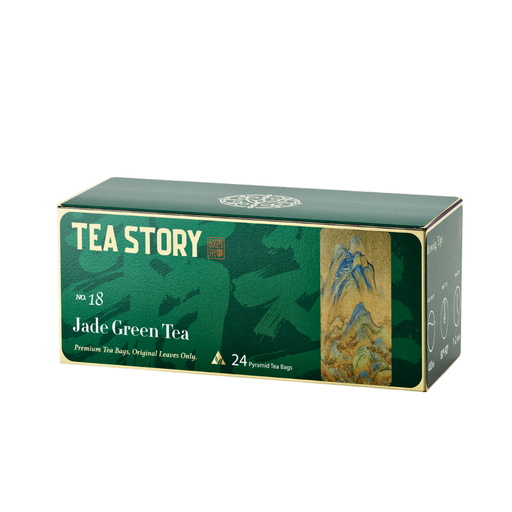 No image available
The pre-portioned bags offer a straightforward format for a weekday drink. The product name makes an ECOCERT Organic claim; check the pack’s certification information and brewing directions when deciding whether it suits your routine.
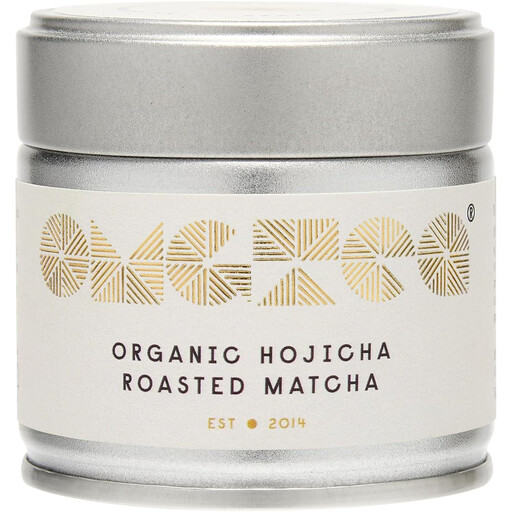 No image available
This roasted matcha variant is an option to consider if you can prepare your drink before travelling. Check the 30g product’s preparation and storage directions, along with its product-specific organic labelling.
 No image available
If you are considering matcha prepared before departure, allow for the steps involved rather than treating it like a tea bag. Check this 30g product’s mixing and storage directions and its product-specific organic labelling.
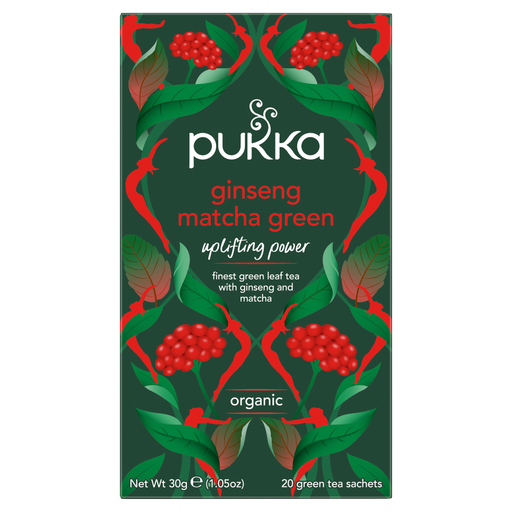 No image available
For a green-tea blend containing matcha, check this product’s full ingredients rather than treating it as pure matcha. The name identifies a 30g pack; confirm the preparation format, directions and product-specific organic labelling before choosing it for a commute.
UK government guidance says a food product marketed as organic must meet organic-production rules, and the product and suppliers must be certified by an approved organic control body. For a food product described as organic, at least 95% of its agricultural ingredients must be organic. Check the particular pack’s claim and ingredients, especially for a blend.
No. Pukka describes Supreme Matcha Green as a whole-leaf green-tea blend and says matcha is 2% of it. Twinings describes its separate organic matcha powder as 100% matcha. Check the exact product name and ingredients rather than assuming all matcha-labelled teas have the same composition.
A bag involves fewer steps in these manufacturers’ instructions: Clipper advises cooling boiled water for a minute, then infusing its organic Pure Green tea for 1–3 minutes. Twinings’ organic matcha powder method calls for 1g powder, 70ml water cooled to 70–80°C and a bamboo whisk, so check whether that preparation fits the time and equipment you have.
No such equivalence follows from an organic label. Organic certification concerns production and labelling conditions; it does not establish the same flavour, caffeine amount or individual effect as coffee. Choose a tea format you want to prepare and drink, and check the particular product’s ingredients and directions.