Hosts planning self-service tea
Portioned bags let guests steep their own drinks. For 240 one-bag servings, work out how many packs you need and check that the seller can fulfil the order in time.


For a Sunday brunch serving 240 drinks, matcha-containing tea bags make sense if guests will steep their own tea: twelve 20-bag packs provide 240 bags, but they are not one 240-bag catering box. Choose powder for drinks mixed to order, allowing for the chosen product’s dose, preparation method and staff time; confirm pack configuration and ordering limits before committing.
Portioned bags let guests steep their own drinks. For 240 one-bag servings, work out how many packs you need and check that the seller can fulfil the order in time.
Powder suits a menu of whisked matcha or lattes when someone can measure and mix each drink. Base the quantity on the recipe for the exact powder you choose.
Check the ingredients and serving information for each matcha product, particularly if coffee and other teas will also be served. A tea blend and a measured portion of powder should not be treated as interchangeable.
Settle the service style first, then calculate 240 portions using either the bag count or the powder’s stated dose.
| Priority | What to check | Your needs |
|---|---|---|
| Service style | Decide whether guests will steep bags or staff will measure and mix powder. Check the chosen product’s preparation directions and the equipment needed. | I want guests to make their own tea without a queue, or I can arrange someone to prepare each whisked drink. |
| Ingredients | Read the full ingredient list and matcha proportion. Clearspring lists its Matcha Sencha as 97.5% sencha and 2.5% matcha; its ceremonial powder is listed as 100% matcha. | A steeped green-tea blend may suit my menu, but I need to know whether guests are expecting a drink made from matcha powder. |
| Portion count | Twelve 20-bag packs equal 240 bags, not one catering box. For powder, use the exact product’s grams-per-drink instruction: JING specifies 1.5 g per 160 ml cup. | I need enough for 240 drinks without confusing a retail multipack with a single 240-bag box. |
| Preparation | Check steeping or mixing instructions before planning service. JING specifies 70°C water and 30 seconds of whisking or shaking for its powder; other products may give different directions. | If I choose powder, I can allow time and equipment for each drink rather than assuming it will be as quick to serve as a tea bag. |
| Ordering | Confirm the number of packs per order, any quantity cap, delivery timing and best-before date. Joybuy’s ITOEN Matcha Genmaicha listing states a maximum of 10 of its 20-bag packs per purchase. | Before relying on one seller, I need to know whether the required quantity can arrive for brunch. |
| Caffeine information | Check the chosen product’s serving information and account for coffee, tea and other caffeinated drinks on the menu. Do not transfer a powder’s stated amount to a different tea-bag blend. | I would like guests to be able to identify what is in each drink and choose among the options served. |
The drinks can be quite different. Clearspring’s Matcha Sencha contains 2.5% matcha alongside sencha, while Joybuy lists ITOEN Matcha Genmaicha with 60% roasted rice and 3% matcha.
Read the ingredients before choosing. Select a blend for a steeped tea with that ingredient profile, or a product listed as 100% matcha when that is the drink you intend to prepare.
Twelve 20-bag packs provide 240 bags, but the seller may limit how many packs can be bought in one order. Joybuy’s listed limit for ITOEN Matcha Genmaicha is 10 packs per purchase.
Check the actual pack configuration, order limit, best-before date and delivery timing before relying on a 240-bag plan.
Clearspring suggests 1 g of its ceremonial powder for preparation; JING specifies 1.5 g per 160 ml cup. At JING’s stated dose, 240 cups would require 360 g of that powder.
Choose the powder and recipe first, then calculate the amount from its dose. Plan how drinks will be measured and mixed during service.
Matcha may be only one of several caffeinated items on a brunch menu, and the ingredients and serving sizes differ between products.
Make the drink options and their ingredients clear to guests, and offer a non-caffeinated choice if that is part of the menu.
These examples illustrate the difference between bagged blends and powders; their inclusion does not establish that every product can be ordered in the quantity needed.
Clearspring offers both a Matcha Sencha tea bag and a separate ceremonial matcha powder, so the format and ingredients need checking before a 240-drink calculation.
JING’s 30 g ceremonial matcha powder is an option for drinks prepared to order rather than self-service tea bags.
ITOEN’s Matcha Genmaicha is a bagged option when a blend containing roasted rice is the intended drink.
Tesco Groceries lists Pukka Organic Supreme Matcha Green as a 20-bag, 30 g option for planning with smaller packs.
These options include powders for drinks prepared to order and a 20-bag green tea with matcha for portioned steeping. For the bagged option, 240 one-bag servings would mean twelve packs, subject to ordering and delivery checks.
 Image unavailable
A powder option for a brunch where drinks will be mixed to order. The named set contains 30 g of matcha; check its serving directions and contents before calculating the quantity and equipment needed for 240 drinks.
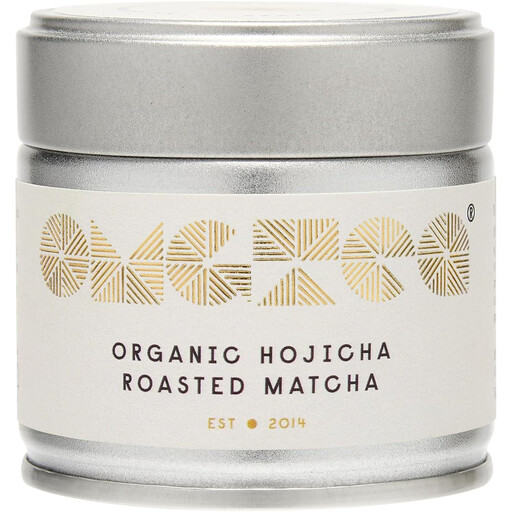 Image unavailable
Consider this 30 g roasted matcha variant if a roasted flavour suits the planned drinks. Check its preparation and serving directions before calculating how many tins to order; powder requires someone to mix the drinks.
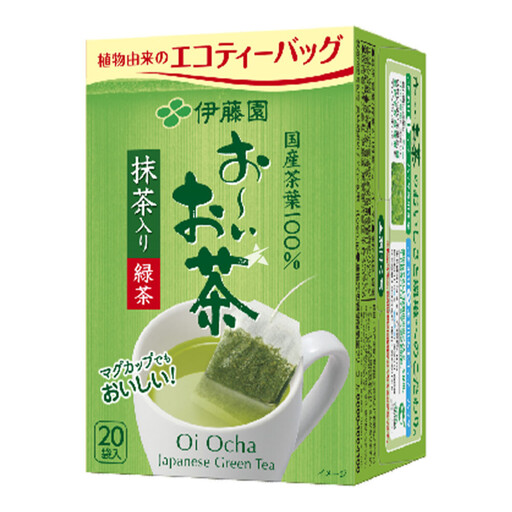 Image unavailable
For self-service steeping, twelve 20-bag packs would provide 240 one-bag servings. This is a green tea with matcha, not a powder; check the ingredients, brewing directions, order quantity and delivery timing for this exact variant before planning the service.
They will give you 240 tea bags, but not one 240-bag catering box. If a single box matters for storage or service, confirm that pack format with the seller; otherwise check that you can order twelve packs and receive them before brunch.
No. Clearspring lists its Matcha Sencha bags as 97.5% sencha and 2.5% matcha, whereas its ceremonial powder is listed as 100% matcha. Check the ingredients of the exact product to decide whether you are serving a steeped blend or a drink mixed from powder.
Calculate it from the chosen product’s dose and your intended recipe. JING specifies 1.5 g per 160 ml cup, which works out to 360 g for 240 cups at that dose; Clearspring gives a different, 1 g preparation suggestion for its own powder.
Use the serving information for the exact products offered, and make clear which drinks contain caffeine. Coffee, tea and matcha can all contribute to a guest’s intake; a powder’s stated serving information should not be applied to a different tea-bag blend.