Who is each format for?
The number of people making drinks, and where they will make them, matters more than the word “matcha” on the front of a large box.
Shared-office and hospitality buyers
Individual latte sachets can make portions straightforward when several people use the same supply and have access to a mug and hot water. World Food Shop lists a Gold Kili case containing 240 sachets, but its sold-out or backordered status when reviewed means an order should not be assumed possible. Check the current listing and full pack label before planning around that case.
Solo commuters changing their coffee routine
A smaller pack lets you settle on a preparation method before committing to 240 drinks. An instant latte sachet needs hot water and stirring; a tea bag makes a brewed tea; pure matcha needs mixing or whisking. Those formats make different drinks, so convenience alone should not decide the choice.
Buyers checking caffeine or ingredients
Compare the declared serving size, caffeine and ingredient list of the exact product you intend to drink. A pure-matcha portion, a green-tea blend and a formulated latte should not be treated as interchangeable. If pregnancy guidance applies, nidirect’s Northern Ireland guidance sets a limit of 200 mg of caffeine per day from all sources.
What should you check before buying?
Start with the drink you want, then check how you will prepare it and whether the pack quantity fits the number of people using it.
240-sachet latte case
Consider it when: Several people will regularly make portioned latte-style drinks with hot water; World Food Shop lists its Gold Kili case as 24 boxes of 10 × 25 g sachets.
Trade-off: That listing was sold out or backordered when reviewed, so confirm current availability and the case’s full label before committing to it.
Pure matcha portions
Consider them when: You want matcha without a pre-formulated latte mix and can prepare your drink before leaving or where you work.
Trade-off: Clearspring’s 1 g Matcha Shot instructions call for whisking, rather than simply stirring an instant latte into water.
Matcha tea bags
Consider them when: You prefer to brew tea in a mug rather than make a powder-based drink.
Trade-off: The Clearspring Matcha Sencha bags listed by Waitrose contain 97.5% sencha and 2.5% matcha, so they are not a substitute for a pure-matcha serving.
| Priority |
What to check |
Your needs |
| Preparation |
Check whether you need only hot water and a spoon, time to infuse a tea bag, or a way to mix powder. For example, Waitrose gives a 1–2 minute infusion for Clearspring Matcha Sencha. |
At work, I may have a kettle and mug but no whisk. A stirred latte sachet or a tea bag would fit that setup more readily than matcha I need to whisk. |
| Drink format |
Read the ingredients: matcha powder, a matcha-containing tea blend and an instant latte mix are distinct products. Waitrose lists its Clearspring tea bags as 97.5% sencha and 2.5% matcha. |
If I want a brewed green tea, a matcha blend could suit me; if I want pure matcha or a latte-style drink, I need to choose that format explicitly. |
| Caffeine |
Compare caffeine using each product’s stated portion, then account for other drinks. Clearspring states approximately 32 mg per 1 g Matcha Shot; the Perfected Organic Matcha Powder listing states 68 mg per 2 g serving. |
I want to know how a serving fits alongside my coffee or tea. Those figures describe different products and portions, not a standard caffeine amount for all matcha. |
| Ingredients and allergens |
Check the current physical pack, particularly for a latte mix. Joybuy’s Gold Kili Oat-K Oat Matcha listing names oat powder, sugar and creamer, and identifies milk, soya and oats as allergens; it is a different product from the 240-sachet Gold Kili case. |
I need the ingredient and allergen information for the exact sachet I will use, rather than assuming that “oat matcha” or “matcha latte” describes everything in it. |
| Quantity and storage |
Count individual servings, not just boxes, and check the best-before date and storage directions. World Food Shop’s 24 × 10-sachet case contains 240 servings; Clearspring’s Matcha Shot comes in 8 × 1 g portions. |
For one commuter, I would check how often I expect to make the drink before buying 240 portions. A shared supply has a different use pattern from a pack kept for occasional mornings. |
Brand and retailer references
These examples help distinguish formats; a brand or retailer reference does not establish that a 240-sachet case is available there.
Clearspring
Its Matcha Shot and Matcha Sencha bags illustrate the difference between portioned matcha powder and a brewed tea blend.
- Clearspring lists Matcha Shot as 8 × 1 g portions containing 100% organic matcha.
- Waitrose lists Clearspring Matcha Sencha as 20 tea bags containing 97.5% sencha and 2.5% matcha; it is not a pure-matcha portion.
Waitrose
Its Clearspring Matcha Sencha listing gives a concrete tea-bag example for comparing ingredients and preparation.
- The listing states a 20-bag pack and a 1–2 minute infusion.
- Check the physical pack for current ingredients and allergen information before relying on a retailer listing.
M&S Food
Its explanation describes matcha as a fine powder made from ground, shade-grown green tea leaves, a useful distinction when comparing powder with tea bags.
- That explanation does not establish the ingredients or serving count of a particular M&S product.
Tesco
Its grocery category includes an Oatly Matcha Latte drink, illustrating a ready-to-drink format rather than a case of individual sachets.
- Check the exact drink’s label and pack size if a portable, prepared option is what you need.
Joybuy options for a commuter routine
These smaller packs cover latte sticks, portioned matcha powder, a ready-to-drink latte and matcha-containing tea bags. They offer ways to try a commuter routine without treating any of them as the 240-sachet case.
 No image available
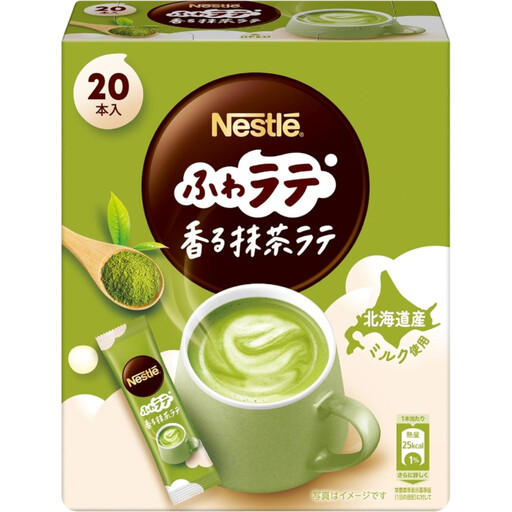
Nestle Fuwa Matcha Latte 96 g, 20 sticks
For a workplace drink made with a mug and hot water, these individual latte sticks are a smaller-pack option. The listed preparation is to add hot water and stir. Check the pack’s ingredients and caffeine information for your needs; the box contains 20 sticks, not 240 servings.
View on Joybuy
 No image available
Perfectted Matcha Powder Sachets, 7 × 1.5 g
These seven individual powder sachets suit someone considering portions rather than a formulated latte case. Check the pack’s drink-preparation directions and caffeine declaration when deciding whether they fit a workplace routine. This is a seven-sachet pack, not a 240-serving supply.
View on Joybuy
 No image available
PerfectTed Vanilla Matcha Latte, four-pack
This ready-to-drink four-pack is an option when a kettle is not part of the commute. The product information gives conflicting caffeine figures, so check the current can before using a figure to plan your intake. The listing also identifies oats as an allergen.
View on Joybuy
 No image available
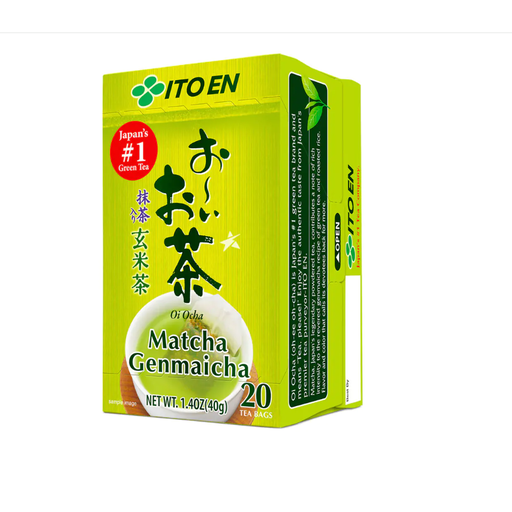
Itoen Oi Ocha Matcha Genmaicha Tea Bags, 20 bags, 40 g
For a brewed drink rather than an instant latte, this 20-bag matcha genmaicha pack offers a different format. It is a tea blend, not pure matcha. Check the physical pack for the ingredient proportions and brewing directions, and do not mistake the 20-bag pack for a 240-serving case.
View on Joybuy
Questions about commuter matcha
Does a 240-sachet matcha case make sense for one commuter?
It makes more sense if you already know you will use that particular drink regularly and can store it as directed before its best-before date. World Food Shop lists a 240-sachet Gold Kili latte case, but it was marked sold out or backordered when reviewed. A smaller pack lets you settle on the format before committing to that quantity.
What can I make with just a kettle and mug at work?
An instant latte sachet can be stirred into hot water; World Food Shop gives those directions for its Gold Kili case. A tea bag is another straightforward option, but it makes a brewed tea: Waitrose specifies a 1–2 minute infusion for Clearspring Matcha Sencha. Pure matcha calls for mixing or whisking rather than simply infusing a bag.
Are matcha sachets necessarily dairy-free or unsweetened?
No. The exact ingredients depend on the product: Joybuy’s Gold Kili Oat-K Oat Matcha listing names sugar and identifies milk, soya and oats as allergens. That six-sachet product is not the 240-sachet Gold Kili latte case, whose own label needs checking separately.
How should I compare caffeine amounts during pregnancy?
Use the declared serving size for the exact drink and account for caffeine from other sources. Nidirect’s Northern Ireland pregnancy guidance specifies no more than 200 mg of caffeine a day. For illustration of why the product matters, Clearspring states approximately 32 mg per 1 g Matcha Shot, while the separate Perfected Organic Matcha Powder listing declares 68 mg per 2 g serving.
How should I store matcha for repeated commutes?
Follow the directions on the exact pack, particularly once it is open. The Perfected Organic Matcha Powder listing says to keep its container tightly sealed in a cool, dry place away from direct sunlight, strong odours and moisture; check a different product’s own instructions rather than applying those directions to every format.


